



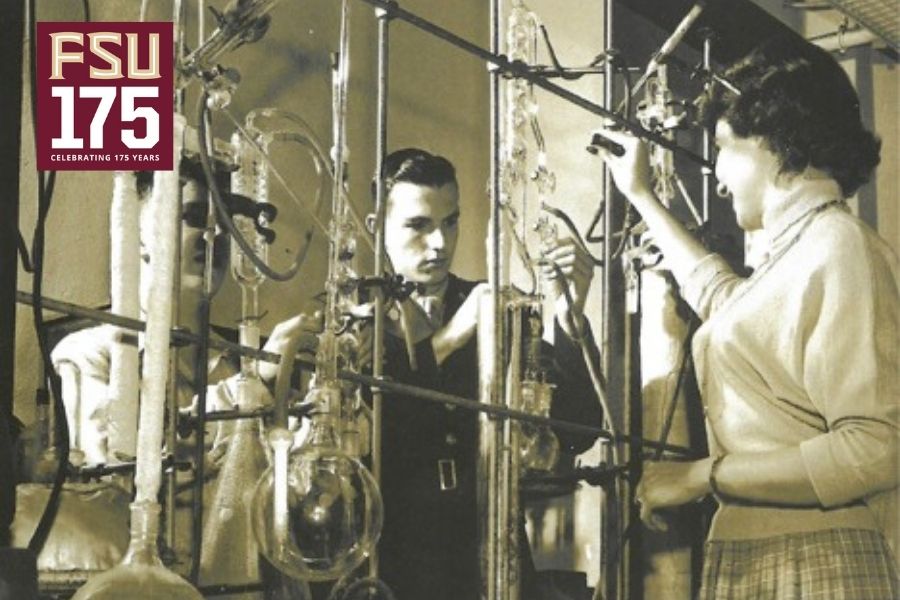
From pioneering cancer research and building the world’s most powerful magnets to expanding the frontiers of health, engineering and the arts, Florida State University has spent generations turning research and creative discovery into work that changes lives.
As FSU celebrates its 175th anniversary, that legacy stretches from the university’s earliest research programs to the National High Magnetic Field Laboratory and today’s rapidly growing FSU Health academic health system.
“Research is central to Florida State University’s mission and essential to the impact we make on Florida, the nation and the world,” said President Richard McCullough. “For generations, FSU researchers have pushed the boundaries of knowledge, tackled complex challenges and transformed bold ideas into discoveries that improve lives. We look to build on that legacy as we continue investing in the research that will drive the next generation of breakthroughs.”
Early research foundations
In 1947, the Florida State College for Women became Florida State University, signifying an expansion of the institution’s mission from undergraduate education to a research enterprise.
The university’s research footprint was also growing. FSU established its first marine laboratory, the Oceanographic Institute, in 1949, followed by additional facilities on the St. Johns River near Jacksonville and on Tampa Bay. The facilities supported research into local fisheries, the oceanography of the Gulf Stream, red tide and other marine science topics.
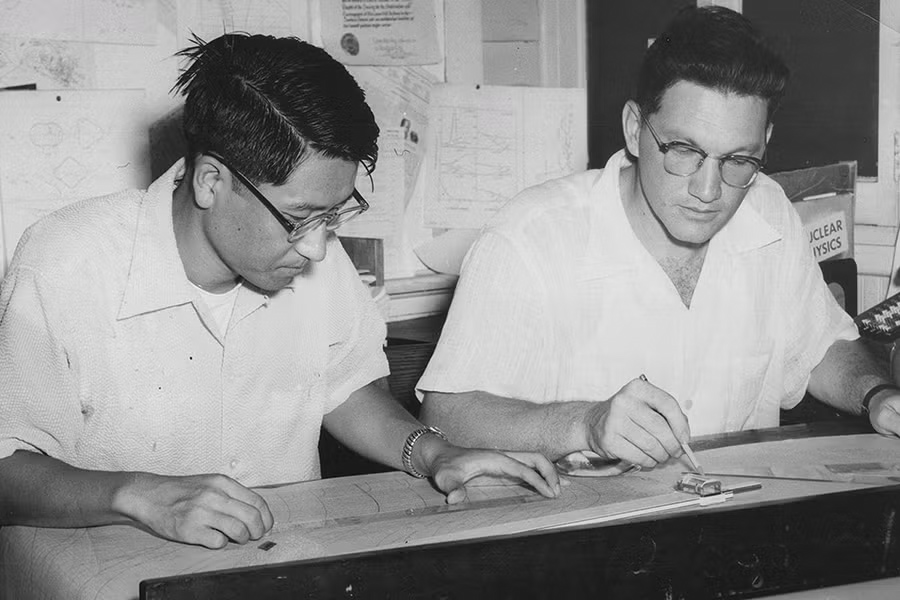
As the FSU research program developed, the university became a leading institution in the physical sciences, especially physics and chemistry. In 1957, FSU established the High Energy Physics group, the first high-energy physics program in the Southeast. The FSU Accelerator Laboratory — now the John D. Fox Nuclear Accelerator Laboratory — began operations in 1960, helping FSU physicists study low-energy nuclear physics, nuclear astrophysics and the quantum mechanics of atomic nuclei and their reactions, which supports applications like medical treatments, energy production and storage, national security and more.
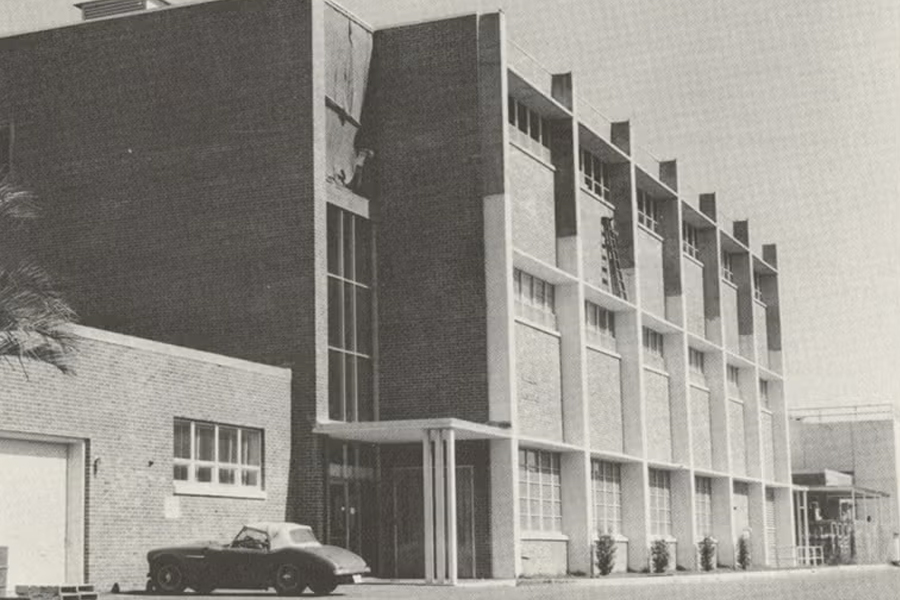
At the same time, the university’s chemistry department was growing. Led by Professor Karl Dittmer, FSU recruited faculty from different branches of chemistry, with research integrated into graduate education. The university expanded its facilities, including construction of the Dittmer Laboratory and investments in sophisticated instrumentation. By 1968, FSU Chemistry ranked 23rd nationally, third in the Southeast and first in Florida.
Research connecting disciplines was also thriving. In the 1960s, the university established the Institute of Molecular Biophysics, an interdisciplinary enterprise dedicated to the application of physical and chemical principles to the investigation of biological phenomena.
Those early accomplishments in physics and chemistry and the link between the two subjects laid the foundation for today’s research enterprise and a home for faculty who keep pushing science forward. The university’s recently established FSU Quantum Initiative continues that history of scientific exploration.
“FSU’s research enterprise is powered by extraordinarily talented faculty and staff whose work spans the sciences, engineering, health, the arts and humanities and beyond,” said Vice President for Research Stacey S. Patterson. “By supporting ambitious, collaborative scholarship, we accelerate discovery, build meaningful partnerships and translate ideas into solutions that have a lasting impact on the communities we serve.”
Supercharging applied research: FAMU-FSU College of Engineering
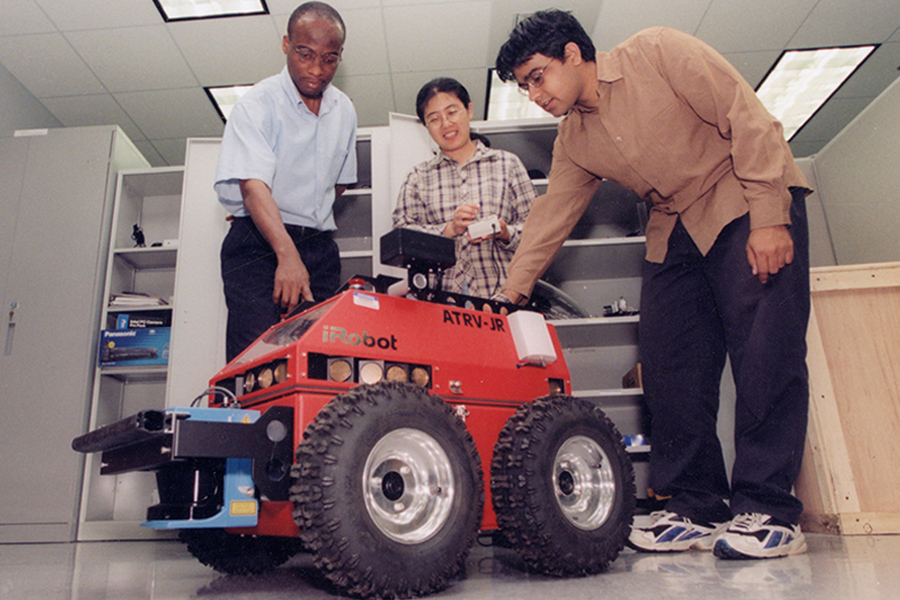
At FSU, fundamental questions and real-world challenges intersect. As the research enterprise continued to grow, university leadership sought to expand its impact on practical applications. In 1982, FSU and Florida A&M University joined forces to establish the FAMU-FSU College of Engineering, the only shared college of engineering in the nation.
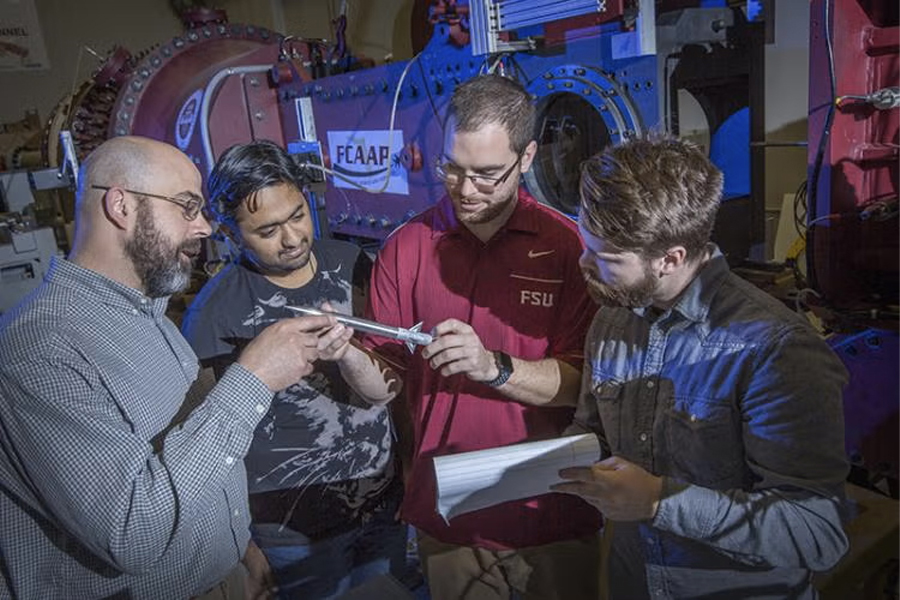
Research at the college has developed into a multidisciplinary enterprise spanning advanced materials, power and energy systems, aerospace, robotics, infrastructure and manufacturing. The college’s research environment includes nationally recognized centers and laboratories such as the Center for Advanced Power Systems, which conducts basic and applied research in areas including power-system modeling, power electronics, electrical machines and superconductivity. Its High-Performance Materials Institute focuses on advanced materials with applications in industries including aerospace, defense and energy.
Aerospace research also has become a major strength. Through the Florida Center for Advanced Aero-Propulsion and related facilities, researchers study aerodynamics, propulsion, materials and next-generation flight technologies. The college also supports research in intelligent systems and robotics, sustainable energy, quantum engineering and artificial intelligence.
“Engineering research is where discovery meets possibility,” said Suvranu De, dean of the college. “The research achievements at the FAMU-FSU College of Engineering help turn scientific discovery into practical solutions, from improving human health and creating new technologies to building safer, stronger and more resilient communities. With every advancement, we are changing lives.”
Taxol
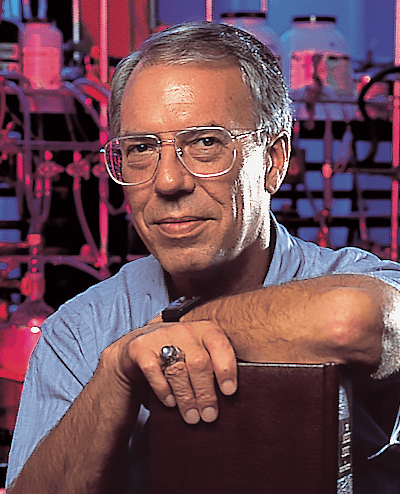
Few examples illustrate the life-changing power of Florida State research better than Taxol. In 1989, FSU chemist Robert Holton and his team achieved a breakthrough in synthesizing the cancer-fighting drug, helping pave the way for its widespread use in treating breast cancer and other cancers. Their work has benefited more than a million patients worldwide and demonstrated how discoveries made in a university laboratory can have a profound impact on human health.
More than three decades later, the Taxol story remains one of the clearest examples of the connection between fundamental research and tangible human impact at Florida State. What began as an extraordinarily difficult problem in synthetic chemistry became a breakthrough that helped make a major cancer treatment widely available. For FSU, it also demonstrated how discoveries made on a university campus could move beyond the laboratory, reach patients around the world and generate resources that could be reinvested in future generations of scholarship and discovery.
An international research attraction: National High Magnetic Field Laboratory
Florida State entered a new era in 1994 when it became home to the National High Magnetic Field Laboratory, or MagLab, the world’s largest and most powerful magnet laboratory. A successful National Science Foundation proposal brought the facility to Tallahassee, where it has become a national center for high-magnetic field research, interdisciplinary discovery and technological innovation.
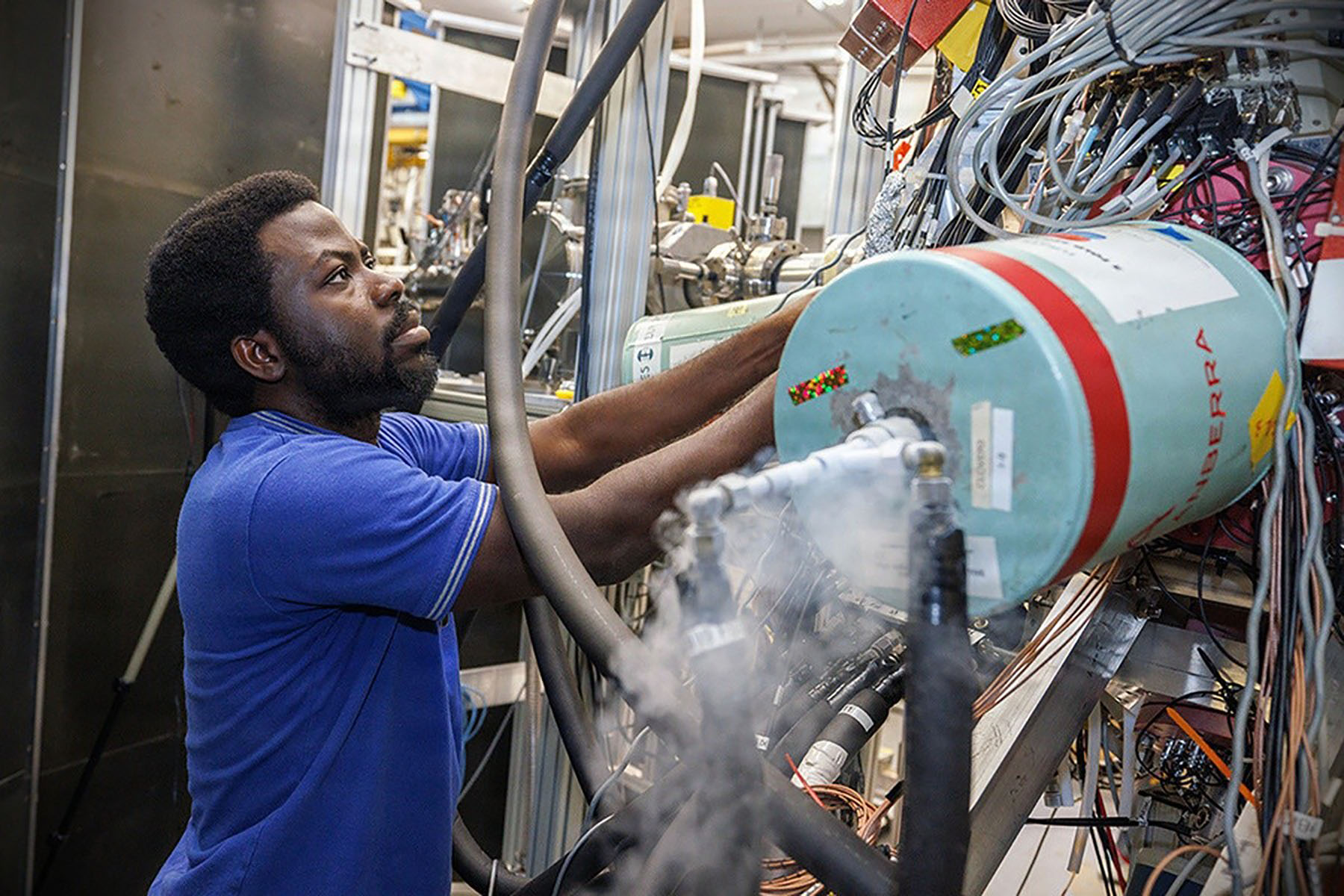
Each year, hundreds of scientists from around the world come to the FSU-led facility to use its one-of-a-kind instruments and explore questions in advanced materials, energy technologies, human health, the fundamental properties of matter and more. Over more than three decades, the MagLab has become a vital part of the nation’s scientific infrastructure and a defining example of Florida State’s leadership in advancing discovery and innovation. MagLab researchers and engineers have repeatedly pushed the limits of magnet technology, setting world records while developing powerful instruments that allow for scientific breakthroughs.
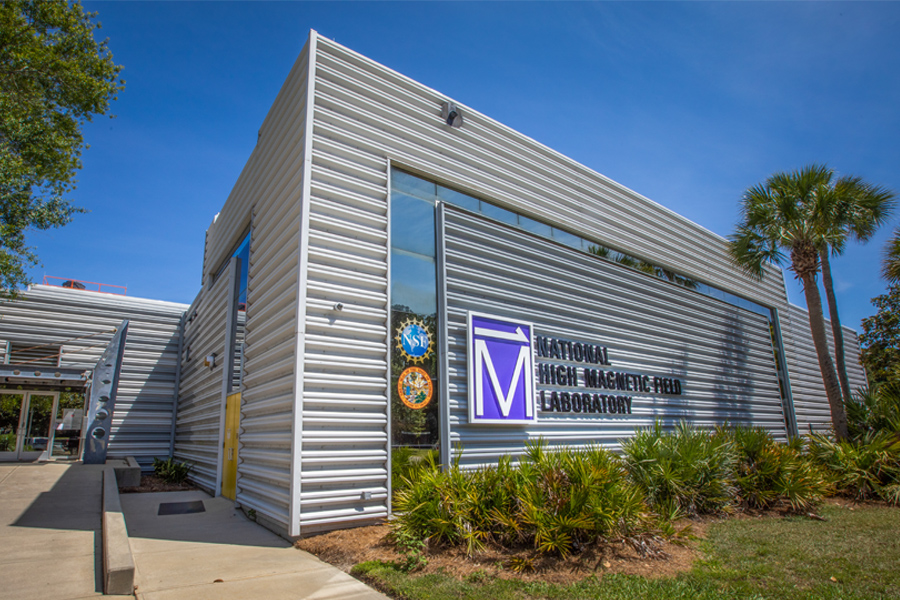
Today, the MagLab is the world’s largest and highest-powered magnet laboratory and the only facility of its kind in the United States. More than a thousand scientists from dozens of countries use its facilities each year, contributing to more than 400 peer-reviewed publications annually.
“Transformative research begins by giving talented people the tools and opportunities to pursue big questions,” said MagLab Director Kathleen Amm. “The research taking place here helps expand the boundaries of what we know and what we can achieve. That spirit of exploration has been central to Florida State University’s research legacy, and it will continue to drive breakthroughs for generations to come.”
A history of creative expression and humanistic inquiry
Along with scientific research excellence, artistic expression has been part of Florida State University’s academic identity for more than a century.
The university’s formal history in the visual arts dates to the early 1900s, when a School of Art was established at an FSU predecessor. As the institution evolved, its commitment to the arts expanded across studio art, art history, design, dance, theatre and other disciplines, establishing creativity and artistic inquiry as enduring parts of university life.
FSU also developed a strong tradition of treating the arts as scholarly research. In 1966, faculty helped establish the FSU Florence Study Center, expanding opportunities for international study of art and culture, and in 1970, the university began offering a doctoral degree in art history.
More scholarly watersheds would follow. In 2000, the State of Florida transferred stewardship of The John and Mable Ringling Museum of Art to FSU, expanding the university’s role in artistic scholarship, preservation and public engagement. In 2002, the university built the Facility for Arts Research, which includes specialized research laboratories and equipment for artistic experimentation. The Maggie Allesee National Center for Choreography, one of only two national residency centers for choreography in the United States partnered with a major research institution, was founded in 2004.

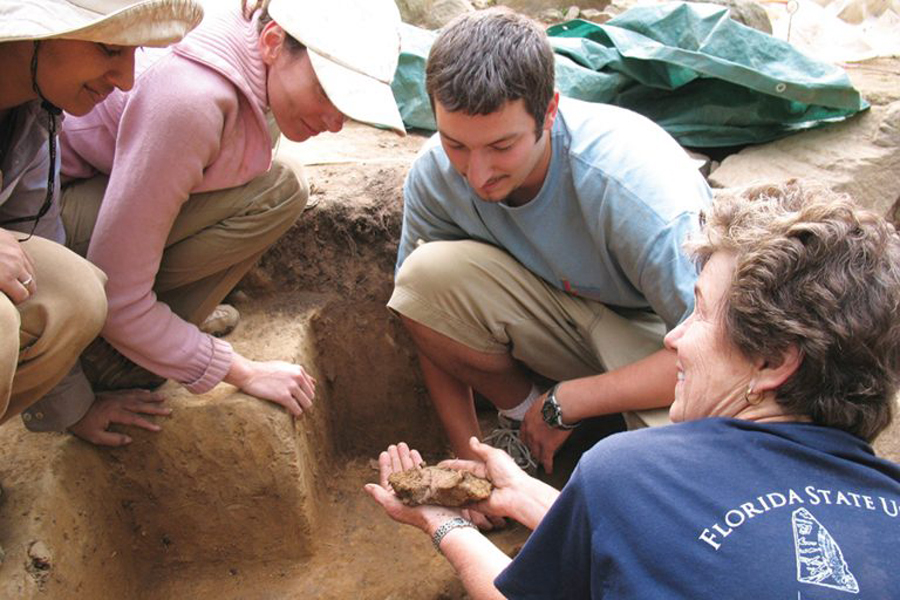
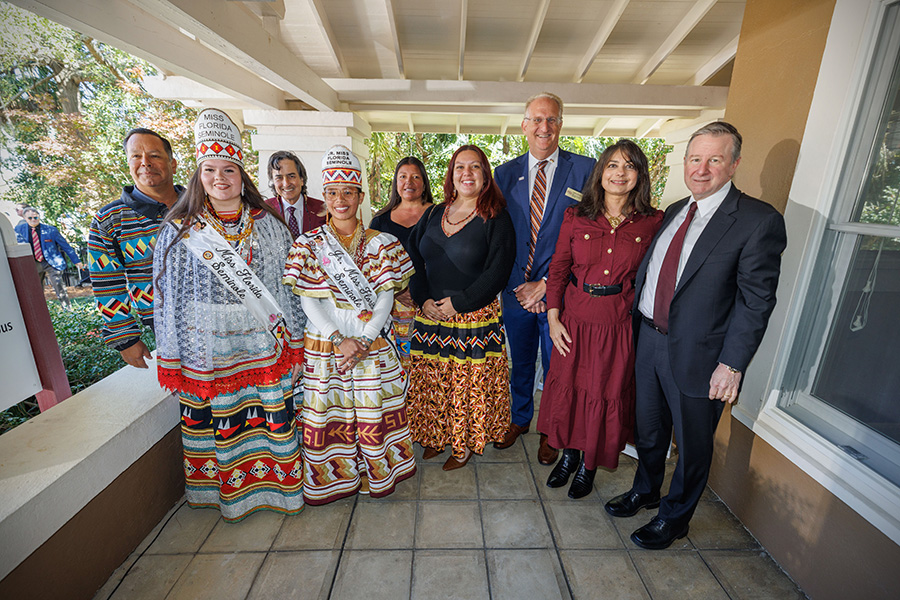

Progress continues today. In partnership with the Seminole Tribe of Florida, FSU launched the Native American and Indigenous Studies Center in 2023. The facility is a center for students interested in learning more about Native American and Indigenous history and culture and for conducting collaborative and ethical research with NAI communities.
The FSU Humanities Center, established this year, focuses scholarly research on exploring what it means to be human. The center is a laboratory for invention in which faculty, students and the public respond to questions involving citizenship, social life, technology and human enterprise.
Multidisciplinary research centers such as the Learning Systems Institute and the Florida Center for Reading Research are hubs for innovative educational solutions that connect theory with practice. Work taking place there is helping improve our understanding and application of the science of reading, supporting literacy across Florida and beyond.
These efforts reflect a tradition in which artistic creation and scholarship are integral to FSU’s culture of discovery, demonstrating that research can produce not only scientific breakthroughs and new technologies, but also new ways of understanding culture, history and the human experience.
Supporting health research
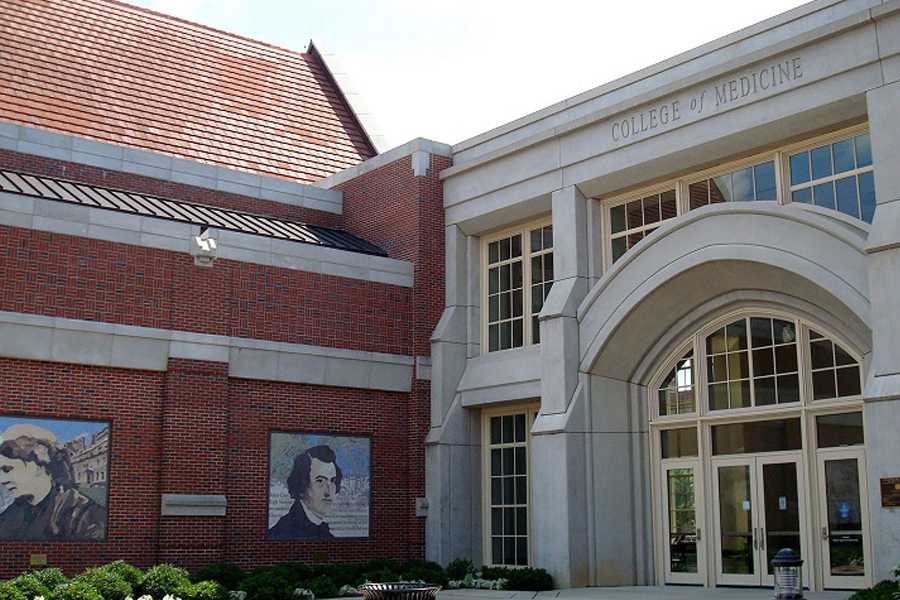
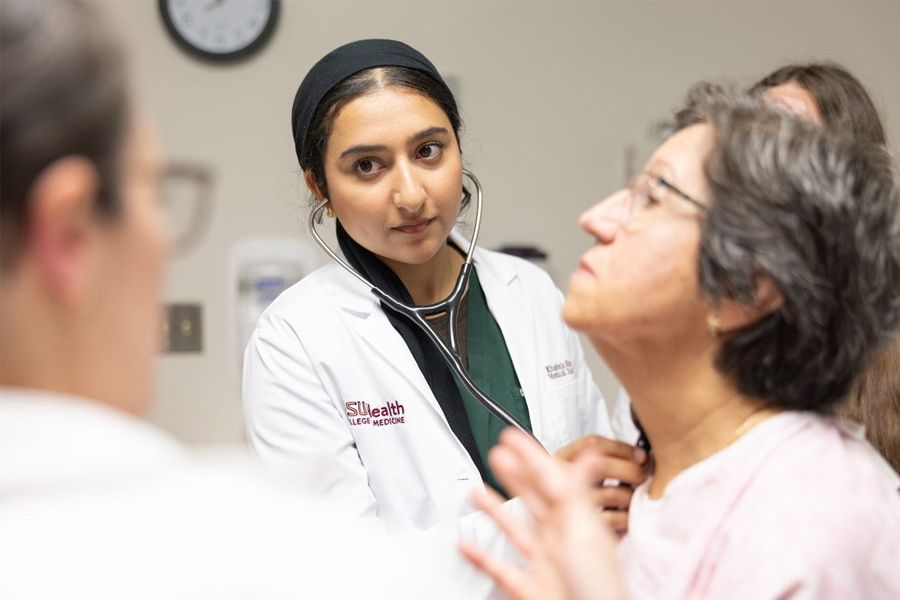
Health research has become a driving force for FSU’s research mission. A major milestone came in 2000 with the creation of the FSU College of Medicine, founded with a mission to serve the unique health needs of Floridians. Designed as a community-based medical school, the college developed a statewide network of regional campuses and clinical training opportunities, including programs focused on rural and medically underserved communities.
Along with its role as a community-based medical school developing the next generation of healthcare providers, the college serves as a center for health research across numerous disciplines. Faculty investigate areas including molecular, cellular and developmental biology, autism, mental and behavioral health, geriatrics, family medicine, rural health and more.
Research improving human health takes place throughout FSU. At the College of Nursing, faculty are incorporating advances in neuroscience and artificial intelligence to support the next generation of nurses and researchers. Investments in brain and pain science, chronic disease, mental health, population health and more have made the college a center for tackling some of the country’s most persistent and difficult health challenges.
The 2023 combination of several colleges into the Anne Spencer Daves College of Education, Health, and Human Sciences created new opportunities for research across disciplines. Faculty at Anne’s College investigate questions about human potential across the lifespan, from learning and educational policy to nutrition, physical activity and personal and family well-being.
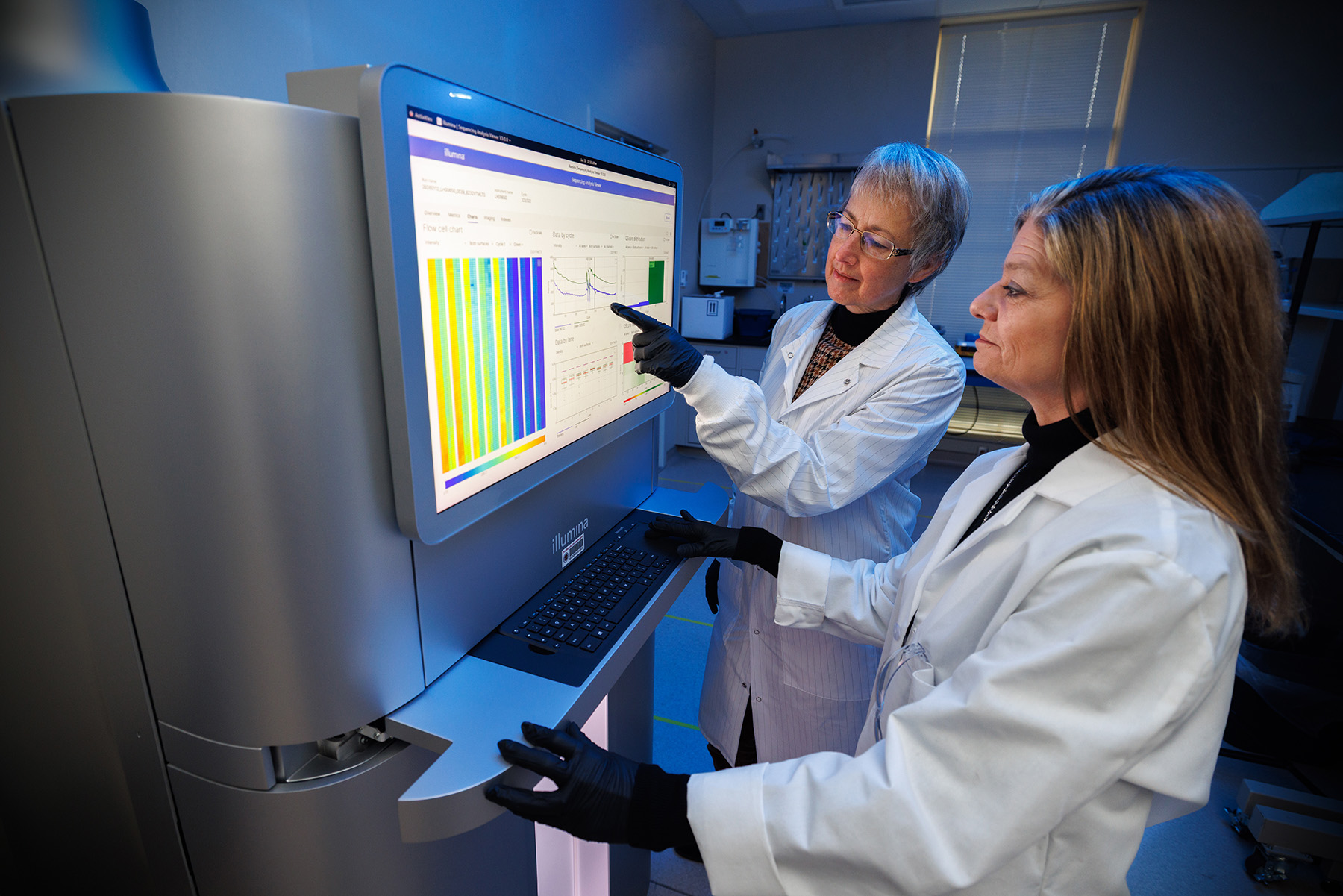
Research centers and institutes have strengthened FSU’s ability to translate discoveries into real-world solutions. The Florida Institute for Pediatric Rare Diseases develops innovative genomic technologies to improve diagnosis, care, and treatment for children and families affected by rare diseases. The institute coordinates the Sunshine Genetics Program, a voluntary research program using whole-genome sequencing as an additional newborn screening tool, helping families identify rare genetic conditions earlier in life so treatment can begin sooner.
Through the Institute for Connecting Nutrition and Health, FSU faculty are pioneering a comprehensive approach to tackle diet-related chronic diseases through multidisciplinary nutrition research initiatives. Improving human performance in all walks of life is the focus of the Institute of Sports Sciences and Medicine. And the Institute on Digital Health and Innovation advances individual and public health through collaborative and synergistic partnerships focused on the development, evaluation and dissemination of digital health tools, technologies and innovations.
Impactful breakthroughs have accelerated with the development of FSU Health, the university’s integrated academic health system, bringing together research, education and clinical care. Through FSU Health, the university is growing its biomedical research portfolio, supporting science exploring health across the lifespan and developing new facilities for research and clinical care.
These investments represent a new phase in FSU’s health research history, creating closer connections among scientists, physicians, students and patients and expanding the university’s capacity to turn research discoveries into better health outcomes for communities throughout Florida.

Student success and the future of research
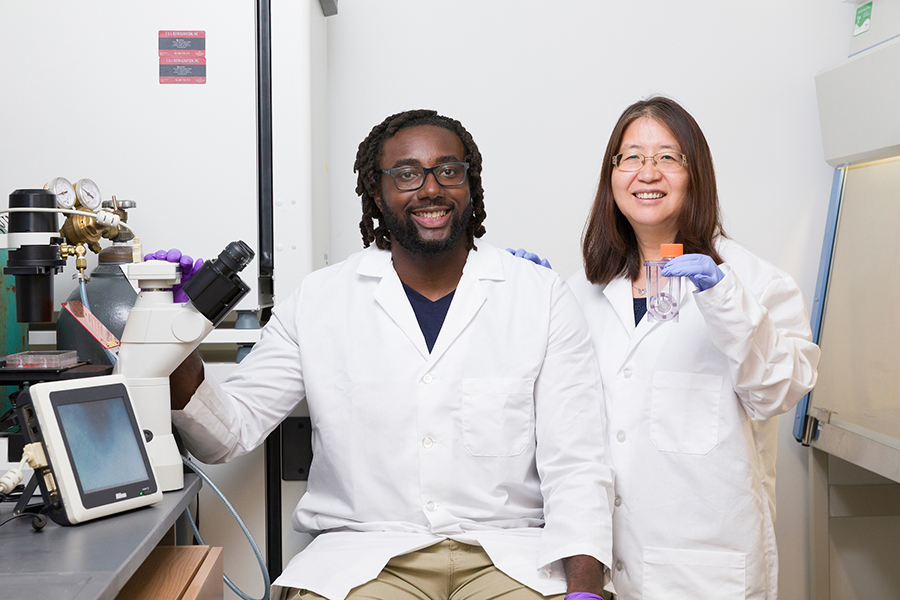
Research conducted across the university continues to advance health, science and technology, strengthen communities and deepen our understanding of the world. FSU’s research expenditures are breaking records, reaching over $500 million, and faculty continue to earn accolades, such as membership in the National Academies of Sciences, Engineering, and Medicine, recognition in the American Association for the Advancement of Science and more.
Generations of FSU students have worked alongside leading scientists, clinicians, engineers and artists. In laboratories, classrooms, performance spaces and field sites, they learn to ask ambitious questions, test new ideas and pursue answers to important problems.
After 175 years, FSU’s story of discovery is still being written. Researchers continue to expand the frontiers of knowledge, pursue ambitious questions and put their breakthroughs to work in service to humanity. As faculty push their research forward and turn ideas into impact, the university’s legacy is a foundation for the next generation of transformational research.