



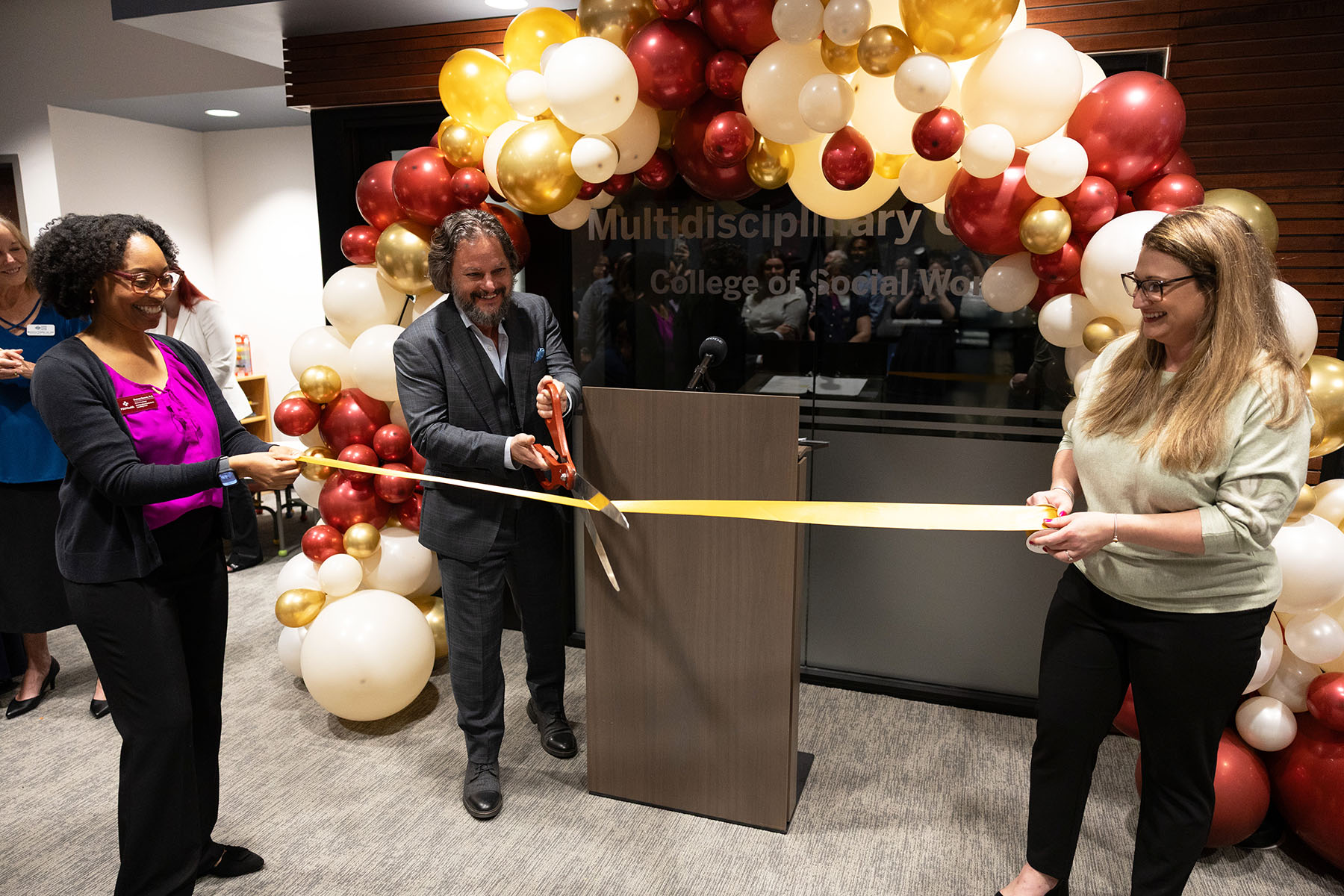
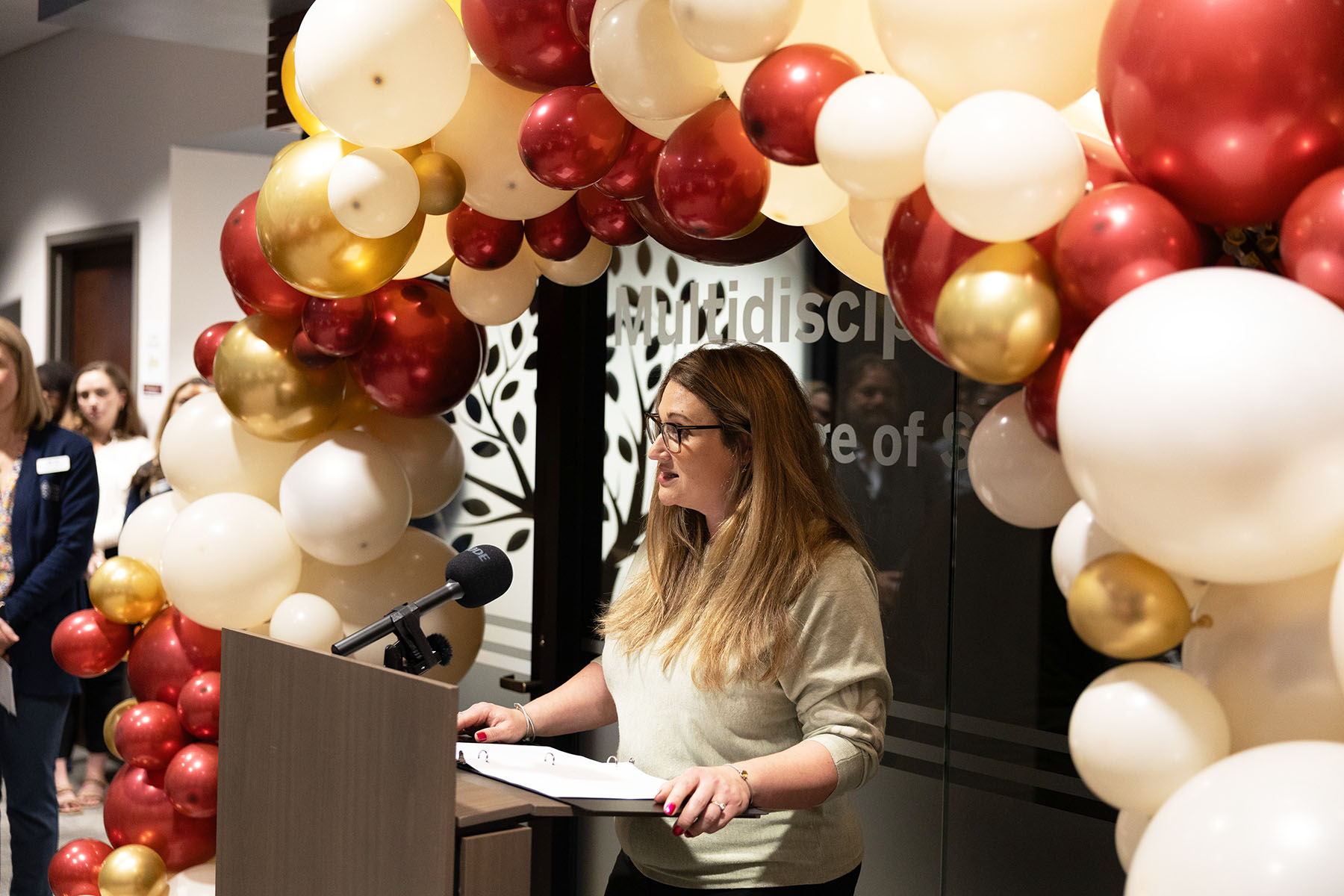
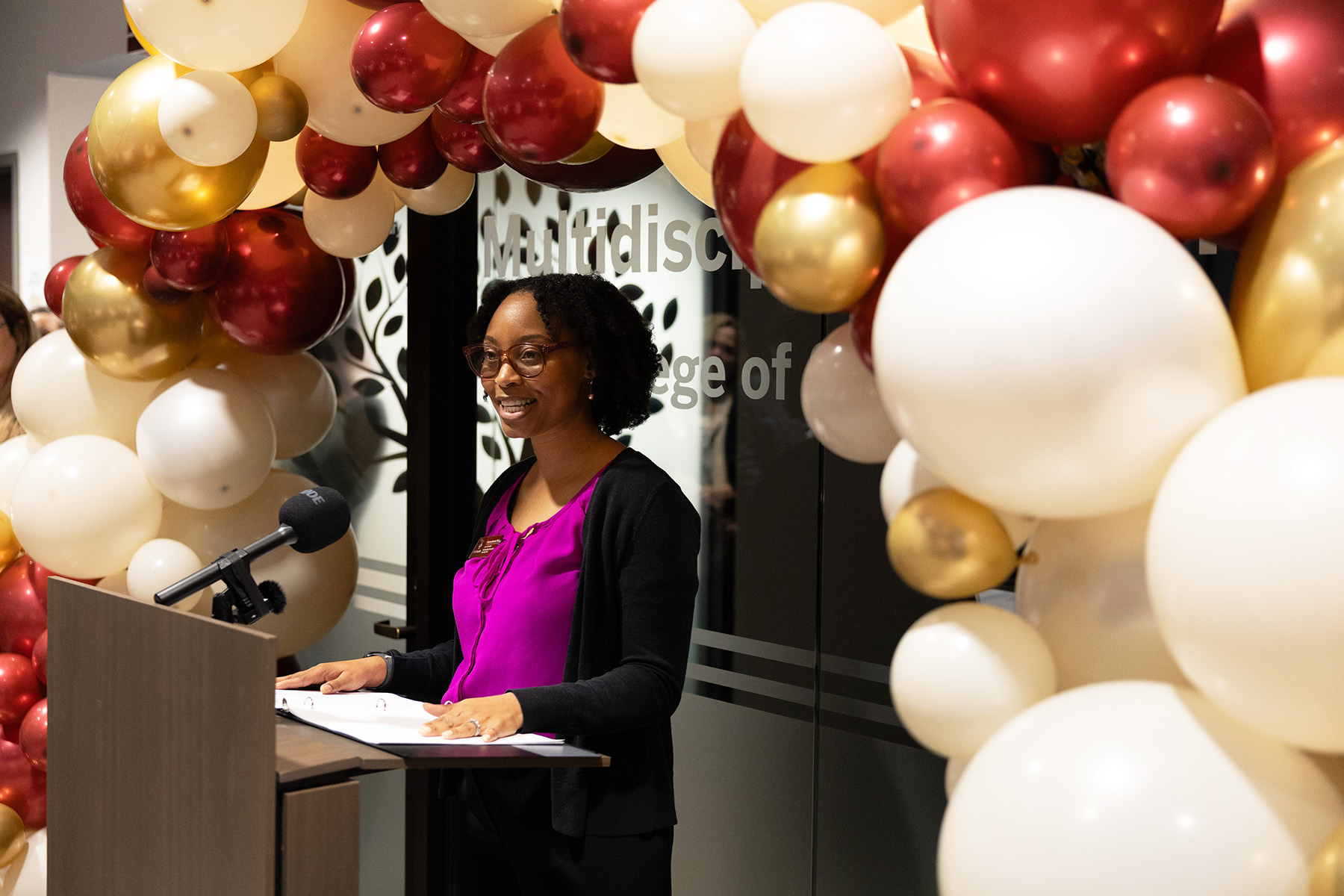
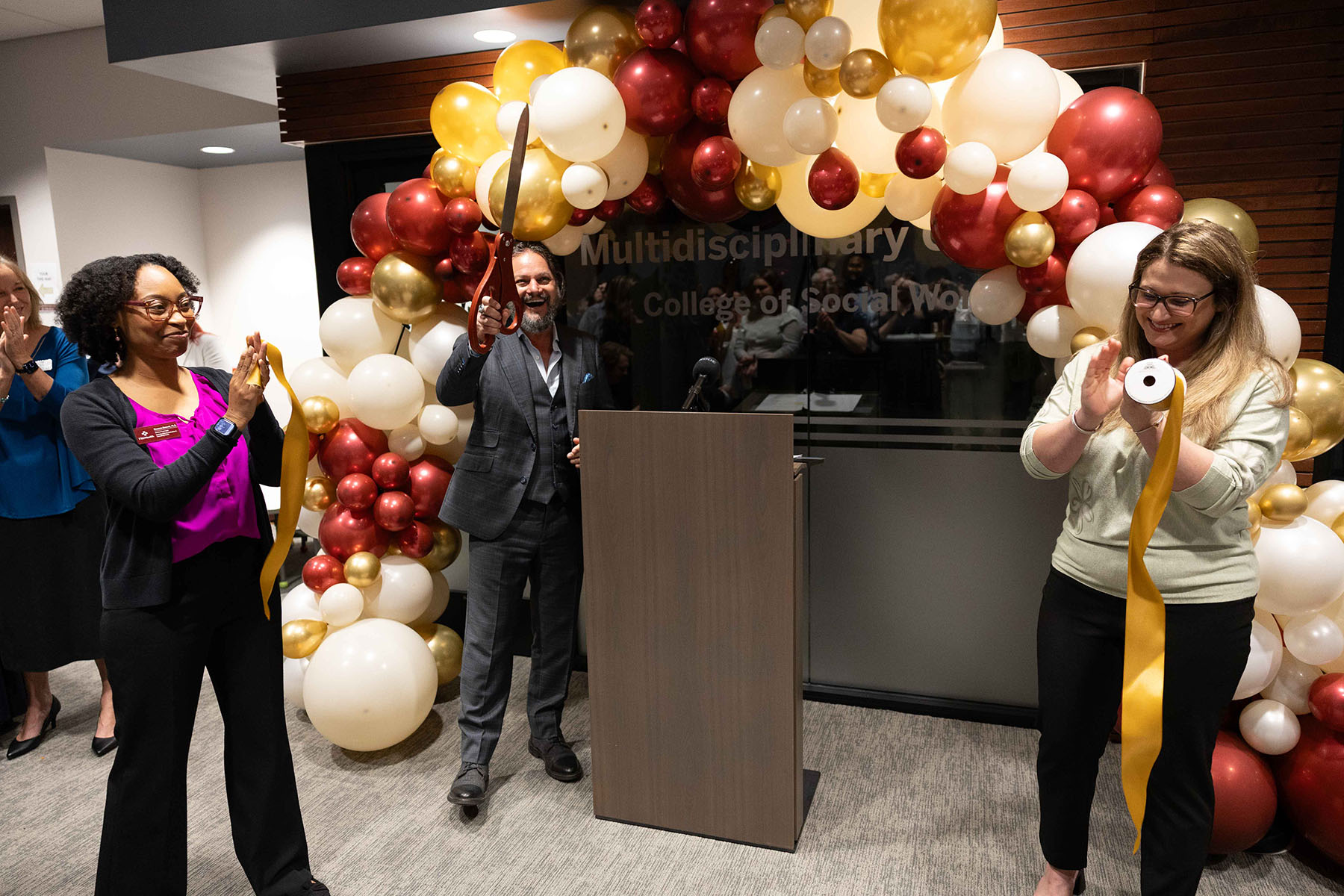
Florida State University is transforming the future of clinical training and community support with the grand opening of the newly expanded Maryland Building.
This state-of-the-art renovation marks a collaborative milestone for the FSU College of Social Work, serving as a premier joint home for the Multidisciplinary Evaluation and Consulting Center (MDC) and the Florida Institute for Child Welfare (FICW). The addition debuts advanced facilities for both organizations specifically designed to bridge the gap between classroom theory and the complex realities of supporting children and families.
“This building has been transformed into a hub for leadership, innovation and impact,” said David Springer, dean of the College of Social Work. “Yet, that vision was never solely about bricks and mortar; it was about creating a collaborative environment where research, education and practice come together under one roof. It is a place where ideas are tested, refined and translated into action in a way that strengthens families, communities and systems across the state of Florida.”
The renovation introduces advanced facilities to connect classroom learning with real-world human services challenges. This expansion fulfills FSU Provost Jim Clark’s original vision for the Maryland Building as a dedicated space for the profession, which he developed while serving as Dean of the College of Social Work.
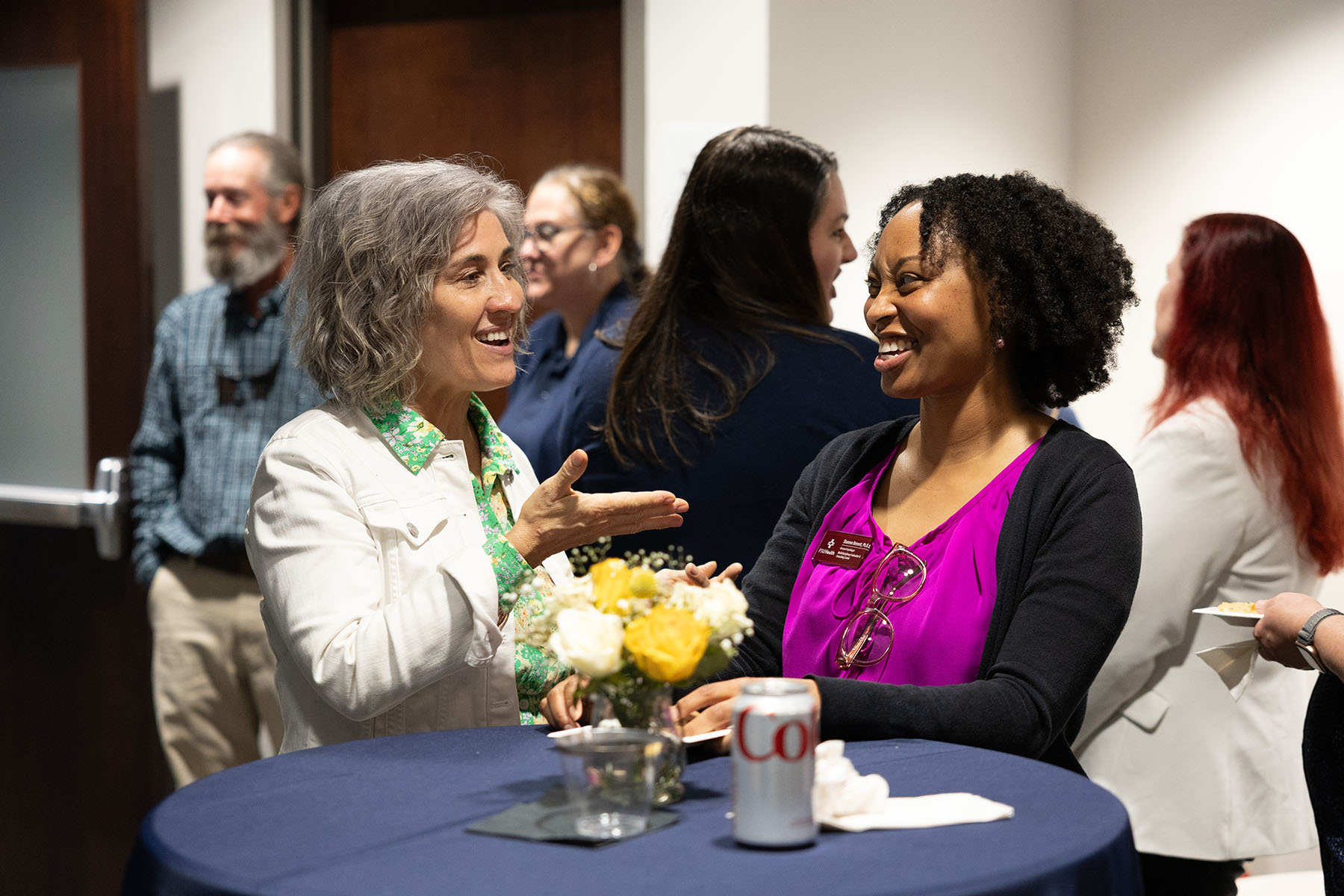
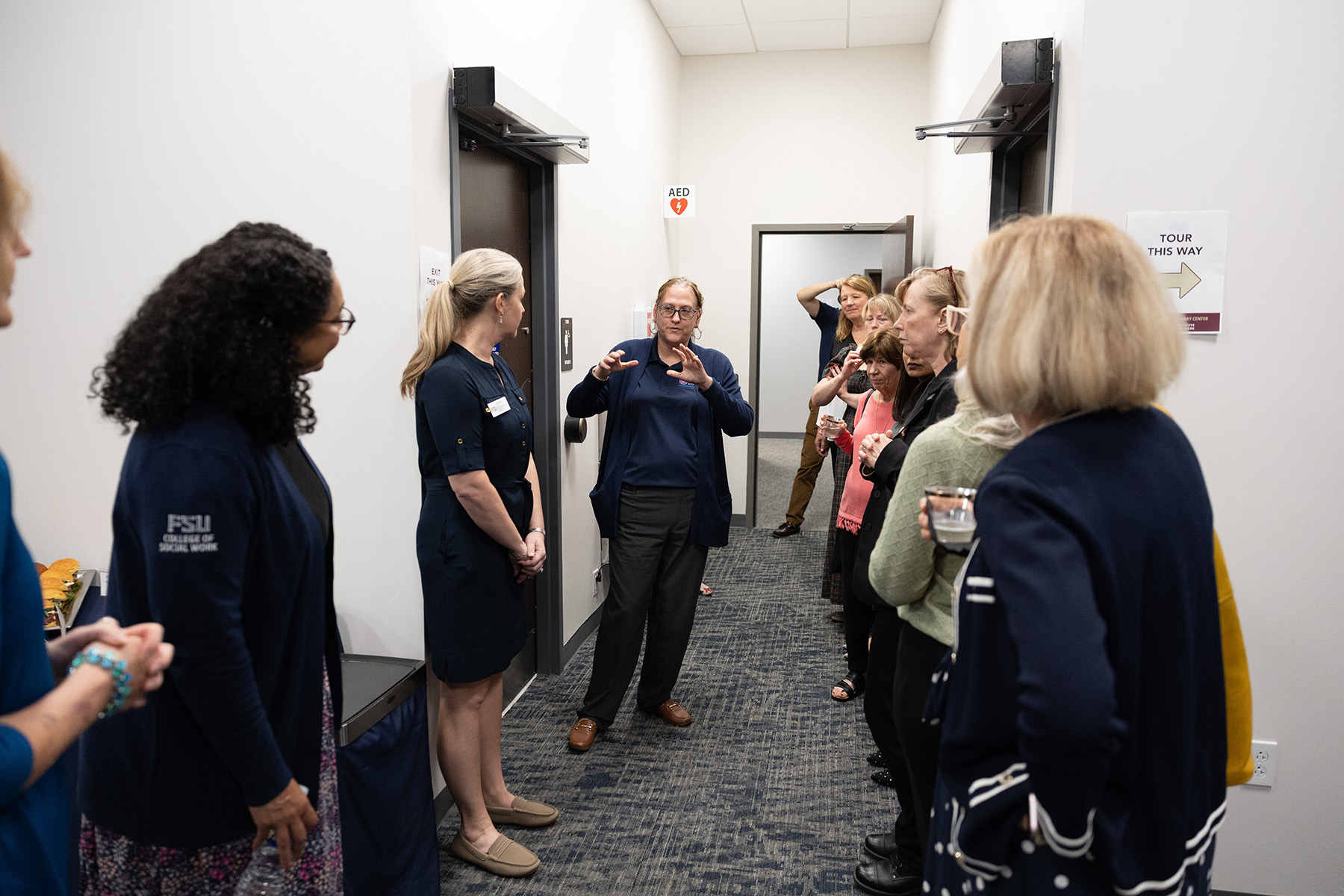
During the grand opening, visitors toured the expanded facility, beginning with the Multidisciplinary Evaluation and Consulting Center. Established in 1983 through the vision of founding director Louise R. Goldhagen, the MDC provides psychological evaluations, diagnostic testing, therapy and consultation for school-aged children facing complex medical, behavioral and educational challenges.
The MDC’s new layout will serve 22 school districts in the Florida Panhandle and includes specialized therapy rooms for Parent-Child Interaction Therapy, a parent workstation and a private family room for those traveling from rural districts.
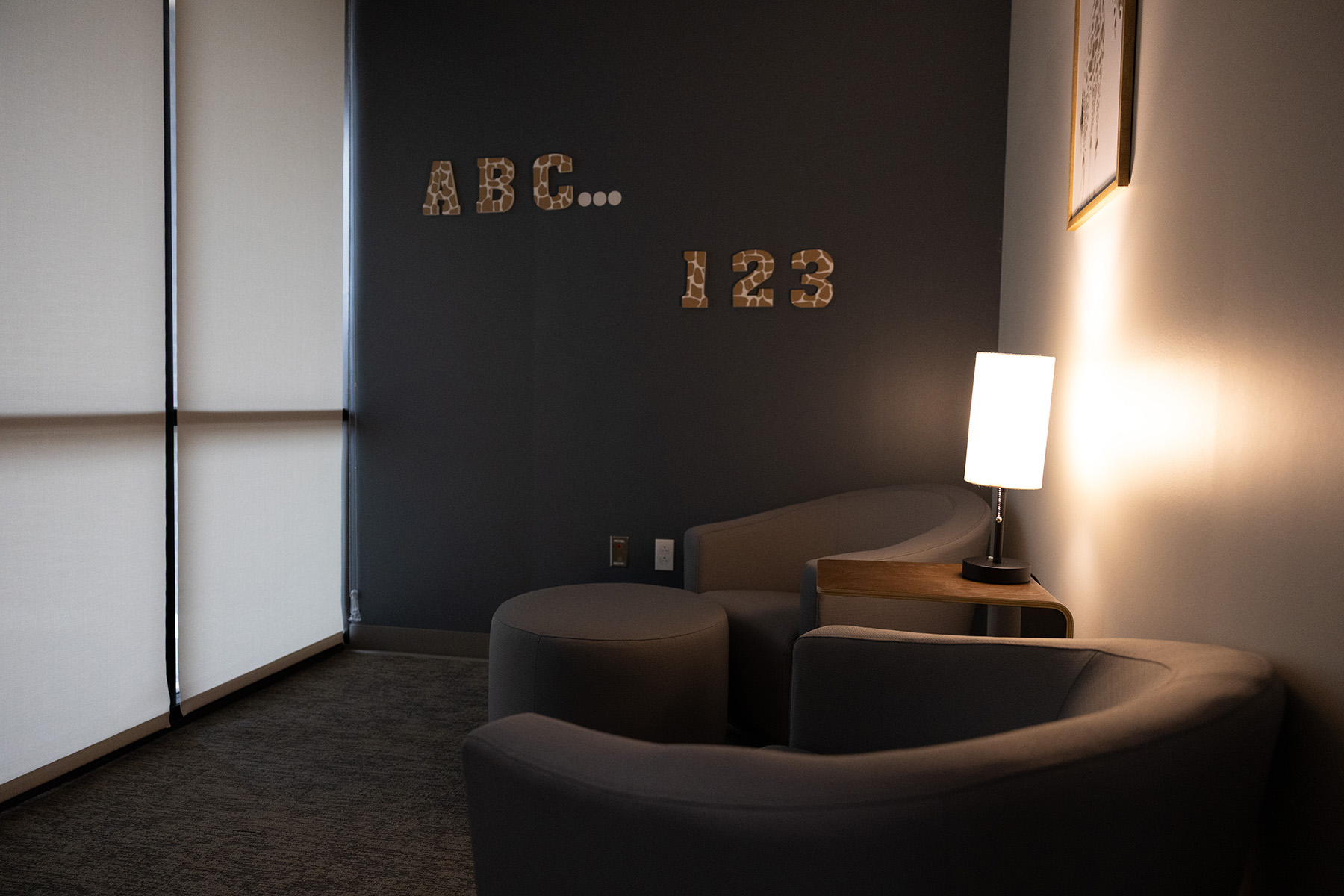
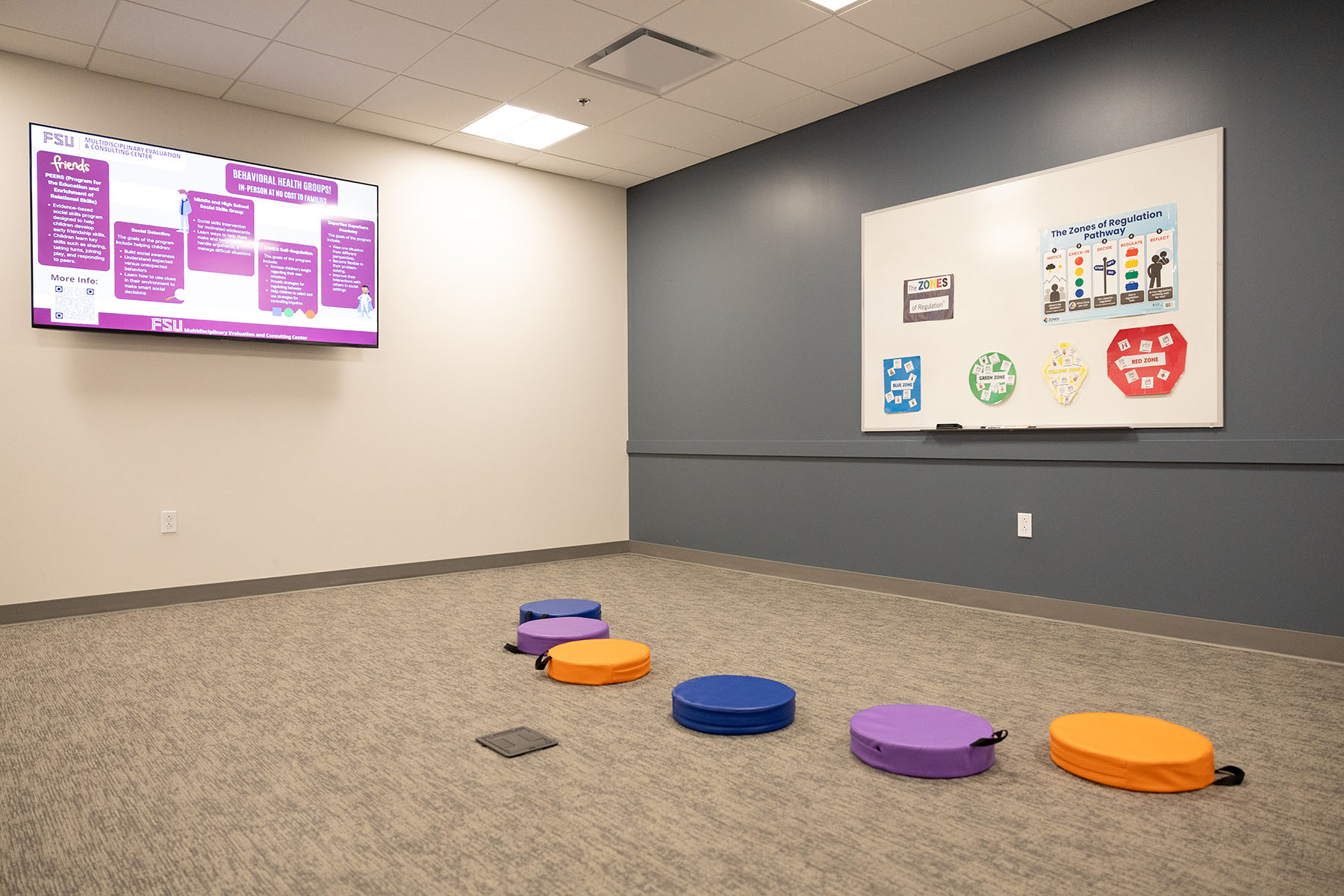
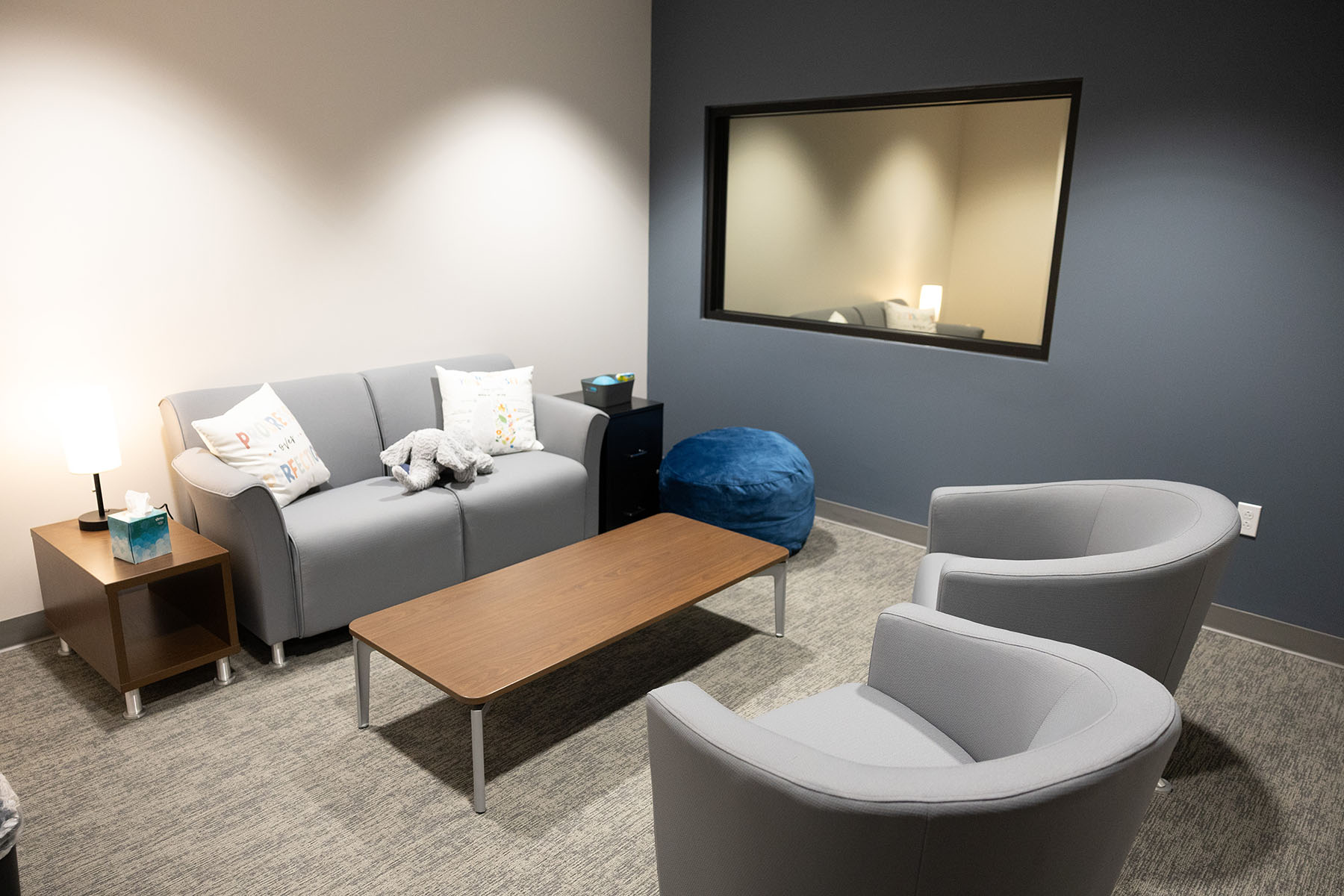
The space is equipped with state-of-the-art training and observation technology, including Bluetooth audio that allows faculty to live-coach students in real time, video monitoring and one-way mirrors that enable supervisors to provide immediate feedback. These features ensure students receive hands-on training while clients receive a high level of care.
“This building represents every person who believed in our mission, and every partner who cares deeply about the children and families we are privileged to serve,” said Shannon Bennett, MDC director. “I feel incredibly proud of how far we’ve come, deeply grateful to everyone who made this journey possible and genuinely excited about where we’re headed next in our forever home.”
Visitors also toured the Florida Institute for Child Welfare’s new experiential learning lab, a space designed to immerse students in the reality of field work. This fully immersive lab features an explorable home environment featuring a kitchen, living room and bedroom equipped with 360-degree cameras and advanced audio-visual (AV) equipment.
In the lab, students can rehearse professional scenarios and refine interpersonal skills, allowing facilitators and peers to watch interactions live from nearby debriefing rooms to provide real-time feedback.
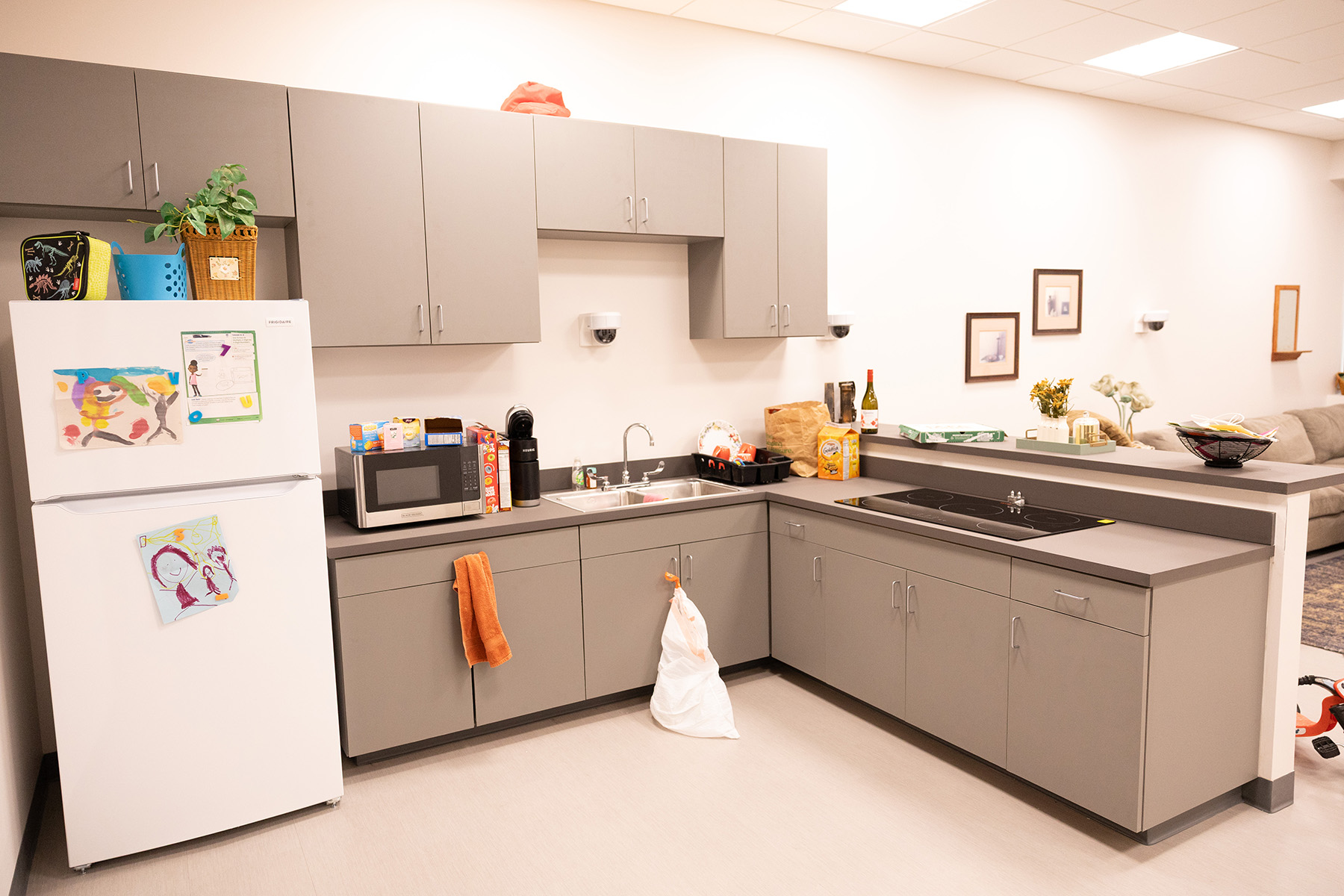
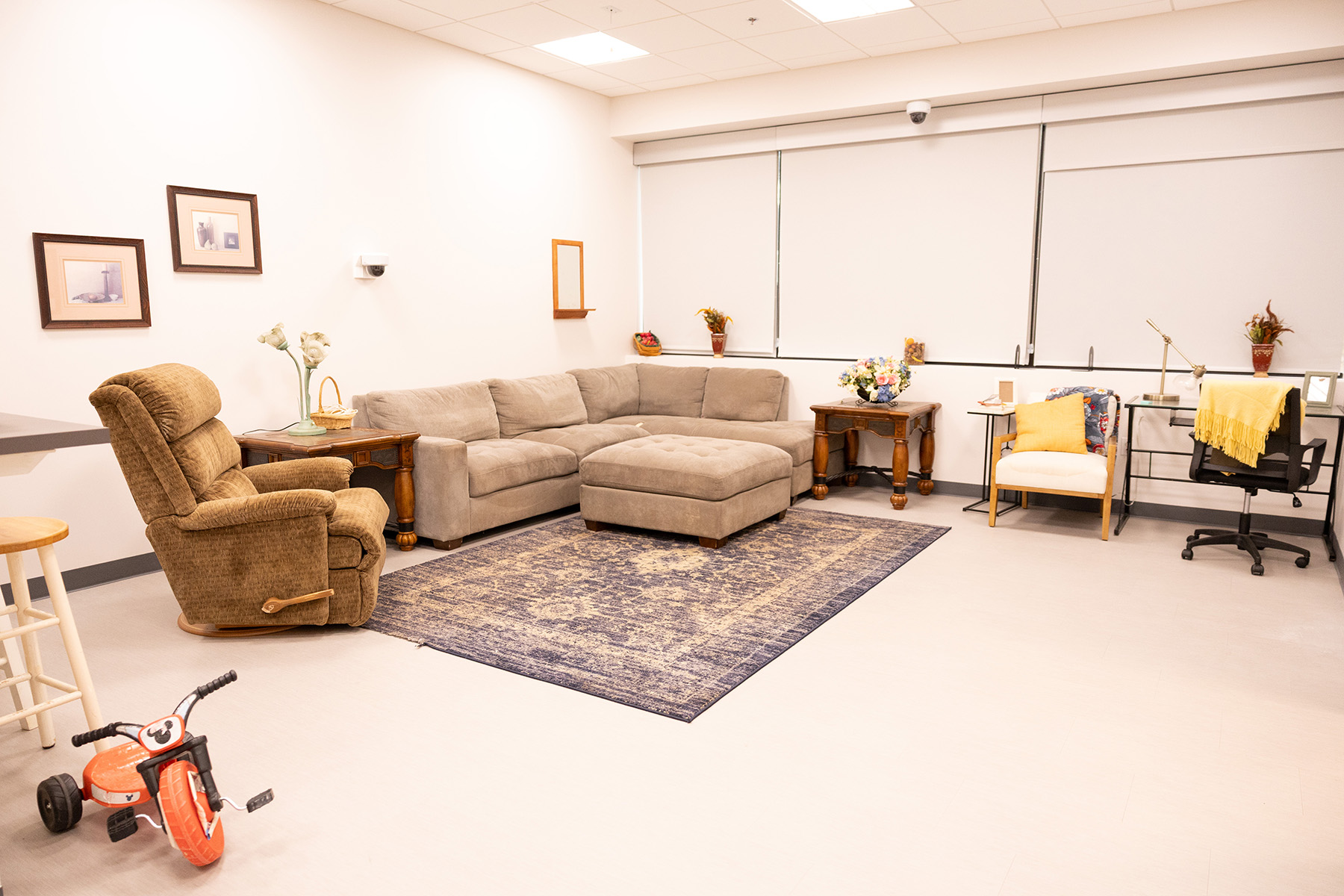
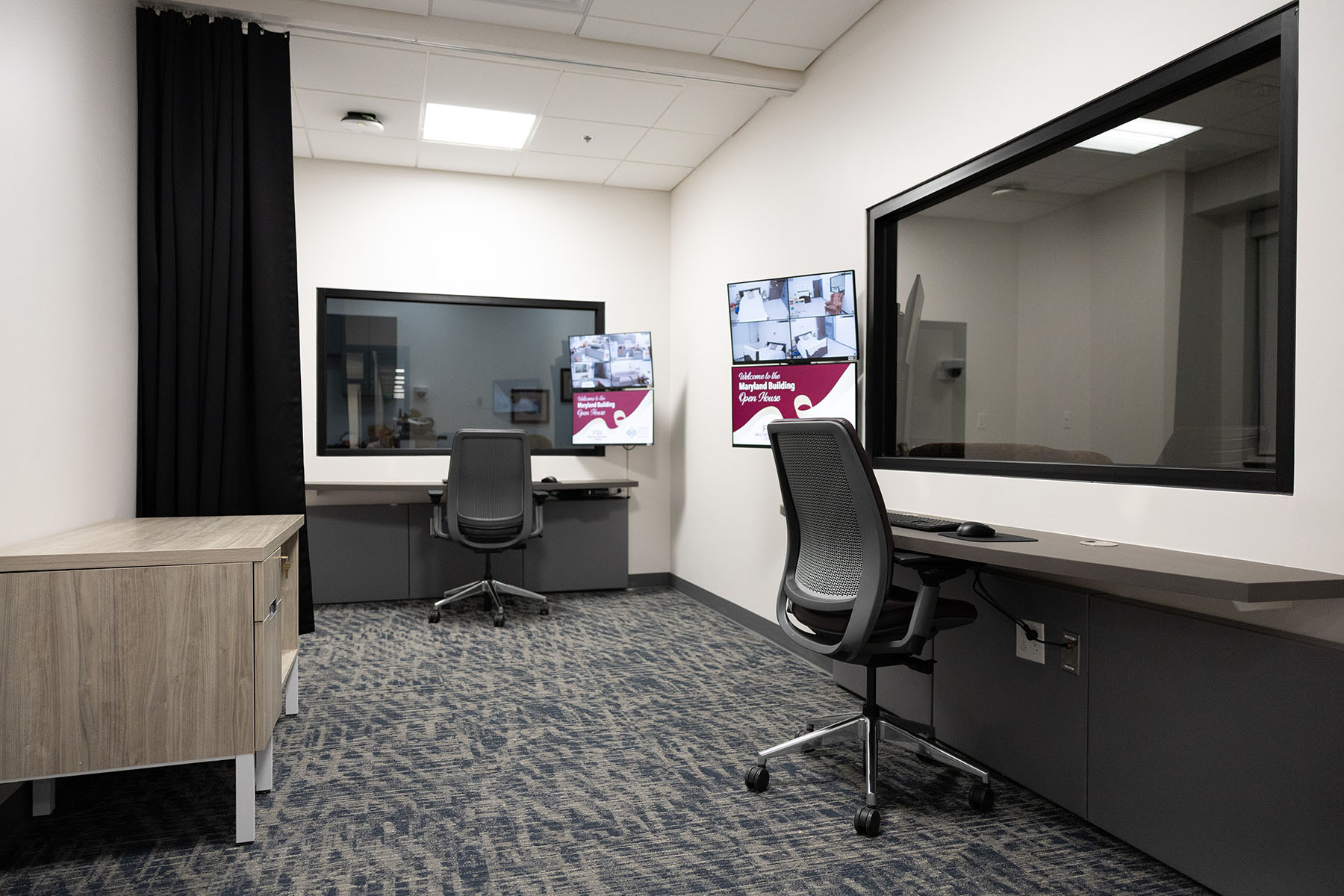
While simulation labs are a staple in medical and nursing schools, FSU is pioneering this approach for social work, marking the only lab of its kind in Florida.
“What makes this learning lab transformative isn’t the simulated spaces or the technology alone; it’s what the space will allow us to do,” said Lisa Magruder, FICW director. “Here, faculty, students, and professionals will actively engage in experiential learning, trainings and opportunities for collaboration — things that bridge the gap between theory and real-world practice.”
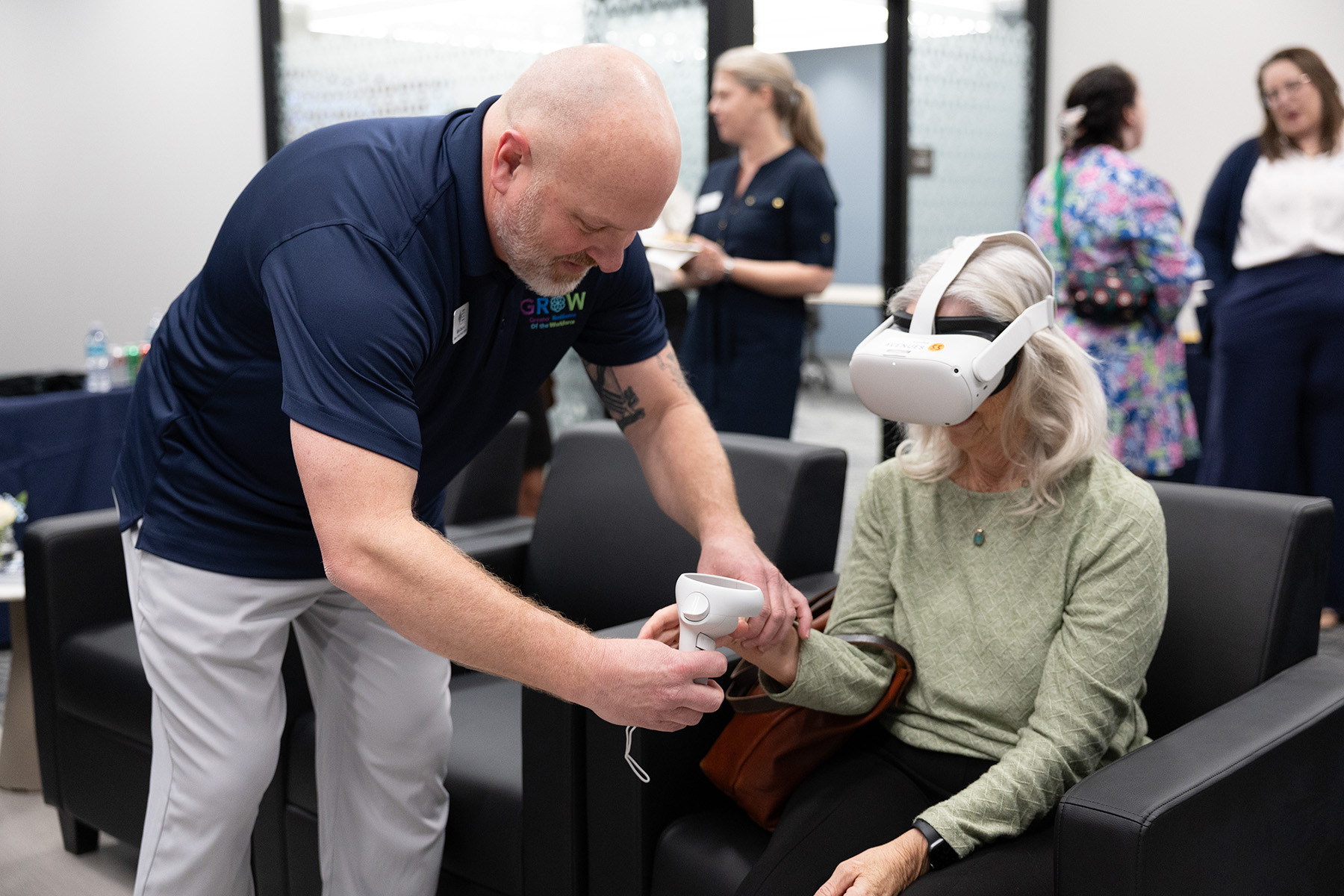
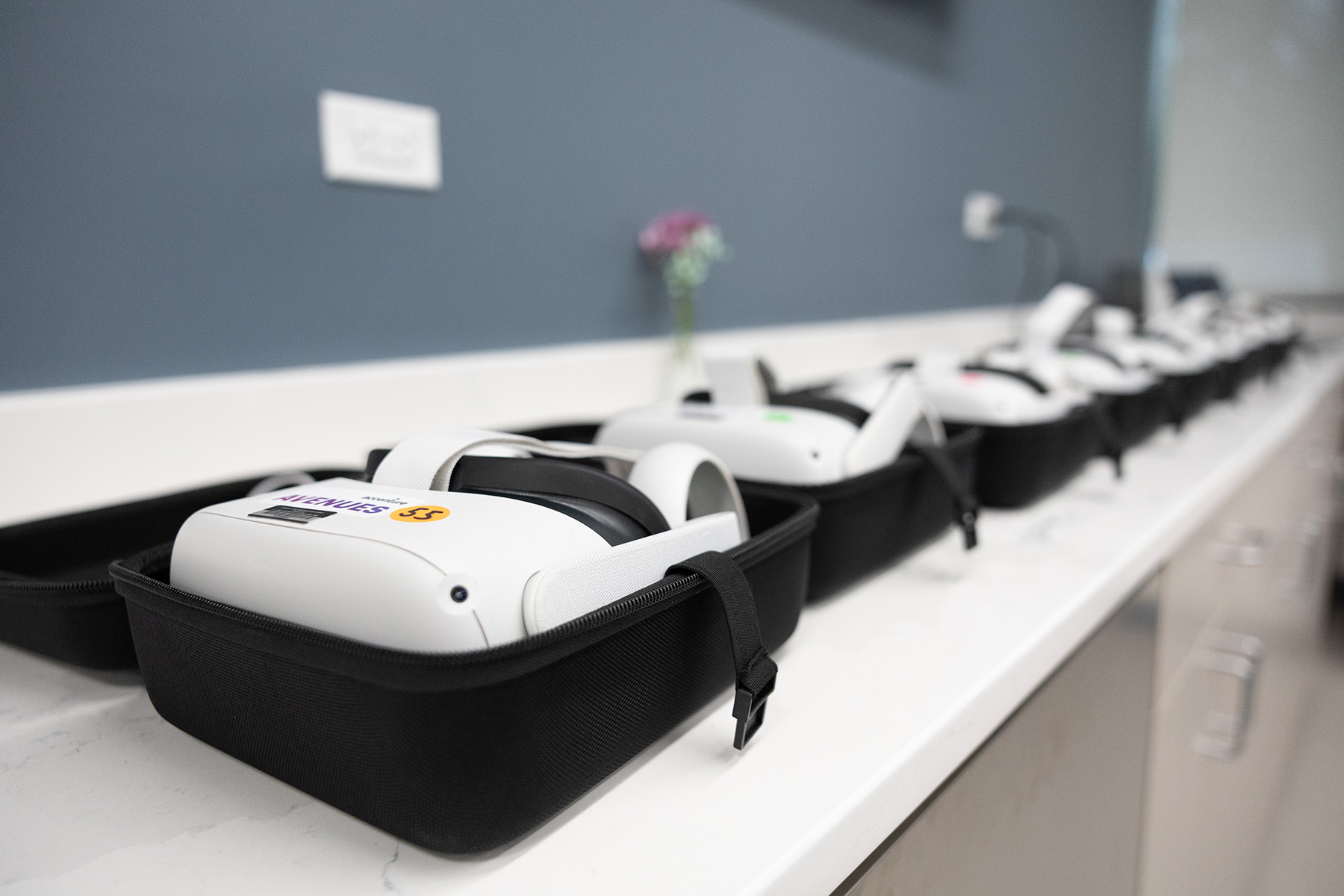
The FICW is also advancing child welfare training through an innovative virtual reality (VR) platform that extends learning beyond the physical lab. Using VR headsets and a computer‑assisted system developed in partnership with FSU’s Office of the Provost, students and professionals can enter “explorable virtual homes” designed to replicate real-world environments. These tools allow users to navigate complex environments and interact with avatars, ensuring that when a caseworker knocks on a real door, they do so with preparation.
“This is a defining moment for our institute, one that goes beyond building a new space,” Magruder said. “It represents a new era and how we prepare the child welfare workforce.”
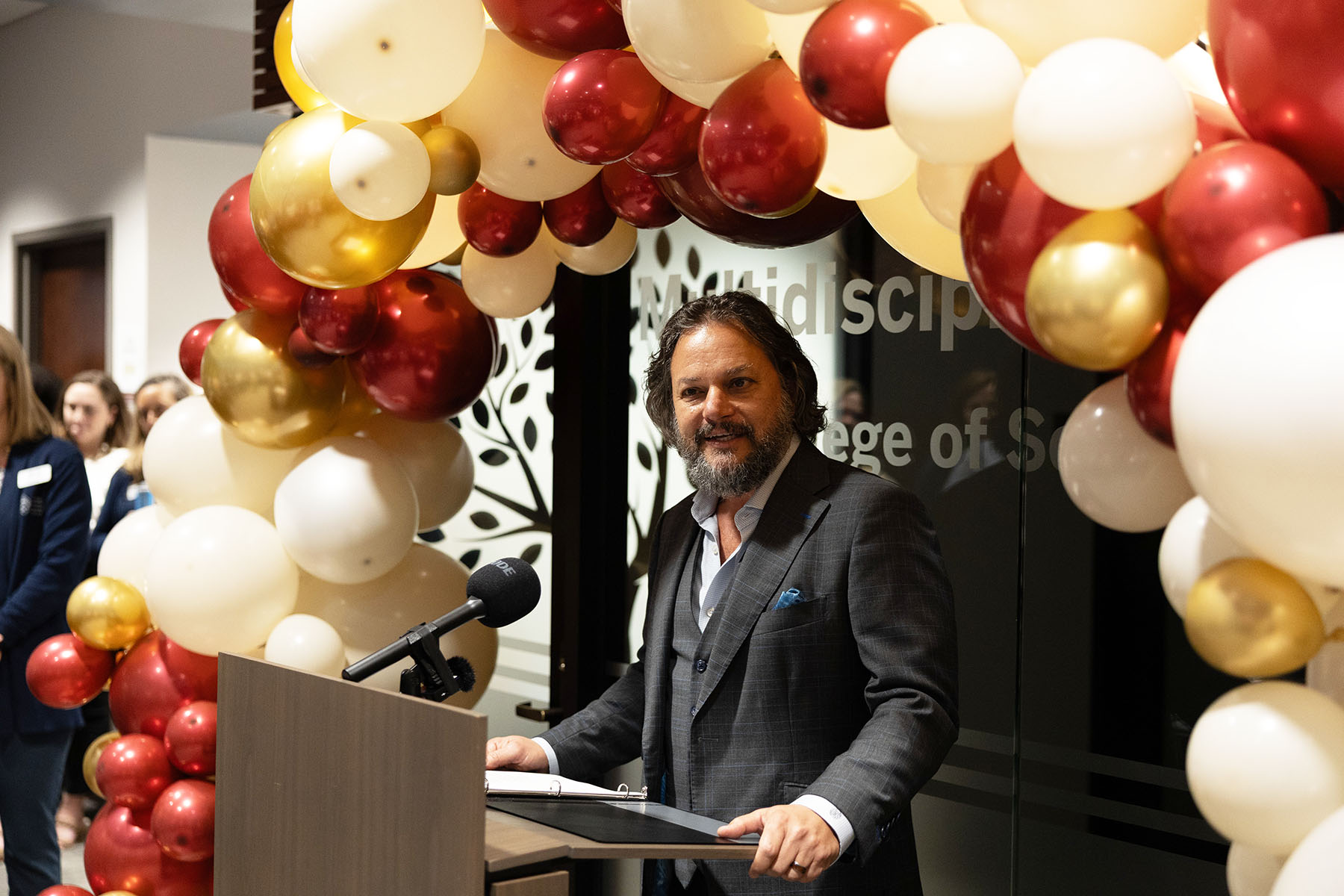
Through this shared space, FSU is not only preparing the next generation of professionals, but also redefining how higher education can meaningfully impact lives across the state of Florida.
“What unites both organizations is their shared commitment to translating knowledge into measurable change,” Springer said. “Whether through its workforce development and policy leadership, or through direct multidisciplinary service, these centers demonstrate how social work moves from inside to impact and they exemplify the true spirit of innovation at Florida State University.”
The Maryland Building is located at 2139 Maryland Circle in northwest Tallahassee, conveniently situated near I-10.
Visit the FSU College of Social Work, Multidisciplinary Evaluation and Consulting Center and Florida Institute for Child Welfare webpages to learn more.