



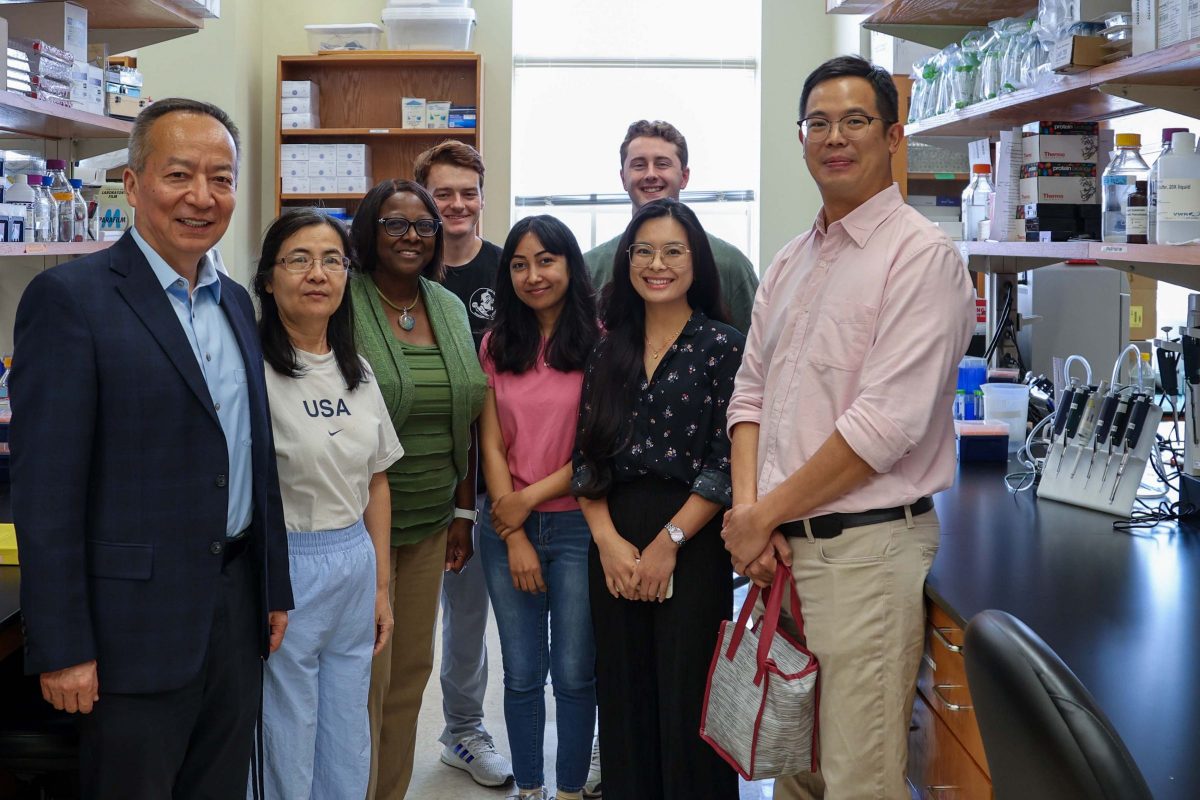
Florida State University researchers at the College of Medicine and the FAMU-FSU College of Engineering will study how physical changes in cells contribute to the progression of pancreatic ductal adenocarcinoma, the most common type of pancreatic cancer and the third-leading cause of cancer deaths in the United States.
The research, which is supported by a $2.8 million grant from the National Cancer Institute, will help scientists understand how the shape and organization of pancreatic cells change as the disease develops and whether these physical changes help tumors grow and spread to other parts of the body.
Pancreatic cancer progression
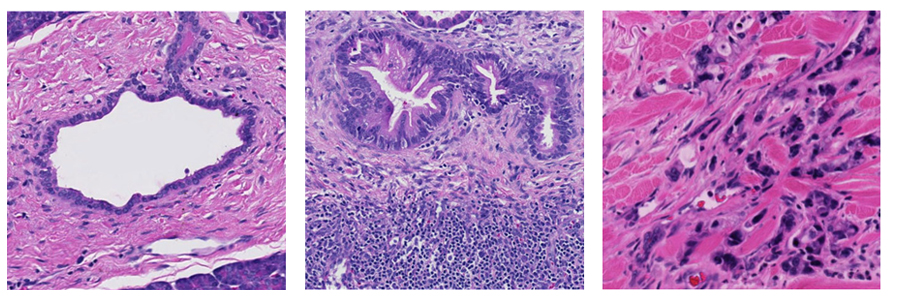
Changes in cell structure and organization are a hallmark of pancreatic cancer progression and are routinely used by pathologists to assess disease stage and progression. Using human-derived pancreatic organoids — miniature 3D models of pancreatic tissue grown in the lab — the researchers will recreate key structural features seen in real patient tumors, from normal pancreatic tissue to advanced cancer.
Normal organoids have a central hollow space, called a lumen, surrounded by a thin layer of cells, similar to the structure of a normal pancreatic duct in the body. In pancreatic cells with primary tumors or metastatic tumors, the lumen is different.
“Primary tumor organoids still have a lumen, but the surrounding cell layer becomes much thicker,” said grant co-investigator Jerome Irianto, assistant professor at the College of Medicine. “In metastatic organoids, the central lumen collapses and is replaced by multiple small lumen-like structures, resembling the disorganized architecture seen in advanced pancreatic tumors. This led us to ask two important questions: What drives these structural changes, and what are the consequences for cancer progression?”
How it works: Cellular physics
The lumen depends on the movement of ions and water to maintain its shape and fluid balance. As ions are transported into the lumen, water follows. The surrounding layer of epithelial cells contains this fluid, creating physical forces that help shape the organoid.
When fewer ion and water channels are present, this delicate balance is disrupted.
“A major factor driving the collapse of the lumen is the loss of ion transport that normally helps build pressure inside it, almost like filling a balloon,” said mechanobiologist Tristan Driscoll, assistant professor at the FAMU-FSU College of Engineering and a co-investigator on the grant. “When that pressure changes, it also changes the mechanical forces experienced by the surrounding cells and how those cells sense and respond to those forces.”
These physical changes may have important consequences for tumor progression. Previous research by the Irianto Lab has identified ion and water channels as potential drivers of changes in lumen structure. In pancreatic tumor organoids, genes responsible for these channels are expressed at lower levels than in normal pancreatic cells. Their expression decreases even further as tumors progress and spread, suggesting a connection between these channels, changes in lumen structure and cancer progression.
The research team will measure forces between neighboring epithelial cells and the forces transmitted to the nuclear envelope surrounding the cell’s DNA to examine how changes in lumen pressure may ultimately affect cell behavior.
Yes-associated protein
The Irianto Lab will investigate whether these changes affect a force-sensitive protein called yes-associated protein, or YAP.
Using gene-editing techniques, Irianto and his team will test how changes in ion and water transport, lumen structure and YAP activity work together to influence pancreatic cancer progression.
Under normal cellular conditions, YAP remains outside of the nucleus in an inactive state. When physical forces change or the cell is compressed, YAP moves into the nucleus in its active state to turn on genes that control cell growth, survival and other behaviors important in cancer.
Why it matters: Improving pancreatic cancer survival rates
Pancreatic ductal adenocarcinoma is a particularly deadly and prevalent form of pancreatic cancer. The disease accounts for more than 80% of pancreatic cancer cases, and the five-year survival rate is around 13%.
Most patients have tumors that cannot be removed with surgery or that have grown larger or spread into nearby tissues. Traditional treatments such as chemotherapy, surgery and radiation have not been shown to significantly improve survival.
“Our goal is to reveal new vulnerabilities in pancreatic cancer that could shape future treatment strategies,” Irianto said. “Despite advancements in care, this continues to be an especially deadly disease that kills tens of thousands of people every year. The better we understand how this works within cells, the better we will be at stopping it.”
Multidisciplinary research to drive impact
Irianto and Driscoll will work with mathematical modeler Katarzyna Rejniak from the Moffitt Cancer Center, pancreatic cancer biologist Chang-il Hwang from UC Davis, and pathologist Jose I. Diaz from the FSU College of Medicine. By combining engineering, cell biology, cancer biology, mathematical modeling and pathology, the team hopes to uncover aspects of pancreatic cancer that cannot be fully understood by studying genes or biochemical pathways alone.