



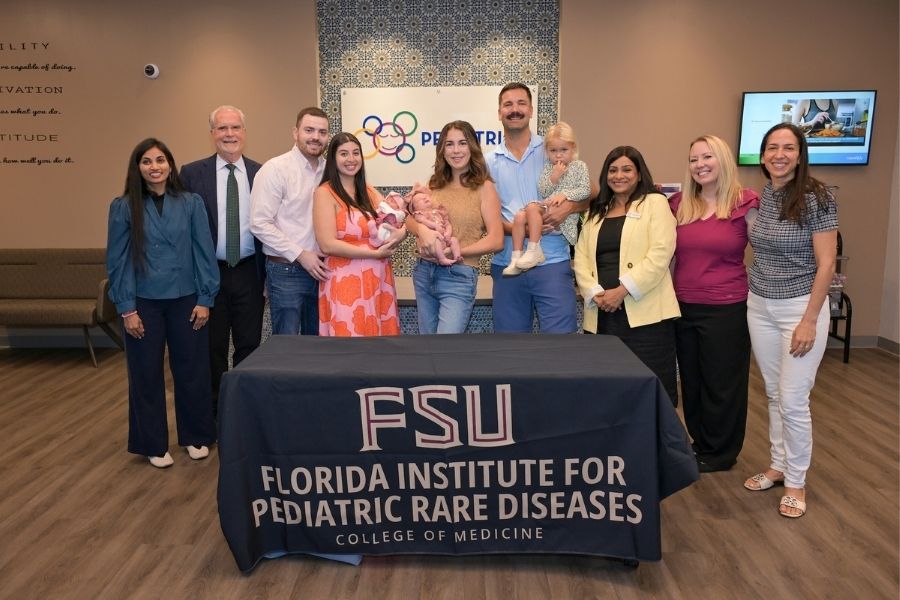
The Florida Institute for Pediatric Rare Diseases (IPRD) at Florida State University has enrolled its first families in the Sunshine Genetics pilot program, which utilizes whole-genome sequencing to screen newborns for rare genetic conditions.
The screening checks for nearly 900 genetic conditions. Early identification of these conditions will empower families with knowledge about their newborn, reduce diagnostic delays and accelerate the path to treatment or specialized management.
Florida Rep. Adam Anderson (R-Palm Harbor), who championed the legislation which established both IPRD and the Sunshine Genetics Act, called it a milestone he will never forget.
“Two years ago, this was an idea we were fighting to make a reality,” Anderson said. “Today, Florida families have the opportunity to enroll their newborns in a program we once could only imagine. This remarkable progress is a testament to the doctors, researchers and industry leaders, as well as the hospitals and universities across Florida and around the country, who believed in this vision and worked to make it possible.”
Anderson will deliver a keynote address at the International Consortium of Newborn Sequencing (ICoNS), Oct. 7-8 at Harvard Medical School before an international collection of experts in the field. He will be joined there by IPRD and Sunshine Genetics leadership, in addition to leadership from many of its program partners.
Sunshine Genetics and its pilot program is administered by IPRD at FSU’s College of Medicine, with guidance from the multi-institutional Sunshine Genetics Steering Committee and support from industry leaders Baylor Genetics, GeneDx, Nest Genomics and Amazon Web Services (AWS).
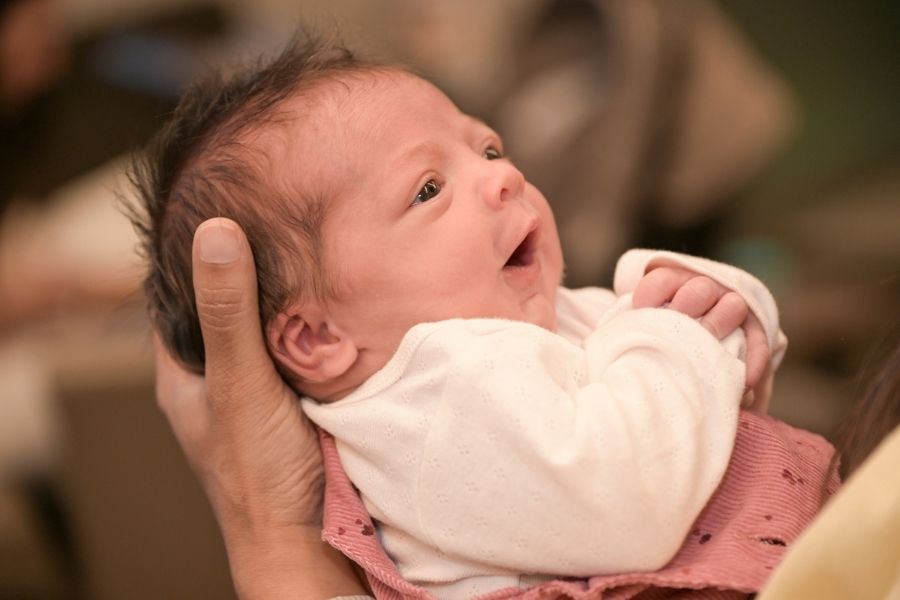

Parents or legal guardians can voluntarily enroll their newborns into the program through digital education and consent facilitated by Nest Genomics. IPRD has partnered with Pediatrica Health Group, which provides pediatric primary care to families at 19 locations across Florida, including six in the Jacksonville area. One of those has been designated as the launch site, where parents can learn about the pilot program and how it complements Florida’s standard newborn screening for 60 conditions before deciding whether to enroll.
As part of the standard newborn screening, a small blood sample is collected from newborns via a heel prick, placed on a specialized filter-paper card, and submitted to the Florida Department of Health’s Public Health Laboratory in Jacksonville for screening. For families consenting and completing the digital enrollment in the program, a sample from their child’s newborn screening housed at the Jacksonville laboratory will be sent to Baylor Genetics. Baylor Genetics was selected as a strategic partner contributing to the program and its development and will serve as the lead whole genome sequencing provider at launch.
“Enrolling our first families enables us to begin the carefully coordinated approach to implementing a statewide genomic newborn screening program responsibly,” explained IPRD Director Pradeep Bhide. “The steering committee and participating organizations have worked together to establish the governance, clinical and laboratory workflows, quality safeguards and lines of accountability needed to support every stage of the program, from enrollment and consent to sequencing, interpretation, results disclosure and recommendations for follow-up care. Nest Genomics’ digital platform provides an end-to-end solution that operationalizes these processes across the program lifecycle, a distinguishing feature.”
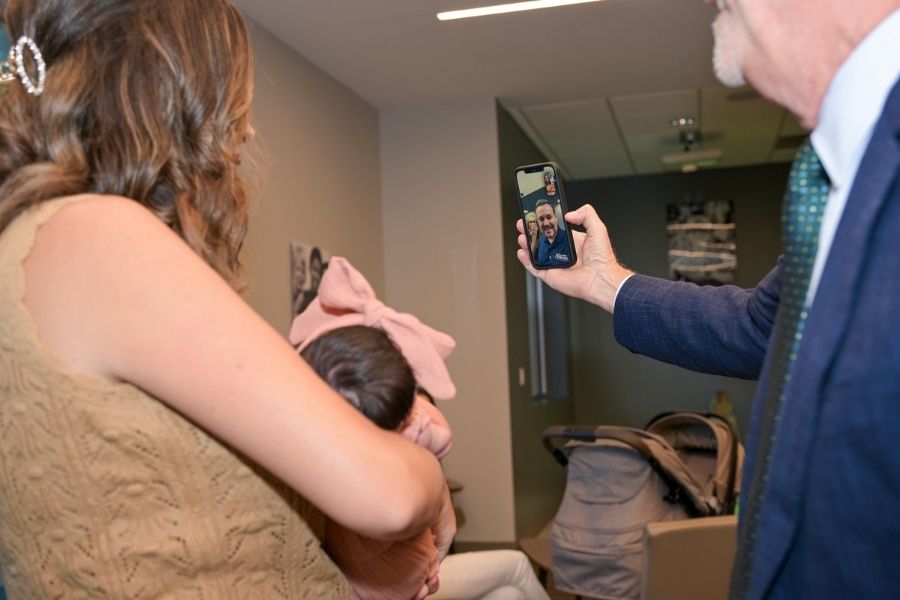
Baylor Genetics is expected to complete whole-genome sequencing, analysis and clinical interpretation within four to six weeks. Results will be reviewed by the Sunshine Genetics clinical team before they are released to families. Families that receive a screen-negative result will be notified electronically. For a screen-positive result, a Sunshine Genetics clinician will contact the family by telephone to explain the findings, discuss any recommended confirmatory testing and help coordinate appropriate follow-up with medical specialists, dietitians or other healthcare professionals.
“The Sunshine Genetics Pilot Program represents an important step forward in the evolution of newborn screening,” said Baylor Genetics Chairman and CEO Kengo Takishima. “Earlier access to genomic insights may help identify rare genetic conditions sooner, provide greater clarity for parents and providers, and better inform medical management and care. We are proud to collaborate with leaders across Florida and industry partners to support this innovative initiative, and to contribute our expertise to a program that is advancing the future of genomic newborn screening and pediatric health.”
GeneDx, one of IPRD’s first industry partners, has made a wide range of contributions, including strategic and operational guidance in the lead-up to the Sunshine Genetics launch. The program’s gene list is derived from the BRIDGES-NBS program which was developed in partnership with GeneDx.
“We believe genomics should be a starting point for health, not a last resort after years of searching for answers,” said Linda Genen, M.D., MPH, chief medical officer at GeneDx. “We’re proud to bring our deep clinical and genomic expertise to help guide programs like this, ensuring they are designed to deliver meaningful, actionable information for clinicians and families. Florida is demonstrating what’s possible when state leaders, academic institutions and genomic experts work together to thoughtfully integrate genomics into care and give more families a clearer path forward from the very beginning.”
Committed to the privacy of participant data, Sunshine Genetics will create a data resource to support research, discovery and innovation in the diagnosis and treatment of pediatric rare diseases.
AWS is building a secure, scalable platform for Sunshine Genetics to collect and store genomic and clinical data that will accelerate the diagnosis and treatment of pediatric rare diseases. Transforming this data into actionable insights, the platform will fuel discovery and drive future innovation, providing a foundation for a new era of precision medicine.
“The Sunshine Genetics pilot is unique in the United States as the only project initiated and funded by the state legislature, with the express goal of generating evidence to determine whether this should be expanded to benefit all 225,000 babies born each year in Florida,” said David Ledbetter, IPRD’s senior associate director of precision medicine who chairs the Sunshine Genetics Steering Committee. “We are excited to be working with our outstanding genetics and newborn screening expert colleagues at the University of Miami, University of South Florida, University of Florida, children’s hospitals in the state and our world-class industry partners.”
Visit the Florida Institute for Pediatric Rare Diseases website to learn more about how this initiative is developing and integrating innovative technologies to improve outcomes for children and families affected by rare diseases. Visit the Sunshine Genetics website to learn more about this life-changing program.
###
Additional Comments from Industry Partners:
Moran Snir, chief executive officer and co-founder, Nest Genomics
“A program like Sunshine Genetics depends on much more than sequencing a newborn’s genome. It requires making every step easy for families and coordinating the many teams involved in their care. Our role is to help turn the program’s clinical vision into a reliable experience that gives every family a path to genomics-informed care.”
Ankit Malhotra, Ph.D., genomics lead, Amazon Web Services
“Sequencing at birth gives every child the best possible shot at early diagnosis, especially for rare diseases where early intervention changes outcomes and improves citizen lives. Florida’s Sunshine Genetics program is one of the most ambitious efforts of its kind in the U.S., setting a blueprint for delivering precision healthcare at population scale. This is exactly the kind of transformational initiative AWS was built to support, and it aligns with our desire to improve health outcomes worldwide.”
Prasanthi Reddy, M.D., chief medical officer, Pediatrica Health Group
“As a pediatrician and a mom, I know how deeply impacted parents and families are when a child’s health suffers. All children deserve the chance to thrive, and we are determined to do what we can to help every family breathe a little easier. Expanding access to quality pediatric primary care and putting research and innovation to work for kids is vital to creating better outcomes and brighter futures. At Pediatrica, we call this Next Generation Care ℠. We are proud to be at the forefront of this initiative, alongside a brilliant collaborative, building the infrastructure for improved pediatric care and wellness, and potentially reducing the burden on our healthcare system in the years that follow.”