



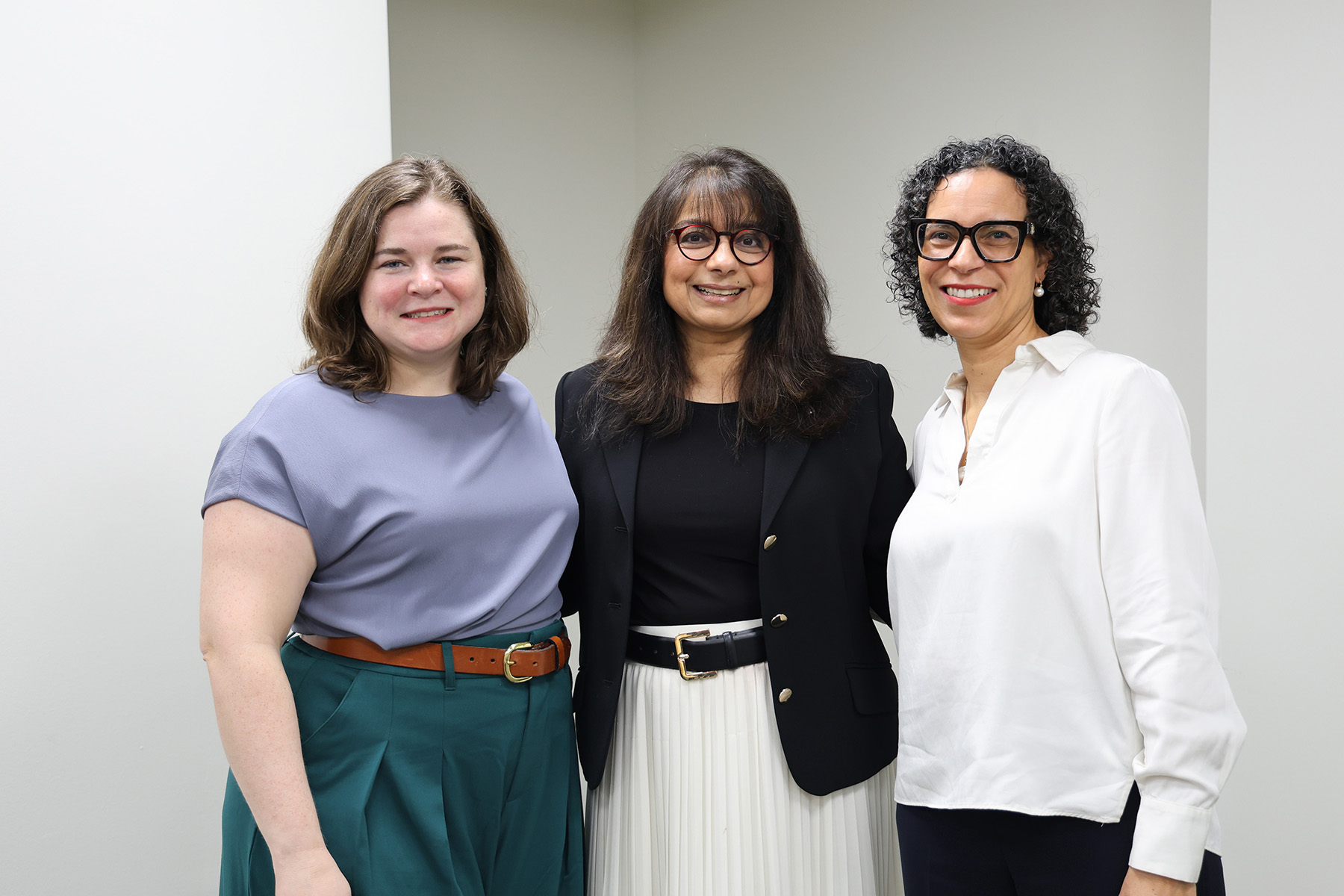
While most people view walking as a simple means to get from point A to point B, a recent interdisciplinary lecture at Florida State University suggests that traveling on foot is an essential act that defines our relationship with the world.
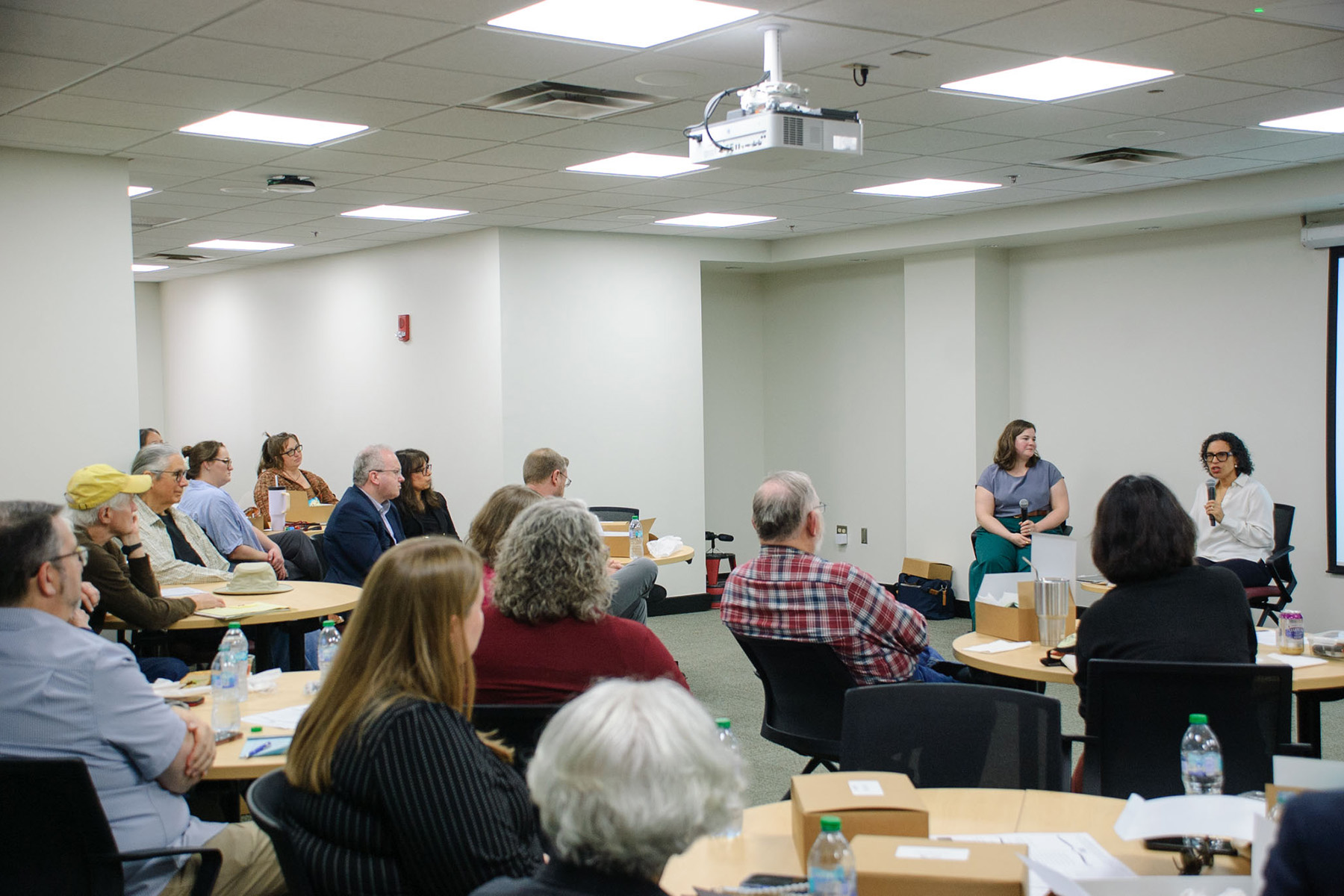
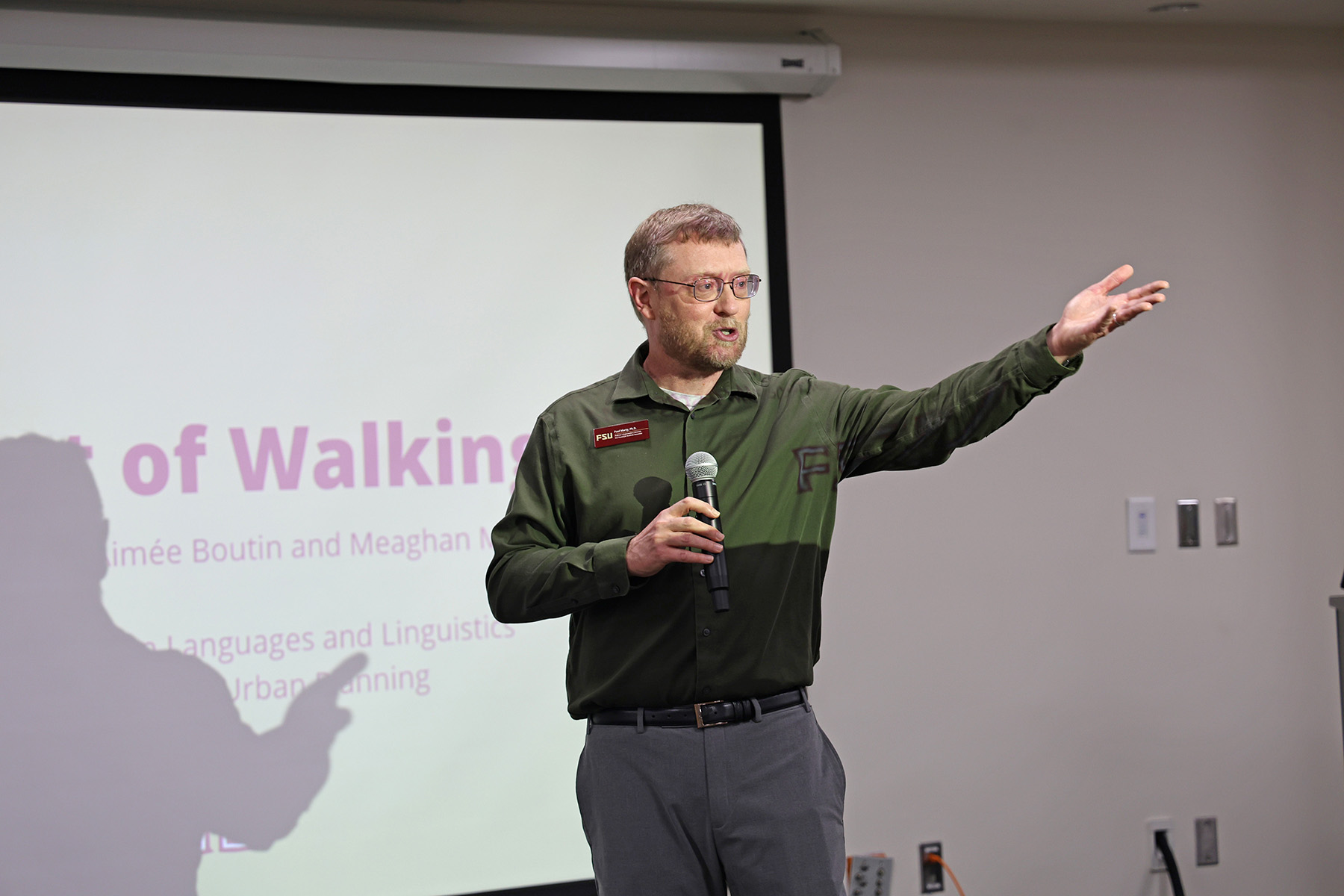
Co-presented by the Milton S. Carothers Faculty Lecture Series and the Festival of the Creative Arts, “The Art of Walking” brought together scholars from across the university to discuss the practice of “flânerie,” or the art of urban strolling.
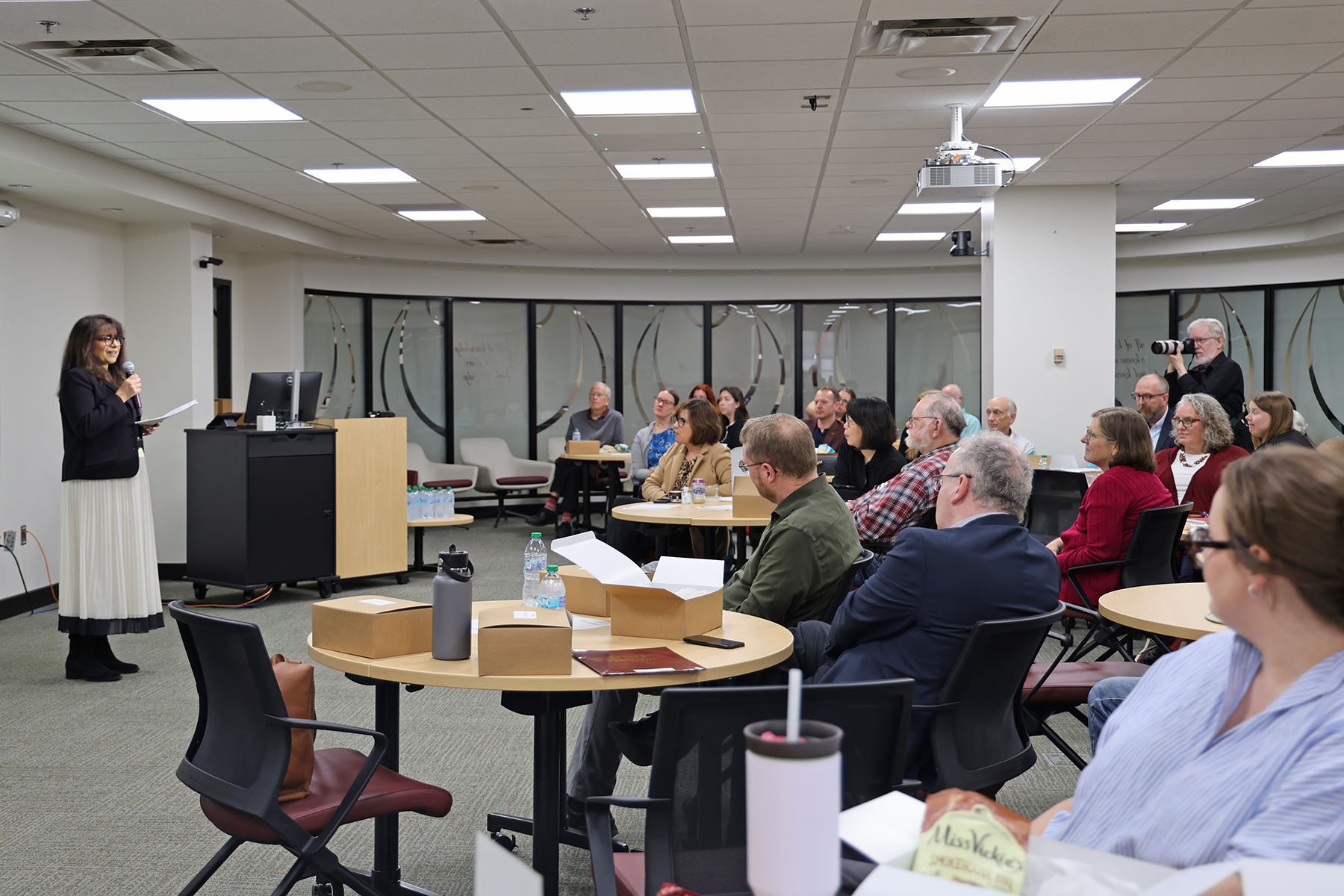
Held in the Bradley Reading Room of Robert Manning Strozier Library, the event offered a deep dive into how the simple act of walking shapes social identity and urban policy. FSU’s First Lady Dr. Jai Vartikar kicked off the afternoon’s program, welcoming attendees and highlighting the importance of the arts and humanities in sparking these interdisciplinary conversations.
“For 45 years, the Carothers Lecture Series has been a space for important conversations that bridge academic disciplines, bring people together and encourage us to think more broadly and to imagine more boldly. That spirit of collaboration is very much alive at FSU today.”
— Dr. Jai Vartikar, First Lady of Florida State University
“For 45 years, the Carothers Lecture Series has been a space for important conversations that bridge academic disciplines, bring people together and encourage us to think more broadly and to imagine more boldly,” Vartikar said. “That spirit of collaboration is very much alive at FSU today.”
The conversation featured Aimée Boutin, a professor of French in the College of Arts and Sciences and Meaghan McSorley, an assistant professor of Urban and Regional Planning in the College of Social Sciences and Public Policy.
Boutin, an expert in 19th-century French studies, opened the lecture by exploring the history of the flâneur. She described the kaleidoscopic encounters of figures in French literature who wandered through Paris, treating the sights and sounds of the city as a “sensory feast.”
“The flâneur does not merely navigate space; they read the city like a living text, capturing the ephemeral beauty and social friction that define the urban experience,” Boutin said.
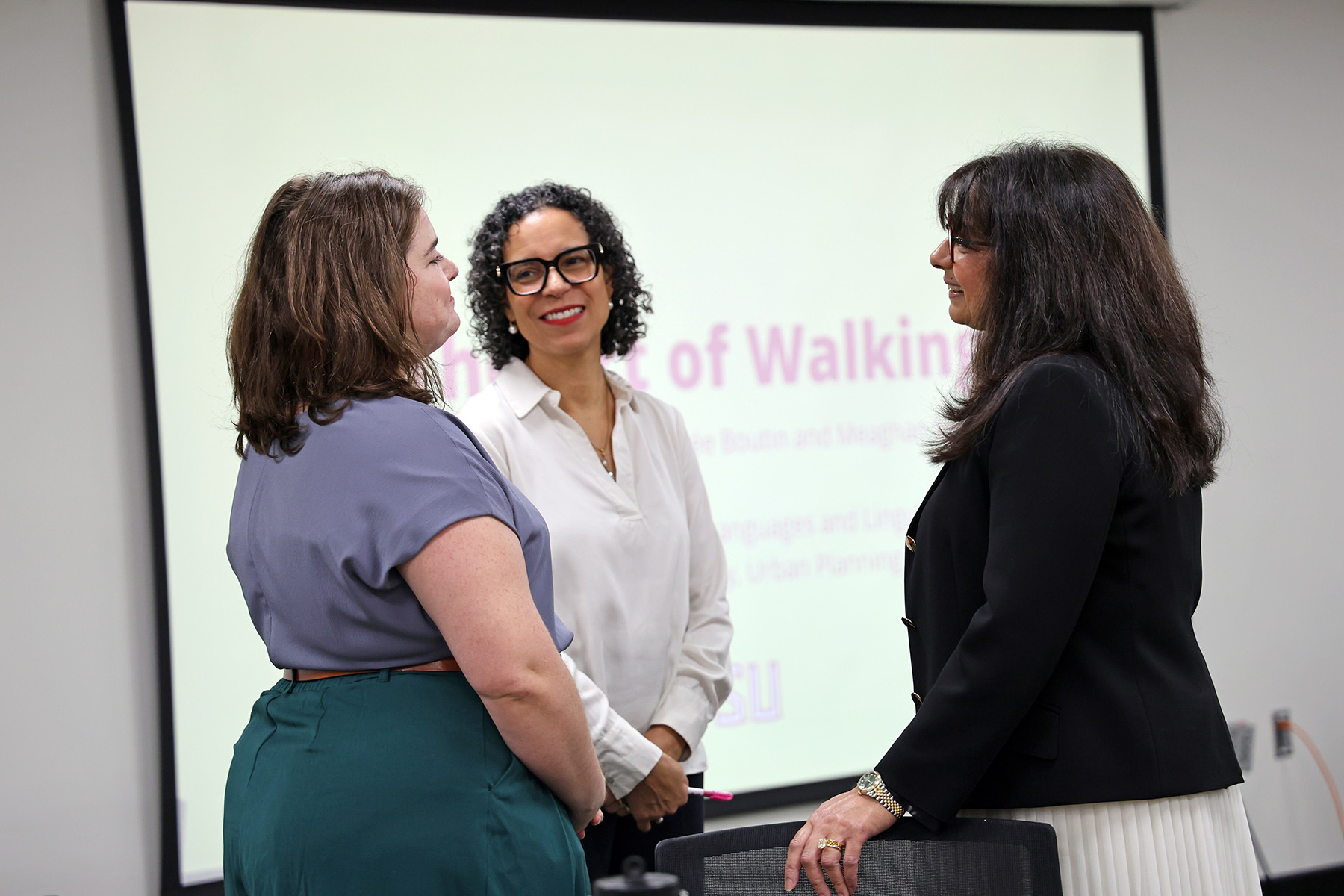
Boutin also highlighted the experience of “walking through time” as something every walker can entertain, especially on a long-standing campus.
“As we traverse the same paths over decades, our walk becomes a layered experience of both presence and memory,” Boutin said. “You might pass a spot and recall the splash of a swimming pool that no longer exists, realizing that to walk across this campus is to walk through time as you do through space.”
McSorley provided a lens on how modern city design can actively facilitate these connections. Exploring walkability, she showed how intentional urban form, such as the addition of street trees, shade and benches can transform a simple path into a welcoming positive environment.
“We have to build the world we want to walk in,” McSorley said. “When we invest in the pedestrian-oriented amenities like greenery or furniture we aren’t just decorating the street; we are shaping an urban form that prioritizes human comfort and encourages people to slow down and engage with their surroundings.”
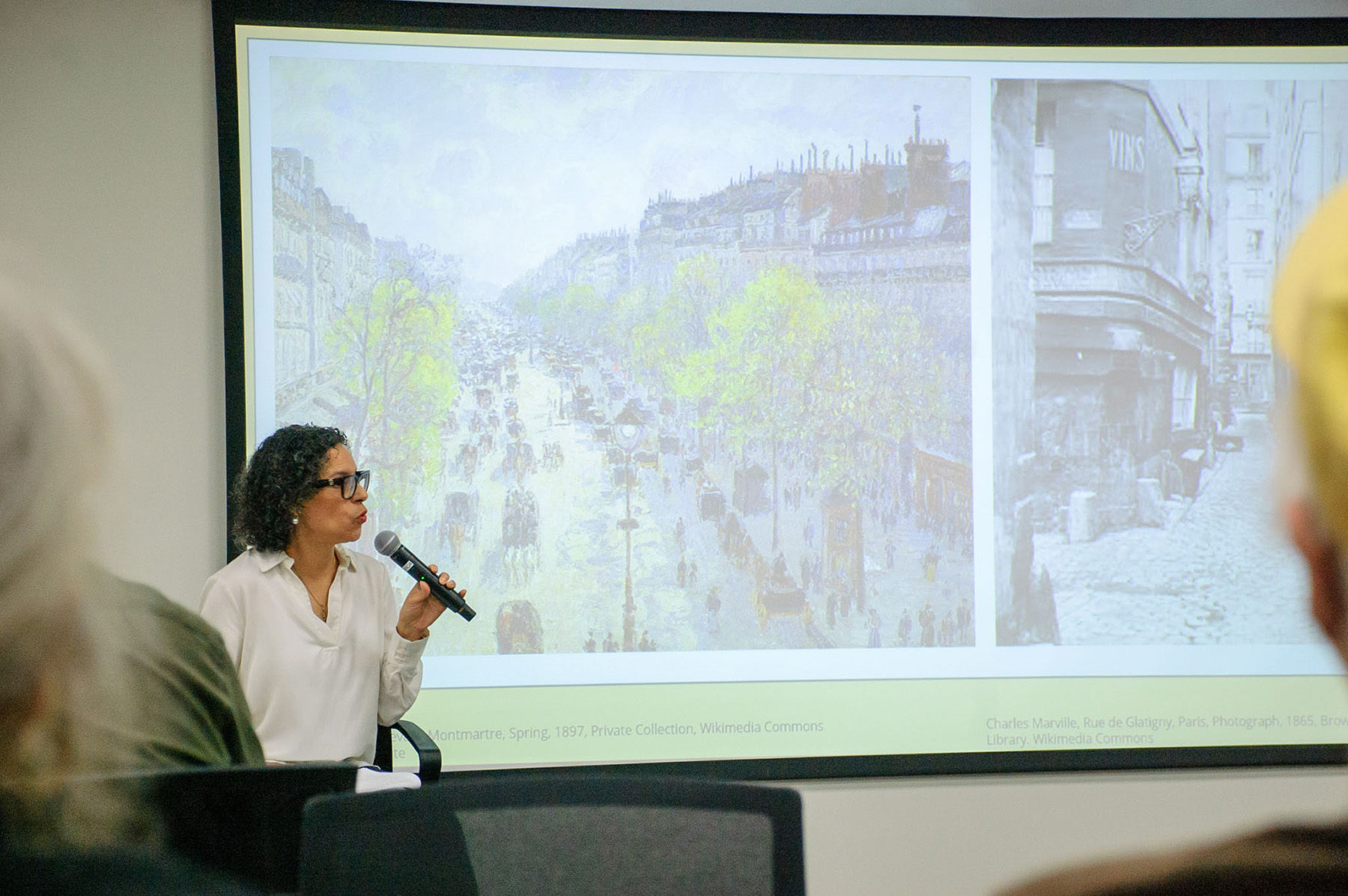
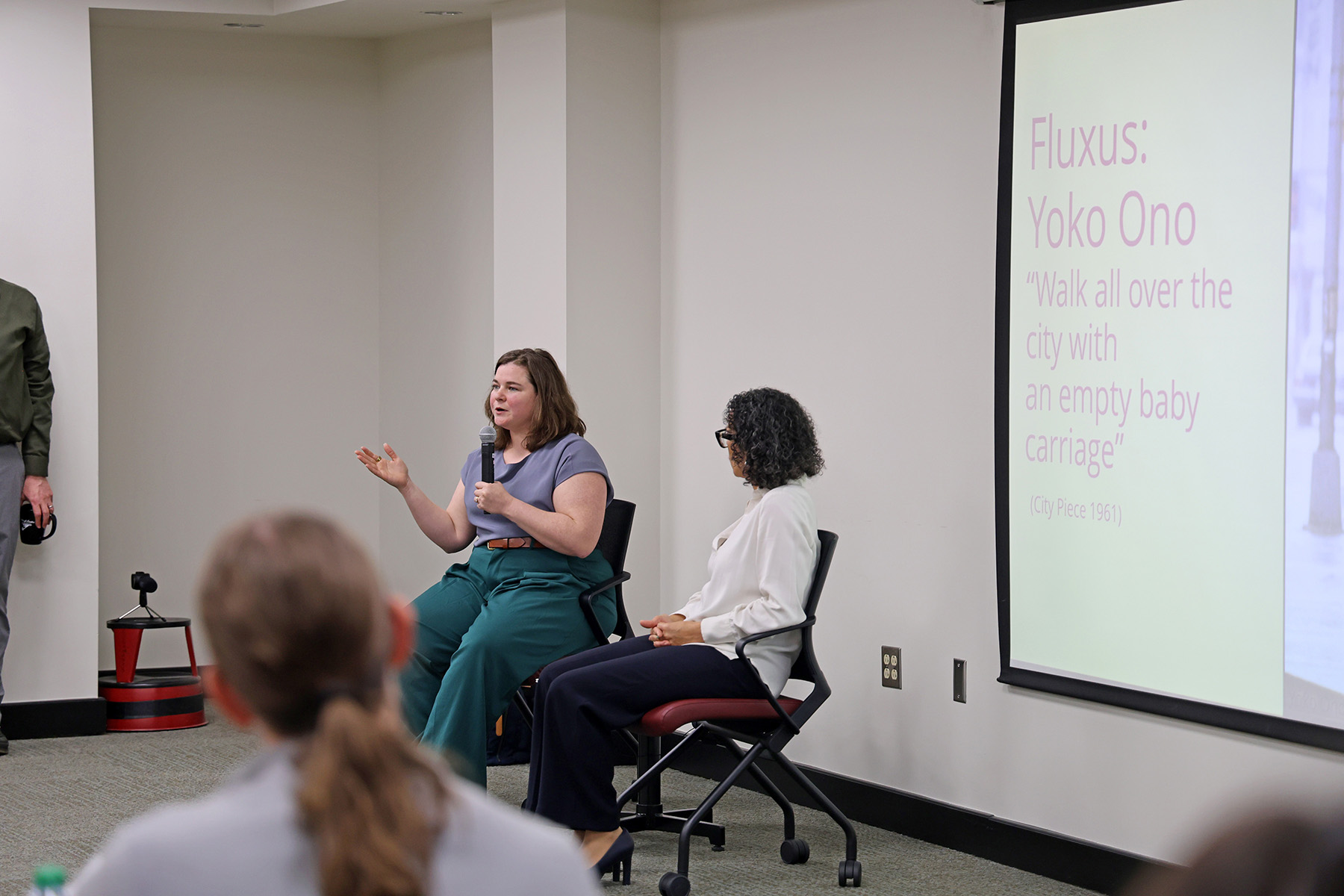
She emphasized that when cities prioritize the human scale, they create spaces where people feel naturally invited to linger and explore. She highlighted the powerful “social ripple effect” that occurs when people see their streets being used as shared community spaces rather than just corridors for traffic.
“Walking is more than just a mode of transportation; it is also a visible signal of a healthy, active streetscape,” McSorley said. “This visibility creates a ripple effect: when people witness their neighbors enjoying public spaces, it normalizes walking as a viable choice and creates a welcoming atmosphere that invites the entire city to participate.”
As a crossover event with the Festival of the Creative Arts, this lecture highlighted FSU’s commitment to breaking down silos between the humanities and the social sciences.
Sponsored by the Office of Research, FSU Libraries and the Office of Faculty Development and Advancement, the event showcased the scope of expertise supported by the university’s research community.
For more information on upcoming lectures, visit fda.fsu.edu.