


Renaissance-era artist Albrecht Dürer and “Mission Impossible: The Final Reckoning” director Christopher McQuarrie both knew that if you want an outdoor image that captivates audiences, you need the right sky.
For Dürer, that meant fine lines to depict squalls, storms, lightning and other ephemeral atmospheric phenomena. For McQuarrie, that meant a background of cloudy skies to emphasize the action in a high-flying stunt scene.
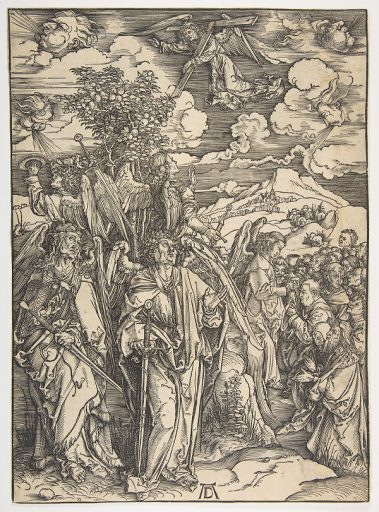
In Dürer’s engravings, Hollywood films and so many other works of art, “the weather is part of the story,” said Stephanie Leitch, a professor in the Florida State University College of Fine Arts.
Leitch was joined by National Weather Service meteorologists, FSU students and faculty, local artists and other presenters at “It’s the Weather!,” an exploration of the inspiring world of weather hosted Feb. 7 at the Challenger Learning Center of Tallahassee. The event was part of the FSU Festival of the Creative Arts, a monthlong celebration of the voices, talents and creativity of FSU faculty and students.
Leitch’s presentation in the center’s Fogg Planetarium took viewers on a whirlwind tour through 500 years of representations of the weather.
After starting with icons of the winds from Renaissance etchings, she shared other examples throughout art history. In Giorgione’s painting “The Tempest,” the viewer’s eye might first be drawn to the human subjects in the foreground before noticing the storm behind them. In Caspar David Friedrich’s 1800s painting “The Monk by the Sea,” the religious figure is dwarfed by a turbulent sea and sky. Studio Ghibli’s 2013 film “The Wind Rises” uses soft clouds as a frequent backdrop to tell the story of an engineer developing a new fighter plane.
“The landscape and atmospheric effects inform what we think about the subject of the art,” Leitch said.
For local fiber artist Kate Taylor, weather was not just the inspiration behind her artwork — it was the subject itself.
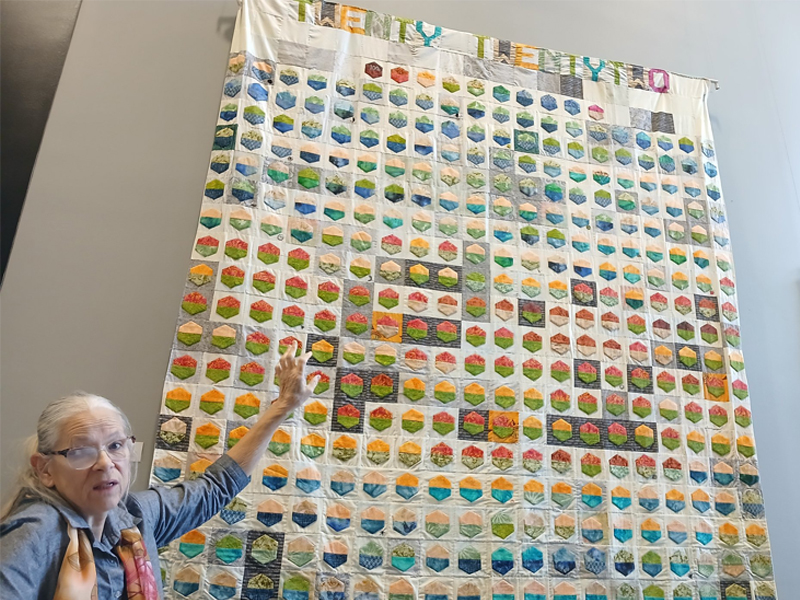
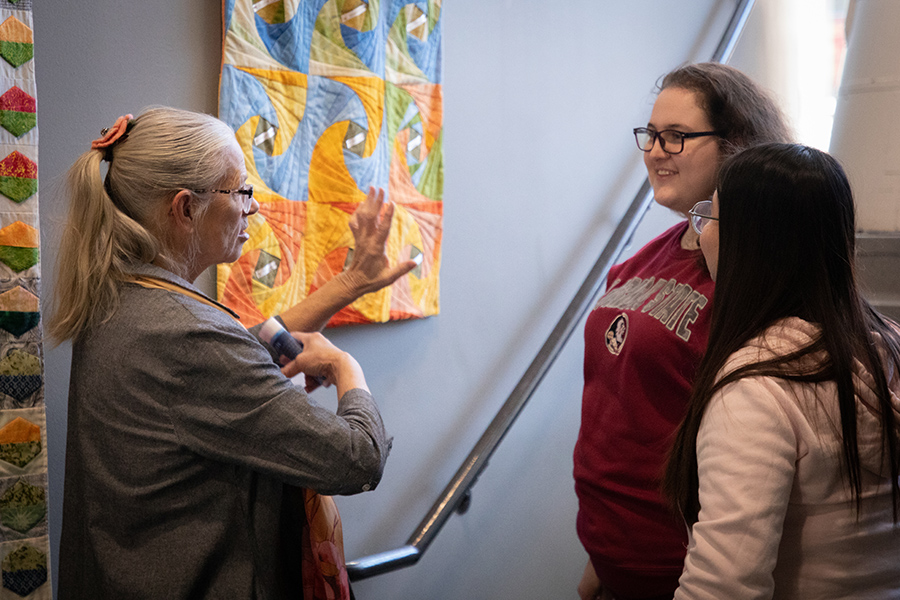
Her quilt “Whether you like it or not: A weather report for 2022 from Dogtown, Florida,” represents a year of weather data in a cozy medium.
“We’ve always had a relationship with weather, but because we have air conditioning and heating now, we don’t connect to that need to understand weather as we used to,” she said.
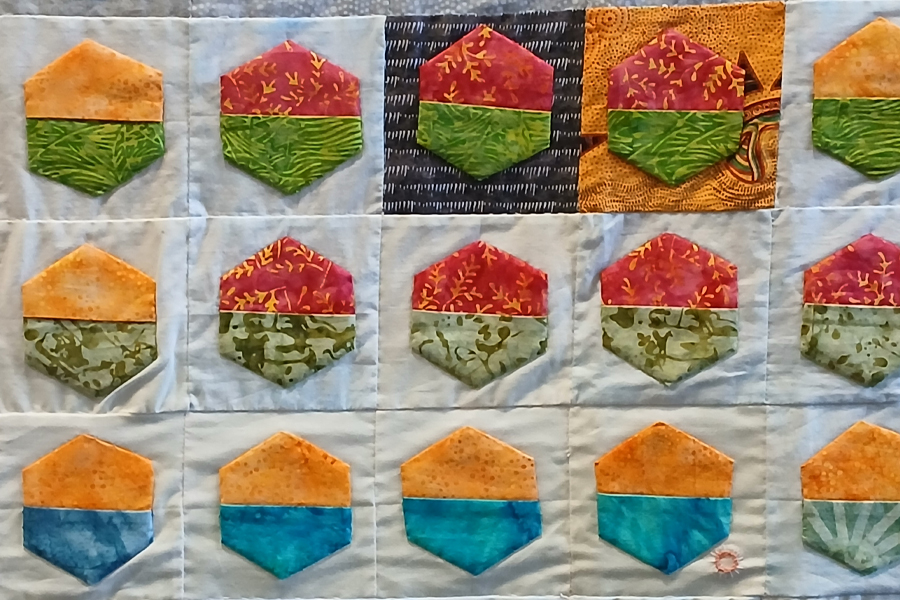
“Whether you like it or not” is Taylor’s attempt to make a closer examination of the weather around her. For each day of the year, she quilted a small square documenting the conditions at her Gadsden County home. An arrow pointing up represented the high temperature, an arrow pointing down showed the low temperature, and the background reflected the sky that day.
Another work depicted average high and low temperatures in Tallahassee for each decade of her life, starting in the 1950s.
“With anything scientific, you have to keep good notes,” she said. “That’s also the way art works. I ran out of fabric that was pre-dyed before I completed the quilt. I had to go back to my notes and then to the dye pot to complete this.”
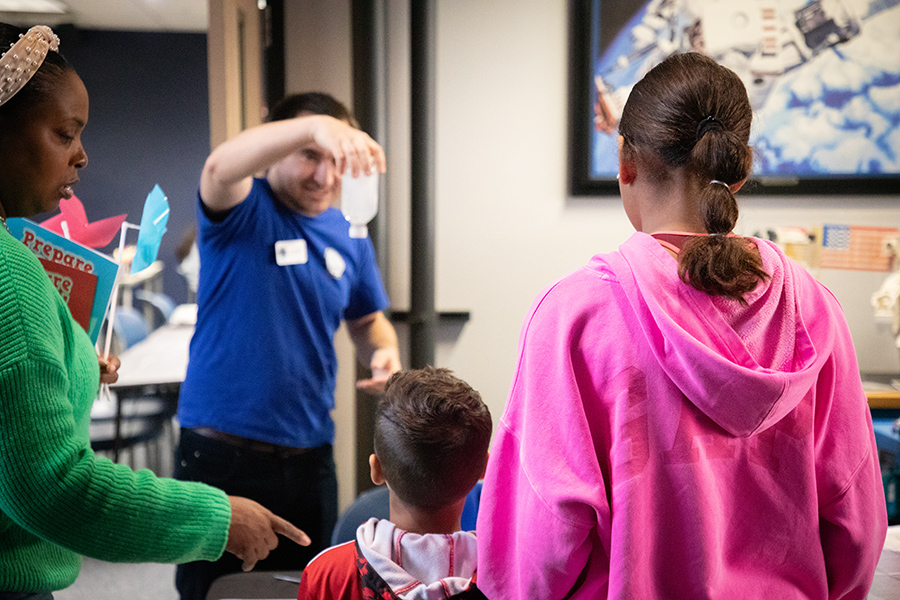
Tallahassee community member Zoila Curry brought her children, 4-year-old Sofy, 8-year-old Kosmo, and 10-year-old Aleena, to the center to learn about weather and practice making new artmaking methods.
“Art is big in our house,” Curry said. “This event was a cool way to show that you can tie art into anything, any aspect of life, even something like the weather.”
Her husband, former FSU triple jumper and Olympian Rafeeq Curry, designed the medals for the World Athletics Cross Country Championships that were recently held in Tallahassee. Drawings, sketches, jewelry and food are just some of the ways they practice creativity at home.
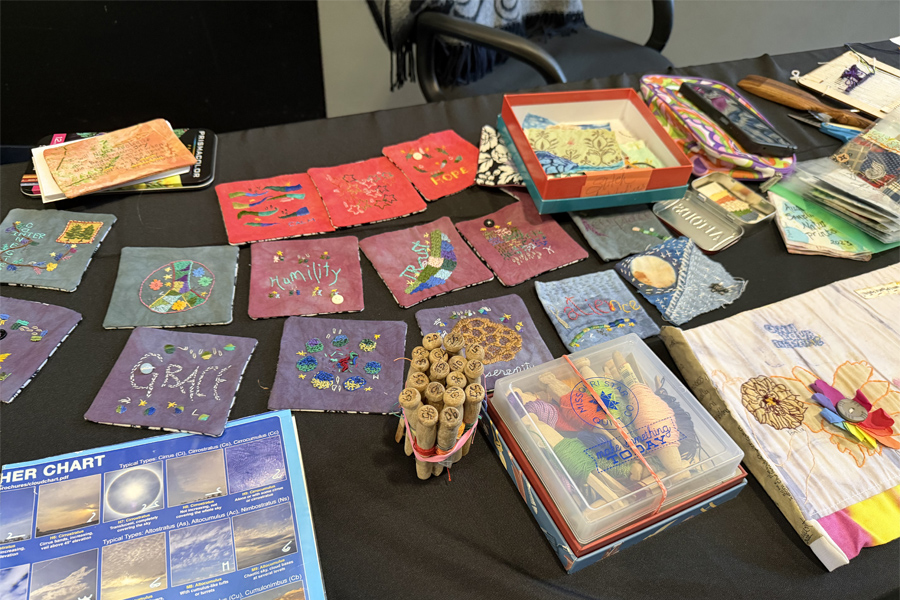
At the center, Sofy showed off a sparkly rainbow that she made at an activity station imitating the work of visual artist Robert Siedel. Other stations saw visitors creating pieces with pastels, weaving construction paper onto a visual representation of a day’s weather, or cutting paper to mimic snowflakes in homage to the scientist Wilson Bentley, who captured the first photographs of individual snowflakes.
Projects like these help students practice motor skills, observation, creativity and other skills, said Abbygail DeVore, a master’s student in the FSU art therapy program. For the FSU students volunteering, it was an opportunity to practice working with children on developmentally appropriate artwork.
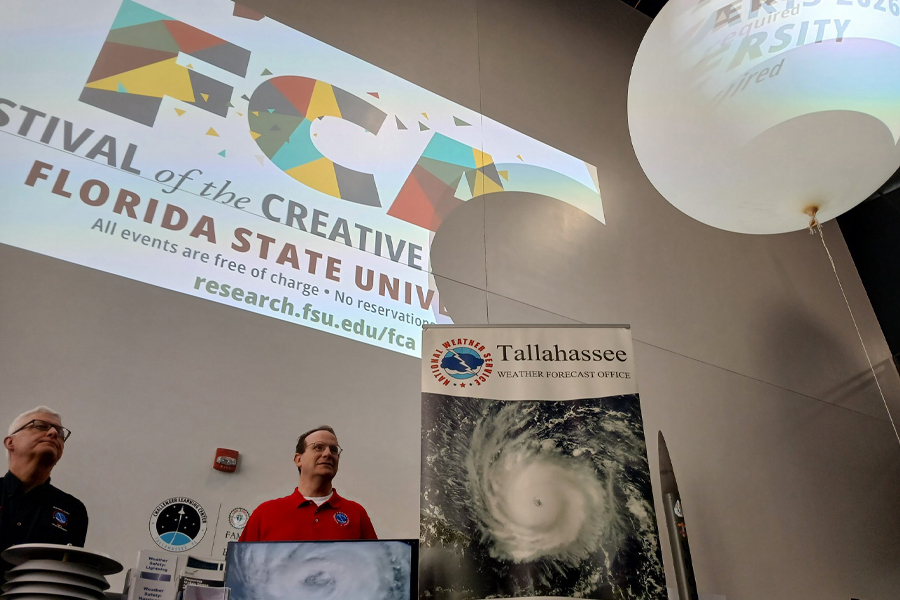
The science behind the weather was also on display. Employees from the National Weather Service’s (NWS) Tallahassee office brought the tools of their trade, such as a temperature sensor and a weather balloon.
At ground level, a weather balloon is about six feet in diameter. After it is released into the atmosphere, it grows to about 30 feet in diameter because of changes in atmospheric pressure before it bursts. Even at just six feet wide, it was a striking prop in the Challenger Learning Center lobby, drawing visitors to the NWS booth for information about how meteorologists work and ways for Floridians to be safe in storms.
It doesn’t take a meteorologist to appreciate a sunset or marvel at the power of a storm. But some artistic principles from graphic design and communications are at work when sharing weather information with the public.
The Festival of the Creative Arts continues Tuesday, Feb. 10 with Arts-Health-Humanities Symposium VI from 12-2:30 p.m. at the Claude Pepper Center, 636 W. Call St.
Visit the Festival of the Creative Arts website for a full schedule of events.