



Thirteen Florida State University graduate students distilled years of research into just three minutes at the annual Three Minute Thesis (3MT™) competition on April 8 in the College of Medicine Peaden Auditorium.
Developed at the University of Queensland in Australia, 3MT is a research communication competition designed to enhance participants’ skill in articulating their research clearly to an audience that may not have specialist knowledge in the subject area.
“This competition gives graduate students a chance to practice the way they think about their research and how to package it for a variety of different audiences,” said Keith McCall, acting director of the Office of Graduate Fellowships and Awards. “It’s critical because our graduate students are doing amazing work on a lot of groundbreaking things, and we want people to know about that work. We want our graduate students to be able to go out and talk about their work, feel comfortable doing that and feel empowered to do that.”
The judges look for engagement, communication, content and comprehension. Competitors must present their research free of jargon and in a way that is accessible for everyone to understand. The brief time limit to explain complex work to a non-specialized audience encourages participants to consolidate and crystallize their research ideas.
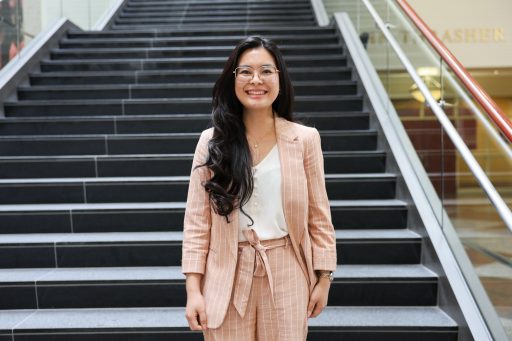
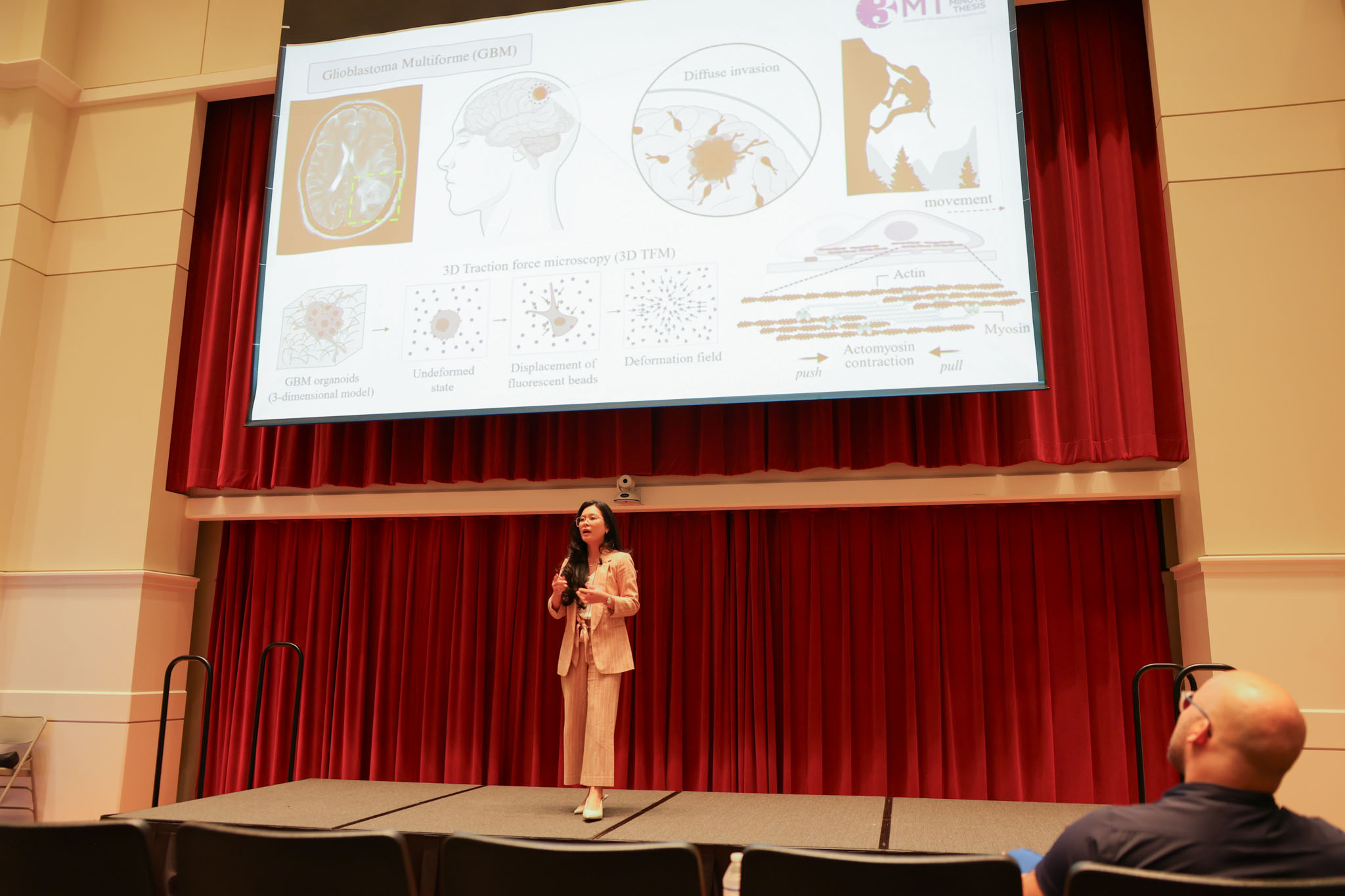
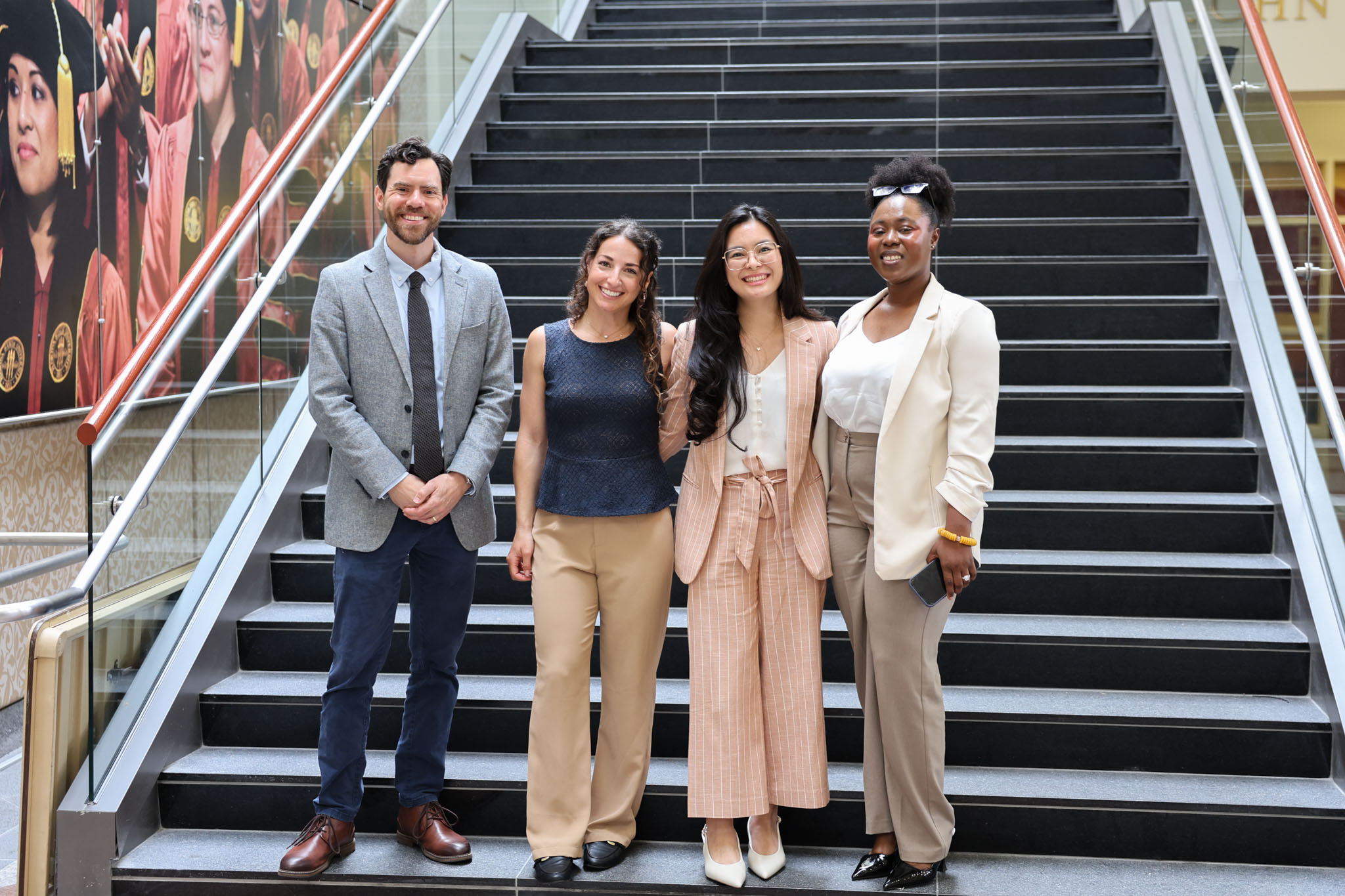
Hyeje C. Sumajit, a College of Medicine student, won $1,000 for first place and $250 for People’s Choice with her research, “Stopping the Spread: Unraveling the Mechanics of Brain Cancer Invasion.” She will represent FSU at the 2026 Conference of Florida Graduate schools later this month.
Sumajit’s research focuses on Glioblastoma Multiforme (GBM) and more specifically on how these cells move to infect healthy tissue by using organoid 3D models.
“Three Minute Thesis helped me improve as not just a person, but also as a scientist,” Sumajit shared. “It’s very difficult to explain your research to the public. This experience really helped me think about how I can explain my research to someone in an elevator for a specific amount of time.”
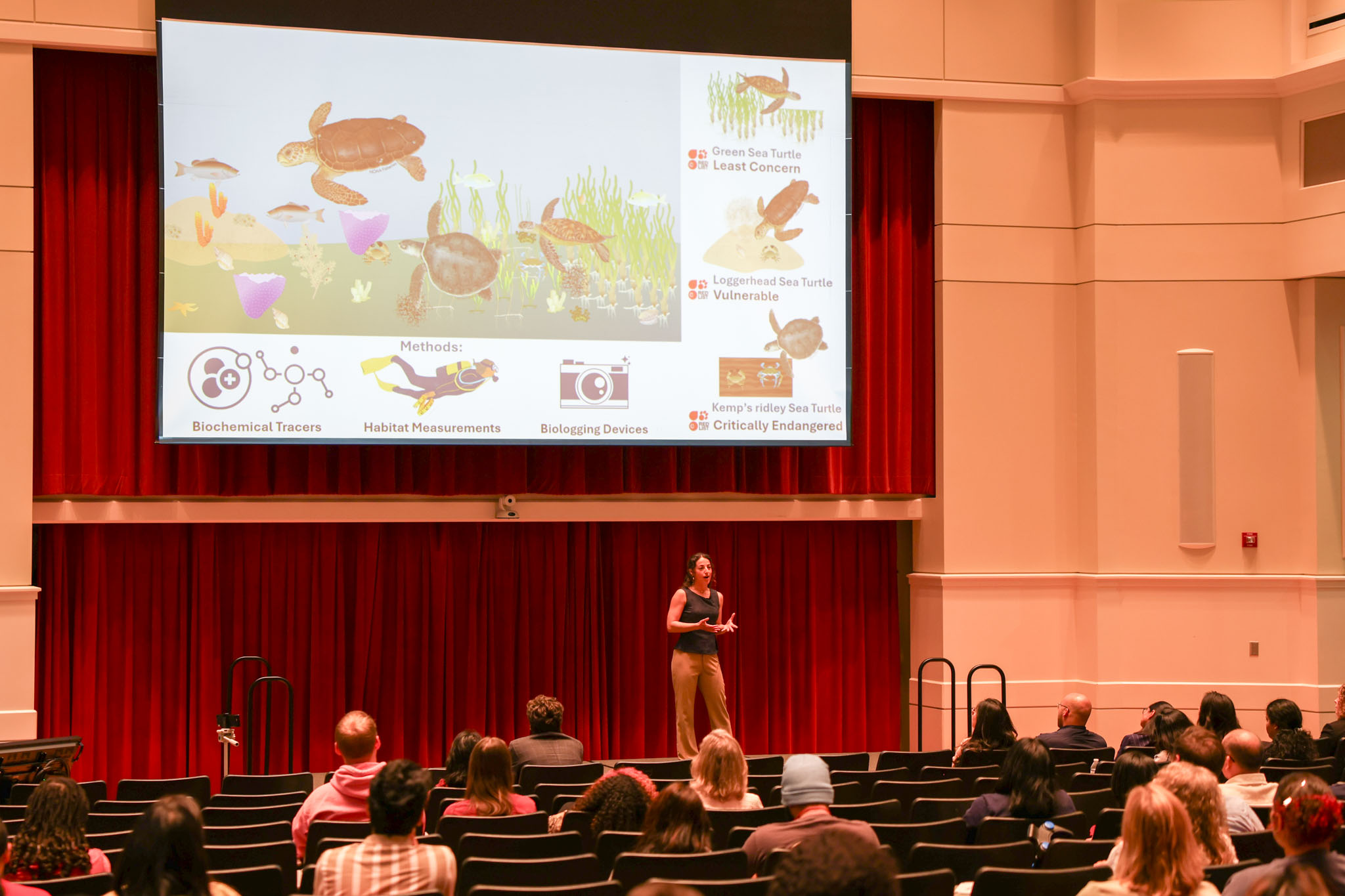
Alexa Putillo, a student in the Department of Earth, Ocean, and Atmospheric Science (EOAS) in the College of Arts and Sciences, claimed the second-place spot with a prize of $750 for her research “The Foraging Ecology and Functional Roles of Sea Turtles.” Her research examines three species of turtles and how their habitat use affects different ecosystems.
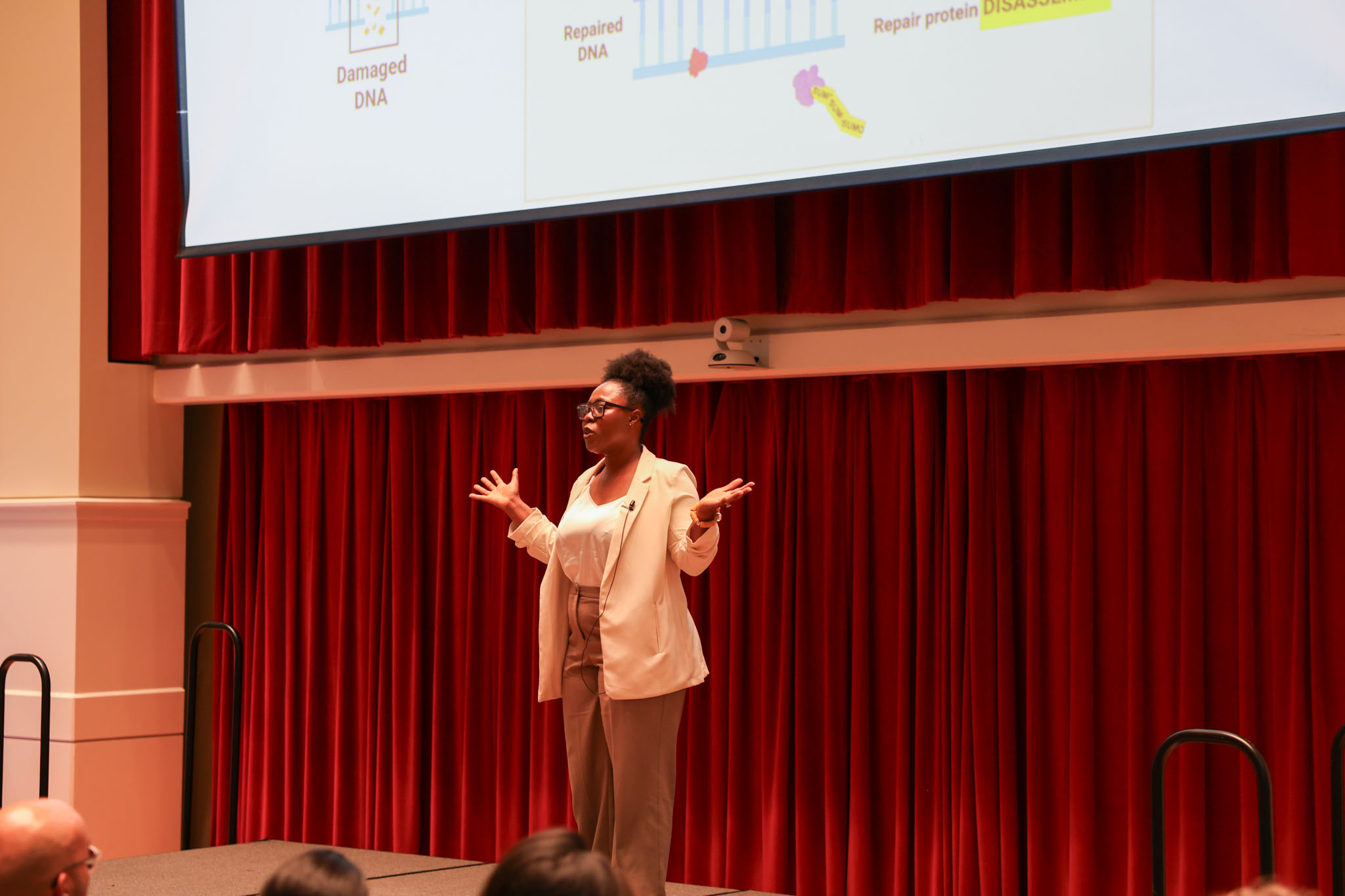
Sophia L. Owutey, a student in the Department of Biomedical Sciences in the College of Medicine, took home third place and $500 for her research “The Role of SUMO labelling in DNA Repair.” Owutey’s work has implications for cancer research, studying how SUMO labelling acts as a localization code for DNA damage repair proteins.
The 10 other student presenters were:
- Cansu Düzgün, Department of Earth, Ocean, and Atmospheric Science, College of Arts & Sciences, “How Do Clouds ‘Breathe?’ – Uncovering Improvement Pathways”
- Elizabeth L. Blue, Department of Educational Psychology and Learning Systems, Anne Spencer Daves College of Education, Health, and Human Sciences, “Compassion Fatigue Among Preschool Educators”
- Yinan Li, Department of Human Development and Family Sciences, Anne Spencer Daves College of Education, Health, and Human Sciences, “A Pilot Group-Based Attachment-Informed Intervention for College Students”
- Gargi Dashora, Mechanical and Aerospace Engineering, “Turning the Clock Backwards: Towards the Supersonic Future”
- Peter Marti, School of Teacher Education, Anne Spencer Daves College of Education, Health, and Human Sciences, “Special Interests Generative AI (SIGAI) Stories for Autistic Kindergarteners’ Narrative Retell & Engagement”
- Chao Wang, Urban and Regional Planning, College of Social Sciences and Public Policy, “From Policy to Place: Can Affordable Housing Embrace Opportunity?”
- Ghazal Hussain, College of Communication and Information, “When Thinking Becomes Optional: The Cognitive Cost of AI Dependence”
- Tyler Rice, Department of Psychology, College of Arts & Sciences, “In the Moment: Alcohol and Suicide Attempt Severity in the U.S. Military”
- Nethraja Kandula, Department of Health, Nutrition, and Food Science, Anne Spencer Daves College of Education, Health, and Human Sciences, “Not Just “Positive:” Measuring How Much Salmonella is in Chicken”
- Niveditha Karthikeyan, Department of Sport Management, Anne Spencer Daves College of Education, Health, and Human Sciences, “Beyond the Ink: Comparing Sport Object Tattoos to Conventional Expressions of Fandom”
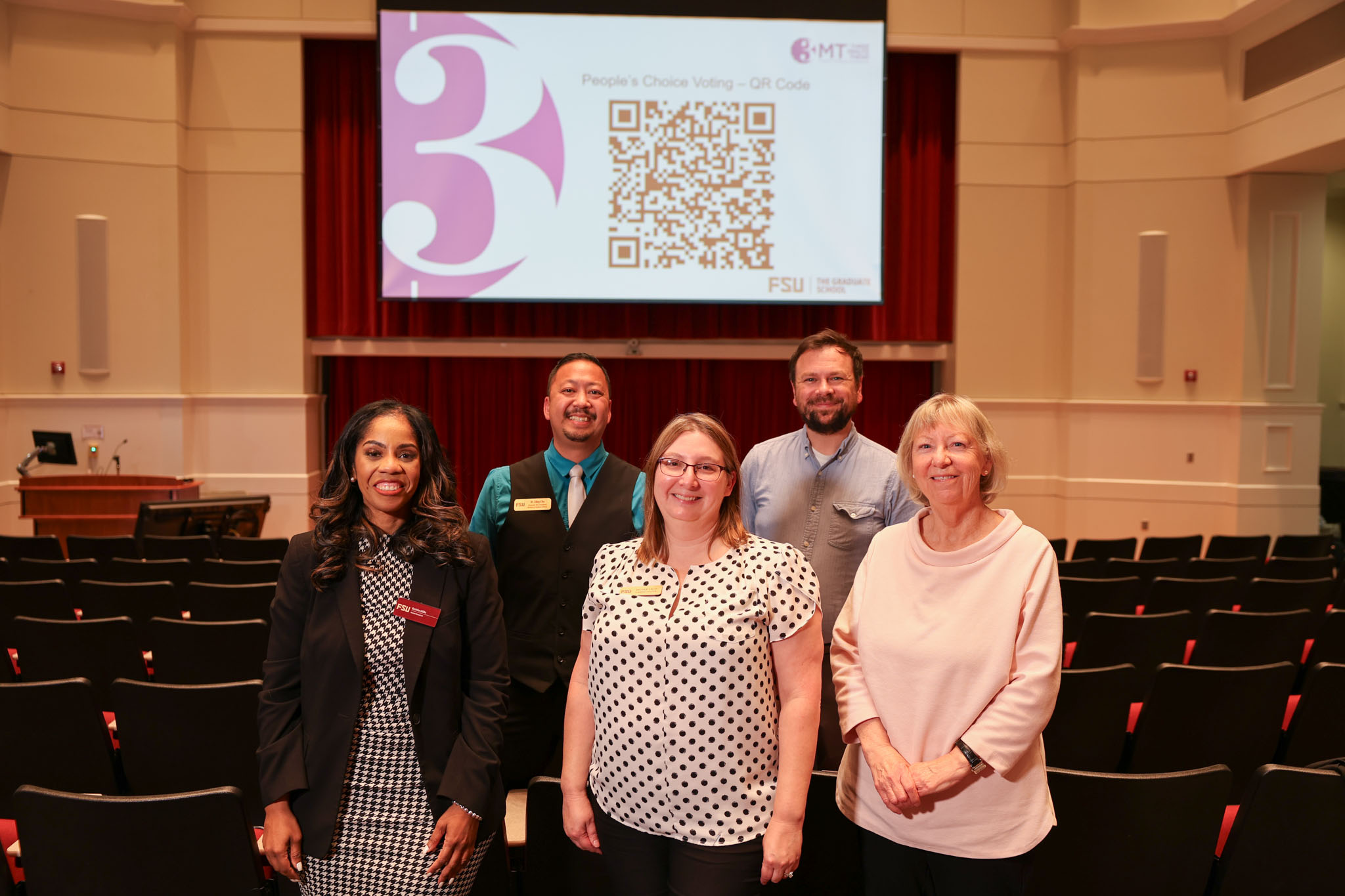
This year’s judges were Zduy Chu, FSU assistant vice president for Student Affairs; Renisha Gibbs, associate vice president for Human Resources and Finance and Administration Chief of Staff; Susan Hellstrom, retired instructor of science communication; and Brian Wilcoxon, director of the Graduate Student Resource Center.
To learn more about The Graduate School and the 3MT competition, visit gradschool.fsu.edu/3MT.