



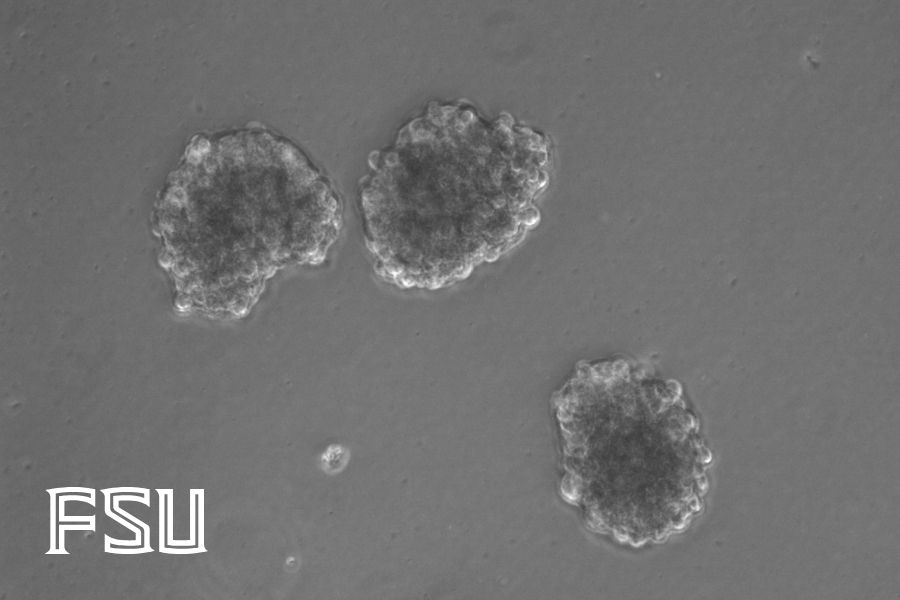
Researchers at the FAMU-FSU College of Engineering and National High Magnetic Field Laboratory, or MagLab, have shown that a potential stroke treatment derived from stem cells may be more effective for women.
In a study published in Theranostics, the research team used human mesenchymal stem cells, which can transform into a variety of different cell types, to harvest extracellular vesicles, or EVs — small particles released by cells as chemical messengers. They tested those EVs as a therapy for ischemic stroke, when blood is blocked from reaching the brain.
The research could help scientists improve drug-based treatments for stroke patients and refine care strategies, even tailoring those that may be impacted by a patient’s sex.
What they did
Extracellular vesicles have shown potential as a treatment for various diseases, both as a way to deliver medicines to specific targets in patients and as a therapy on their own.
In this study, researchers used EVs to treat rats with strokes, then tracked changes in their brains over several weeks with the MagLab’s 21.1-T ultra-widebore magnet using magnetic resonance imaging (MRI) and spectroscopy.
In both males and females, the EV treatment improved post-stroke recovery. MRI scans showed improvements to damaged brain tissue and the brain’s chemical and metabolic activity after treatment.
But the benefits were not the same for each sex, suggesting that biological differences may influence treatment effectiveness.
Why it matters: Personalizing treatment for patients
The primary female sex hormones, estrogen and progesterone, have protective effects for the brain. In this study, the researchers saw that EVs augmented the positive effects of these naturally occurring hormones.
“Extracellular vesicles are a way to use the body’s own biological messaging system to promote healing,” said study co-author Yan Li, a professor at the FAMU-FSU College of Engineering. “That natural capacity to promote repair and restore balance could transform how we treat some of the most challenging diseases.”
Preclinical work, including animal and cellular studies, often uses male subjects to avoid data variations caused by female hormonal cycles. By understanding the role sex hormones play in stroke recovery, the research could eventually help scientists implement more effective treatments for women.
Extracellular vesicles: An avenue for targeted treatment
EVs are a promising treatment for various diseases because they offer the regenerative and anti-inflammatory benefits of cell therapies without the risks of using living cells.
Drugs used to treat strokes must cross the blood-brain barrier to target the area where they are needed. EVs are small and can penetrate deeper into the brain than stem cells, which are more likely to be identified and attacked by a patient’s immune system.
“You’re getting an extra bang for your buck as a patient,” said study co-author Samuel Grant, a professor at the FAMU-FSU College of Engineering. “Even though estrogen is helping recovery, the EV therapy has the added benefit of helping to recover faster, to salvage more tissue and reestablish regulation of metabolic processes in the brain.”
Collaborators and support
Former FSU doctoral student Jamini Bhagu was the lead author on this study. FSU graduate students and undergraduate students were also co-authors. This research was supported by the National Institutes of Health, the National Science Foundation through the National High Magnetic Field Laboratory and the State of Florida.