



Key Points
- Professor Christian Bleiholder received the 2026 Ken Standing Award, which recognizes a scientist who has made a significant contribution to the development of technology in support of life sciences research.
- Bleiholder’s tandem-trapped ion mobility spectrometry, or Tandem-TIMS, enables researchers to distinguish different protein conformations and investigate how they change when proteins interact with other molecules.
A Florida State University chemist has received international recognition for developing a spectrometry technique that helps researchers better understand complex molecular structures and can lead to advances in drug development and target-specific medicines.
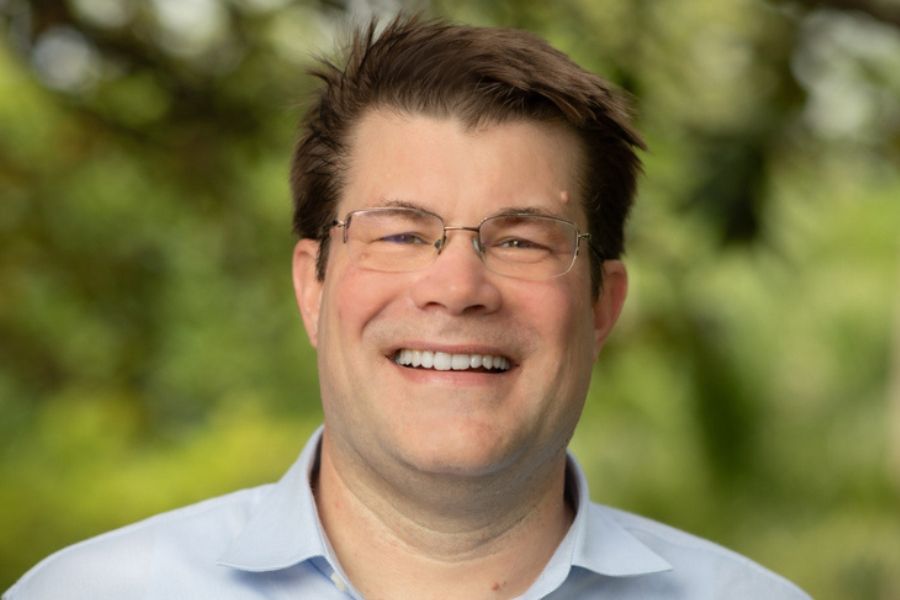
Professor of Chemistry and Biochemistry Christian Bleiholder is the recipient of the 2026 Ken Standing Award from the University of Manitoba in Canada and the ETP Symposium, an international nonprofit organization that hosts interdisciplinary forums for researchers developing innovative technologies. Bleiholder is the first FSU faculty member to earn the award.
“This recognition is particularly meaningful because tandem-trapped ion mobility spectrometry, or Tandem-TIMS, represents more than a decade of research and development by our team at FSU,” said Bleiholder, who joined FSU’s faculty in 2013. “Developing the technology required years of scientific and technical innovation, persistence and close collaboration. I’m especially grateful to the students, researchers and collaborators who helped make this possible, and I’m honored to see our work recognized by the international scientific community.”
The Ken Standing Award, presented every two years since 2007, recognizes a scientist who has made a significant contribution to the development of technology in support of life sciences research. This international award is named after Ken Standing, professor emeritus at the University of Manitoba, and previous recipients include scientists from leading research universities across the U.S. and Canada. Bleiholder will give the Ken Standing Award Lecture at the Lake Louise Tandem Mass Spectrometry Workshop in Canada as part of his award acceptance in December.
“Dr. Bleiholder’s recognition demonstrates the general excellence of research programs in the department and our faculty’s leadership in their respective fields,” said Wei Yang, Department of Chemistry and Biochemistry chair. “An important aspect of our research is advancing and innovating tools, methods and strategies that push the boundaries of modern chemistry and biochemistry, a strength reflected by this award selection.”
The Bleiholder Laboratory integrates physical chemistry, analytical chemistry and biophysics to investigate how genes and the proteins they produce affect human health and disease. Proteins can exist in multiple molecular forms and take on different three-dimensional shapes. The lab’s work combines experimental and computational approaches to study the structure and behavior of complex biological molecules, with research spanning infectious diseases, neurodegenerative diseases and biotherapeutics.
For more than a decade, Bleiholder and his team at FSU have worked closely with scientists and engineers at Bruker Daltonics, a global analytical instrumentation company, to jointly develop Tandem-TIMS. The technology enables researchers to distinguish different protein conformations and investigate how they change when proteins interact with other molecules, including when antibodies bind to antigens.
Fanny C. Liu, who initially joined the Bleiholder Lab as a postdoctoral researcher and is now a research faculty member at FSU, has played a central role in developing Tandem-TIMS. Building on initial startup funding from FSU, Bleiholder and his team secured competitive research funding from the National Science Foundation and the National Institutes of Health to advance this technology.
“An antibody is an ensemble of conformations, and when an antigen binds to an antibody, that ensemble can reorganize and change the molecule’s function,” Bleiholder said. “We want to see those changes and understand how they affect the antibody’s function and ability to bind to its target, which can be used to develop or improve medicines. We’re also interested in how different pharmaceutical formulations affect an antibody’s stability.”
The technique can be used to develop antibody-based medicines, which recognize and bind to specific target molecules. These medicines provide more selective treatment than conventional treatments, such as how chemotherapy drugs can negatively affect healthy cells while also destroying cancerous cells. Bleiholder currently collaborates with Johnson & Johnson Innovative Medicine to apply Tandem-TIMS to antibodies and other biologics to support the development and characterization of new biotherapeutics.
At FSU, Bleiholder is expanding the applications of Tandem-TIMS through collaborations with faculty members in the Department of Biological Science, including with professor Elizabeth Stroupe to investigate large protein complexes and assistant professor Ashwanth Francis to study HIV capsid assembly. These collaborations demonstrate the technology’s potential to advance biomedical research across disciplines and position the research program to contribute to FSU’s growing initiatives in health and biomedical sciences, including FSU Health, an integrated academic health system combining the expertise of hospitals, physicians, clinics, research, education and innovation to improve the health of our community.
In 2025, Bleiholder received the American Society for Mass Spectrometry’s Ron Hites Award for the application of the Tandem-TIMS technology to proteomics, and he was named a senior member of the National Academy of Inventors in 2026.
“It’s incredibly rewarding to see a technology we have worked on for so many years receive this recognition,” Bleiholder said. “What excites me most is seeing how Tandem-TIMS is now opening new possibilities for research in structural biology and biotherapeutics. I hope our work will continue to advance scientific discovery at FSU and beyond.”
To learn more about research conducted in FSU’s Department of Chemistry and Biochemistry, visit chem.fsu.edu.