



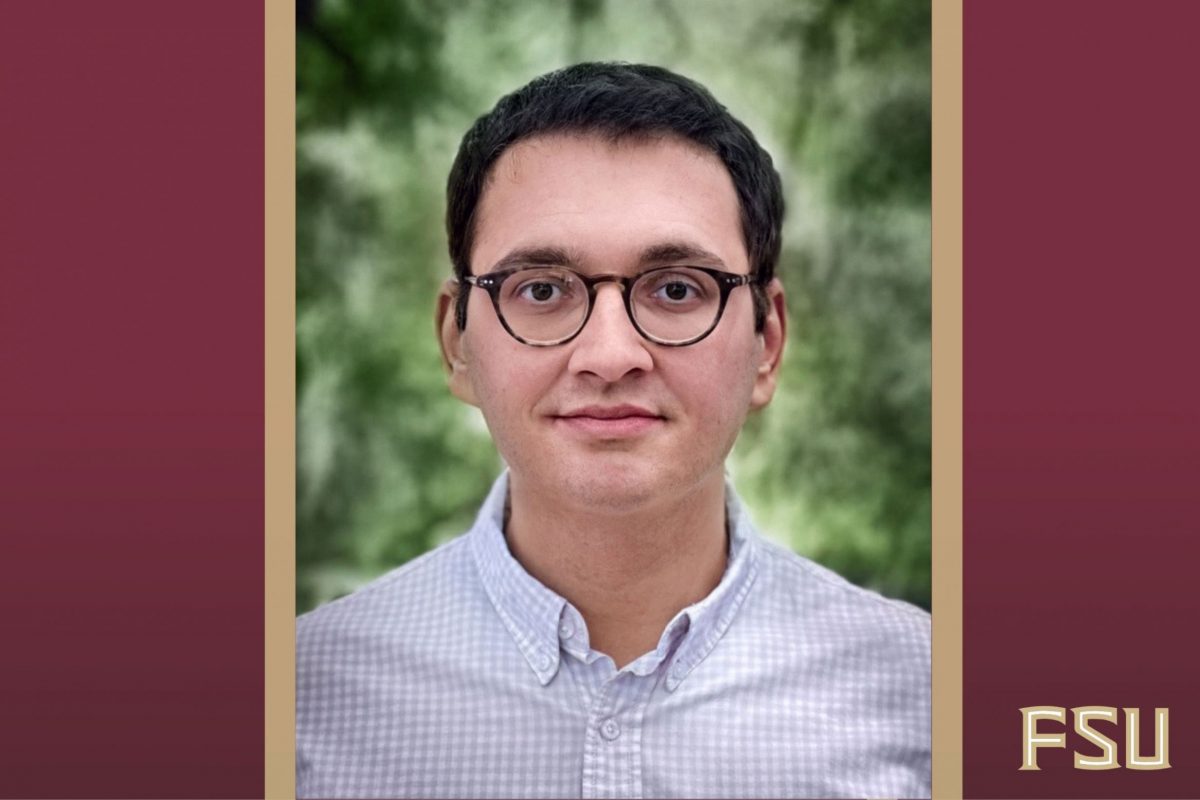
Pellumb Reshidi, an assistant economics professor in Florida State University’s College of Social Sciences and Public Policy, has been named a Senior Fellow of Microsoft’s AI Economy Institute (AIEI), joining an international cohort of researchers studying how artificial intelligence is transforming firms and the future of work.
As part of the fellowship, Reshidi and collaborators Brian Jabarian of Carnegie Mellon University and Luca Henkel of Erasmus University Rotterdam received a Microsoft research grant to investigate the growing use of AI in hiring and recruitment. Their project focuses on agentic hiring, or the use of artificial intelligence to screen, interview and evaluate job candidates.
The research comes as organizations increasingly adopt AI tools in the workplace. While many companies have embraced the technology, questions remain about its effects on workers, employers and labor markets.
“Adoption has moved faster than the evidence, particularly on what happens when an entire industry takes up these systems rather than a single firm, and how the added competition affects firm and worker welfare,” Reshidi said. “Those effects need careful measurement, and we’re approaching them less as a question of AI substituting for people than as one about where the two together outperform either alone.”
Working with a major recruiting firm, the team has conducted a natural field experiment covering roughly 70,000 interviews, producing a dataset that tracks both recruiters and candidates from application through employment and beyond.
The evidence speaks to the interactions between human recruiters and AI systems, to how screening changes when applicants can choose between a human and an AI interviewer, and to how employers compete when they rely on similar AI screeners.
This is AIEI’s third cohort and the first to turn to firms themselves; the previous two examined how education systems prepare people for an AI-enabled economy.
The cohort’s findings will be collected in an edited volume scheduled for publication in January, with Reshidi’s team contributing a chapter and submitting its research to an open-access academic journal.