



Key Points
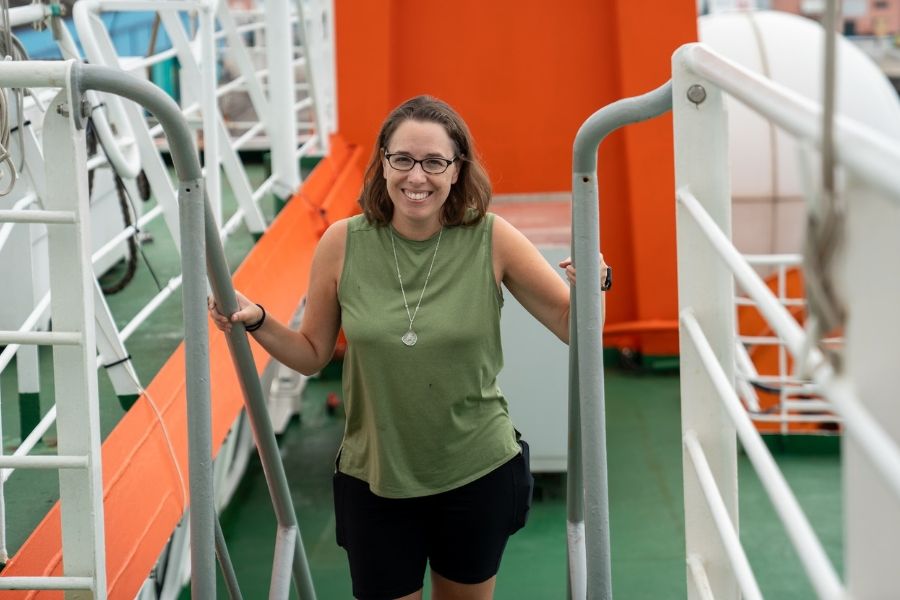
- Associate Professor of Meteorology and Environmental Science Allison Wing is the first faculty member from FSU to receive the Atmospheric Sciences Ascent Award from the American Geophysical Union.
- This award recognizes her contributions to scientific understanding of tropical convection and hurricanes, including her discovery that interactions between clouds and thermal radiation influence the earliest stages of hurricane development.
A Florida State University scientist has been recognized for the role her research has played in uncovering the fundamental mechanisms influencing the organization of tropical clouds and hurricanes. This work helps inform cutting-edge hurricane and tropical weather forecasts, saving lives and mitigating damage to both property and the environment.
Associate Professor of Meteorology and Environmental Science Allison Wing is the first faculty member from FSU to receive the Atmospheric Sciences Ascent Award from the American Geophysical Union, a global non-profit organization dedicated to advancing research in the Earth and space sciences. This distinction recognizes her contributions to scientific understanding of tropical convection and hurricanes, including her discovery that interactions between clouds and thermal radiation influence the earliest stages of hurricane development.“It is a great honor to receive this award, as it is based on colleagues’ perception of my research,” Wing said. “Florida is no stranger to hurricanes, including those that rapidly intensify close to landfall like Helene, a Category 4 that directly hit Perry, Florida — approximately 40 miles from Tallahassee — in 2024. While forecasts have improved in recent decades, we still have challenges to overcome in predicting intensity, especially when storms strengthen quickly.”
Founded more than a century ago, AGU represents more than 500,000 Earth and space science professionals, researchers and advocates worldwide. Since 2012, the Atmospheric Sciences Ascent Award has been presented annually to four mid-career scientists, recognizing research and leadership excellence in the atmospheric and climate sciences. Wing will be presented with the award during AGU’s annual meeting this December in San Francisco, Calif.
“This award places Allison among a select group of leading atmospheric scientists recognized worldwide for their impact on the field,” said Michael Stukel, Department of Earth, Ocean, and Atmospheric Science chair. “It also indicates the department’s national prominence in tropical meteorology, hurricane and climate research, topics that are particularly important to Florida.”
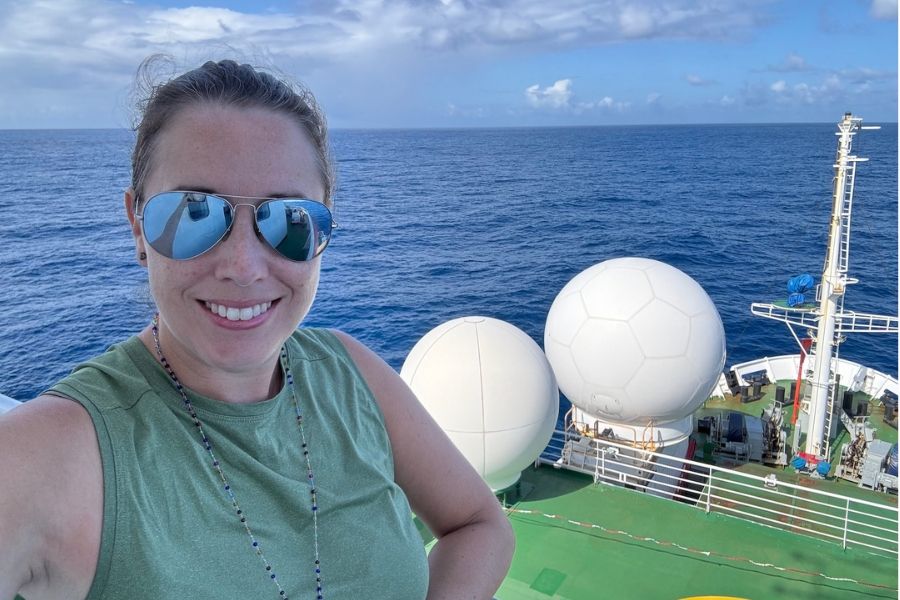

Throughout her career, Wing has contributed to large, collaborative research projects such as the Radiative-Convective Equilibrium Model Intercomparison Project, or RCEMIP, which she has led for a decade. RCEMIP compares how different weather and climate models simulate a simplified version of the tropical atmosphere; this allows researchers to learn new information about how warming changes tropical clouds and how cloud clustering affects climate and rainfall.
In 2024, Wing led the Process Investigation of Clouds and Convective Organization over the atLantic Ocean, or PICCOLO — the U.S. component of the ORganized Convection and EarthCARE Studies over the TRopical Atlantic, or ORCESTRA, project, an international field campaign. Using Colorado State University’s Sea-Pol Radar on the German research ship Meteor, Wing collected cloud and rain measurements, spanning from Barbados in the Caribbean to Cape Verde off Africa’s western coast. Researchers used this data to test hypotheses about the development of cloud clusters and how they influence Atlantic rainfall, tropical circulation features and climate.
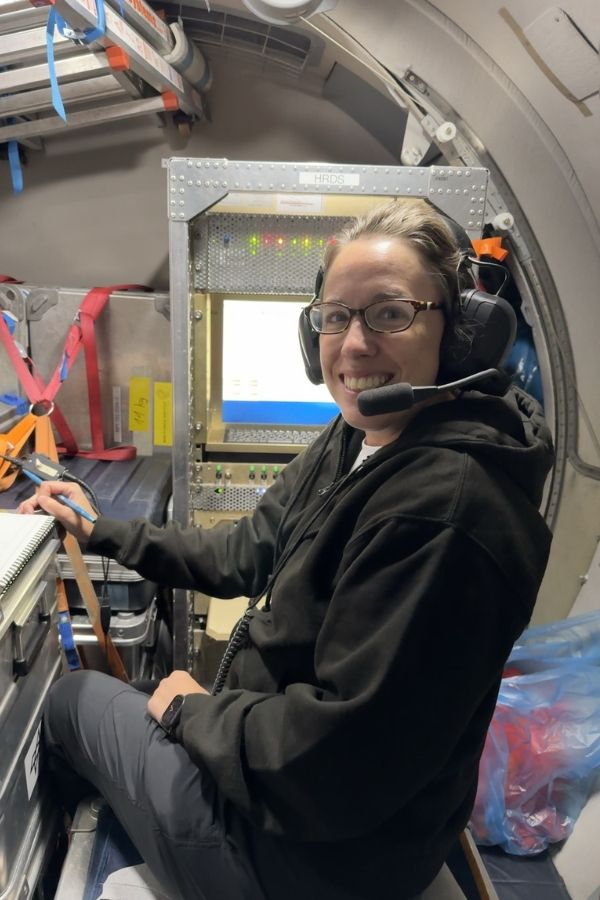
“Allison’s research tackles fundamental questions about how tropical cyclones form and intensify and how they might be responding to a changing climate,” Stukel said. “She brings an unusually powerful combination of fundamental theory, sophisticated numerical modeling and observations to these problems, allowing her to connect basic atmospheric physics with some of the most consequential weather hazards affecting society.”
A key finding from Wing’s research, supported through projects such as RCEMIP and PICCOLO, is that interactions between clouds and thermal radiation heavily contribute to the clustering of thunderstorms into larger, more organized systems. This also influences the early stages of hurricane development, well before they undergo rapid intensification. These results suggest that hurricane forecasts could be improved by better accounting for cloud-radiation interactions at a storm’s genesis in weather models.
“I am grateful for the privilege to collaborate with and learn from many outstanding scientists throughout my career,” Wing said. “Much of my work has been in the form of big, collaborative projects, so receiving the AGU Atmospheric Sciences Ascent Award is, in part, a reflection of the research opportunities I have participated in and led. The award also reflects the exciting work of my students and postdocs, and mentoring them is the most rewarding thing I do.”
In 2024, Wing earned an FSU Developing Scholar Award, and two years before, she received an NSF Faculty Early Career Development, or CAREER, Award. Before joining FSU as an assistant professor in 2016, Wing was a National Science Foundation Postdoctoral Research Fellow at Columbia University’s Lamont-Doherty Earth Observatory. She earned her doctorate from the Massachusetts Institute of Technology in atmospheric sciences in 2014.
For more information on research conducted in the FSU Department of Earth, Ocean, and Atmospheric Science, visit eoas.fsu.edu.