



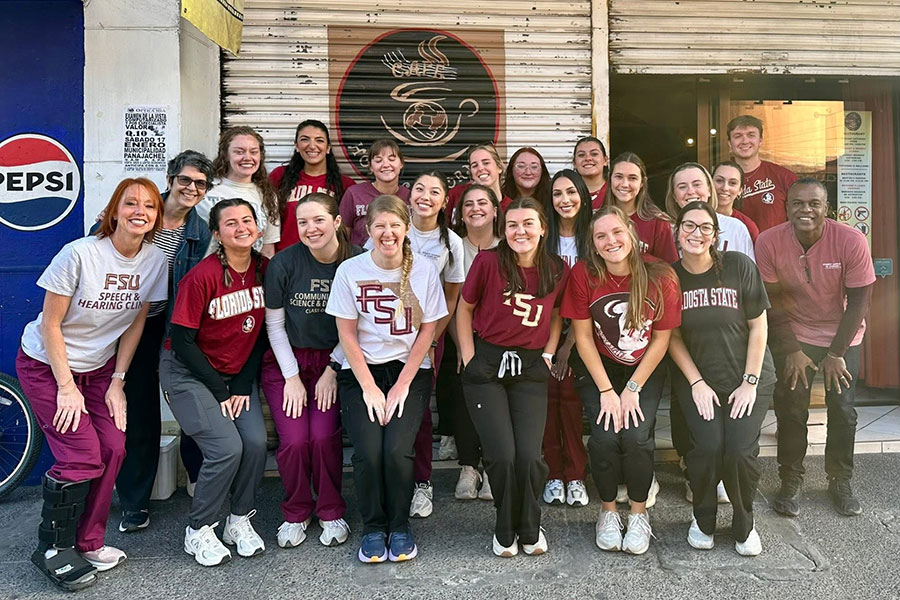
Florida State University students from the College of Communication and Information helped restore hearing for hundreds of patients during a service-learning trip to Guatemala last semester.
Selena Snowden, teaching faculty III and director of Audiology Services in the School of Communication Science and Disorders, led a group to Sololá, Guatemala, where students performed more than 100 ear cleanings, fitted 276 hearing devices and saw more than 200 patients for appointments during four days of clinics.
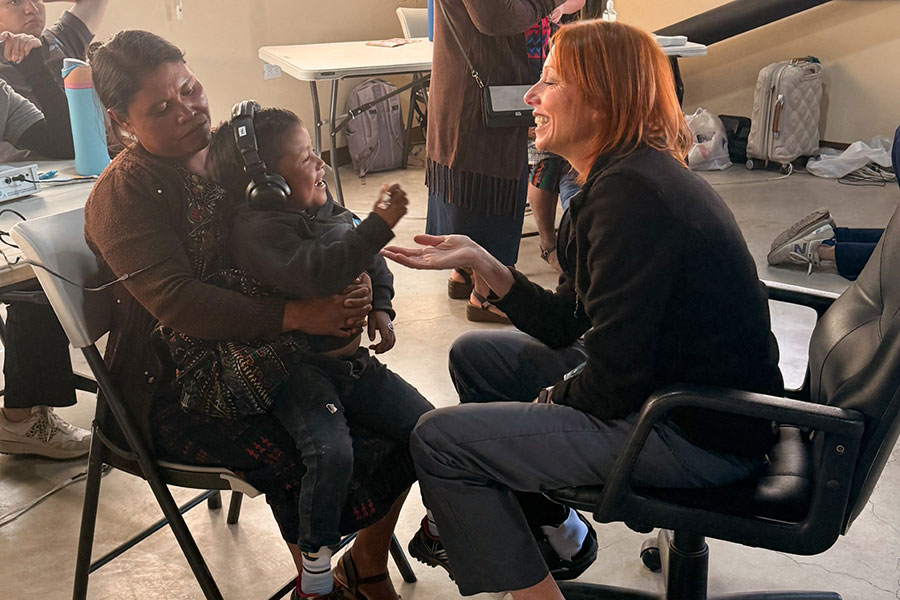
Known as the “Help Guatemala Hear” service trip, Snowden has led groups of students and professionals on similar service trips since 2015, pausing only during the pandemic. The program aims to provide the “gift of sound” to children, adults and indigenous people in the region.
“I love to witness how the students grow each year clinically, personally, and in humility over the course of experience,” Snowden said.
A record number of students participated in the trip: 14 undergraduate students and three graduate students from FSU, along with one undergraduate student studying communication sciences and disorders at Valdosta State University.
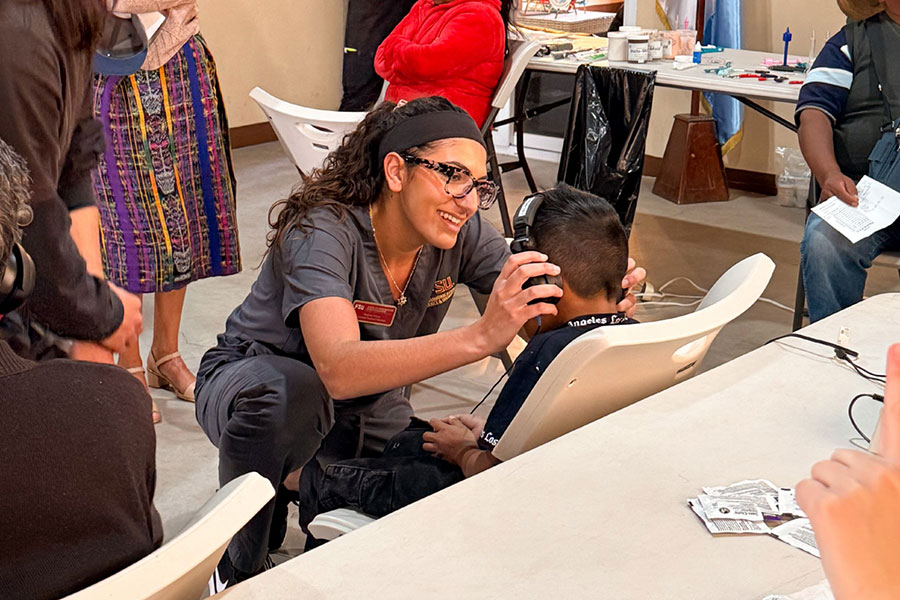
“It’s clear our program’s vision resonates strongly with students and our supportive partners,” Snowden said.
Poverty prevents even routine evaluation and treatment of hearing loss in the Guatemalan Highlands, making audiology services severely needed. Prior to departure, students completed more than 250 hours of training to prepare for the fast-paced, high-impact clinical work they would encounter abroad.
“The 250 pre-trip training hours matter because they ensure students understand the scope of practice and know how to work safely in low-resource settings,” Snowden said. “It can also prepare the students culturally, help the team function smoothly on high-capacity clinic days, and ground the students in reflection and ethics so the experience is about long-term impact.”
For Leslie Abbott, an undergraduate student majoring in Communication Science and Disorders, the extensive preparation helped her feel confident.
“The 250 hours of training made me more confident in my ability to serve the people of Guatemala, however what taught me the most was actually learning from the situations I encountered while I was in Guatemala,” she said.
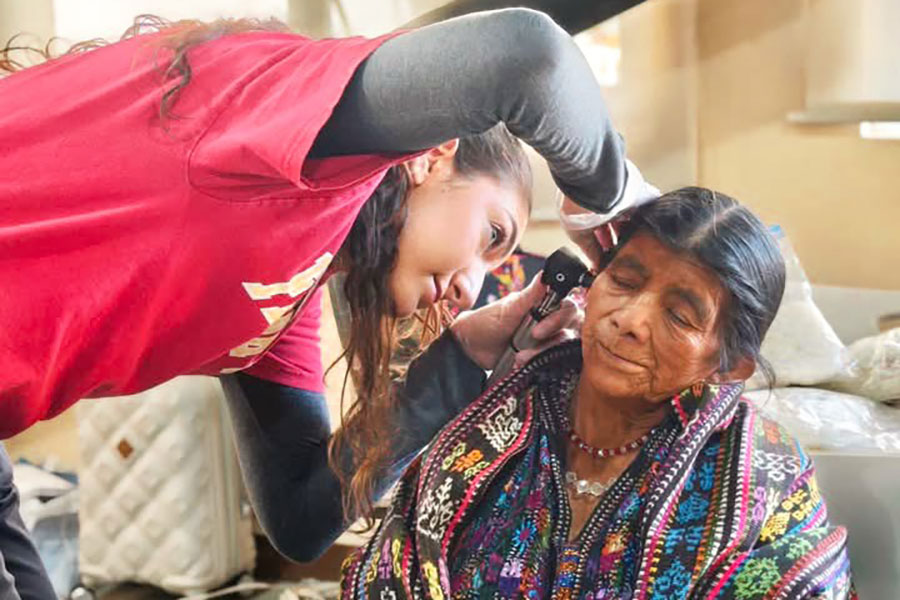
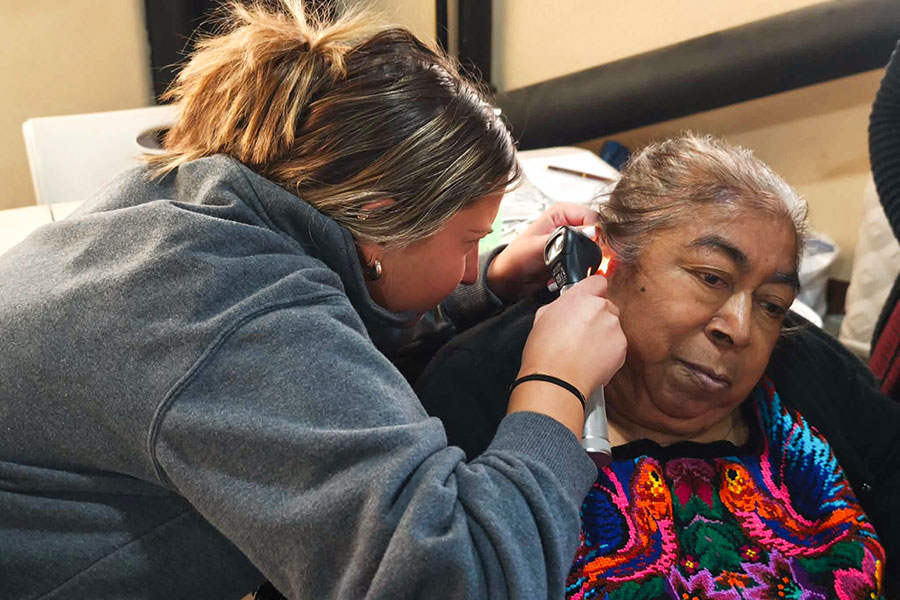
What stood out to Abbott was seeing how committed people were to obtain hearing services.
“We were seeing over 50 people a day, which led to long waiting times for some people,” she said. “It was so eye-opening for me to see the lengths the people of Sololá went for hearing services, and not once did anyone complain.”
Kaitlyn Garcia, a graduate student pursuing a master’s degree in Communication Science and Disorders, emphasized the scale of what the team accomplished together.
“It was amazing to see what we could accomplish with such a large group,” Garcia said. “There was so much energy and excitement, but it still felt very organized and intentional. Even with a big group, everyone knew why they were there.”
For Mia Finigan, an undergraduate student pursuing a degree in Communication Science and Disorders, it was her second time participating in the “Help Guatemala Hear” service-learning project. After participating in 2025, she quickly recognized the impact of having a larger team.
“Having an even larger group had an enormous impact on our efficiency and ultimately the total number of patients we were able to see,” Finigan said. “I felt I was able to take more charge and grow as a leader for others this year.”
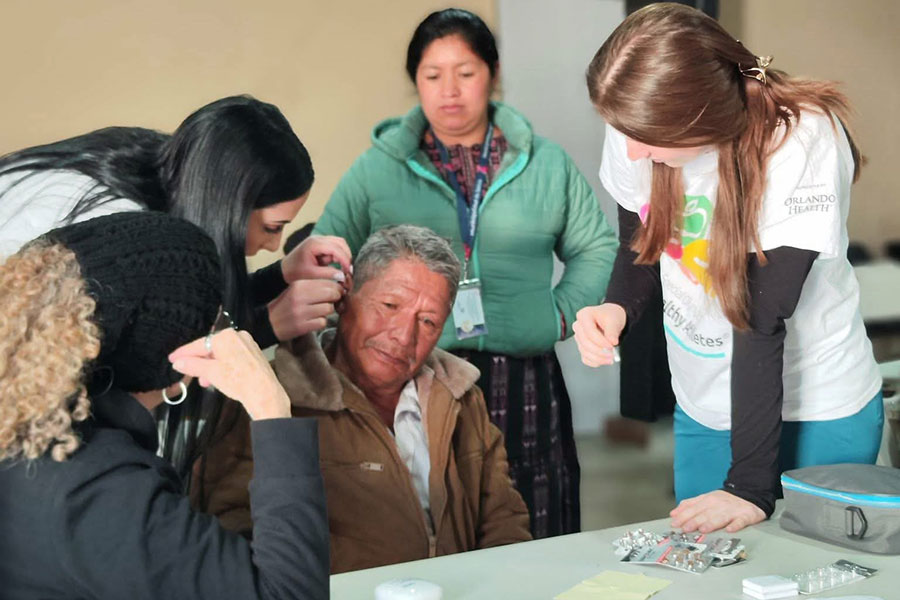
She recalled an emotional interaction with an older man who was eligible for two of the hearing aids available.
“He was so thankful and excited that he came up to everyone who had taken care of him at each station and thanked them vigorously while crying,” Finigan said. “In this moment, I realized just how big an impact we would have on many of the patients we were seeing.”
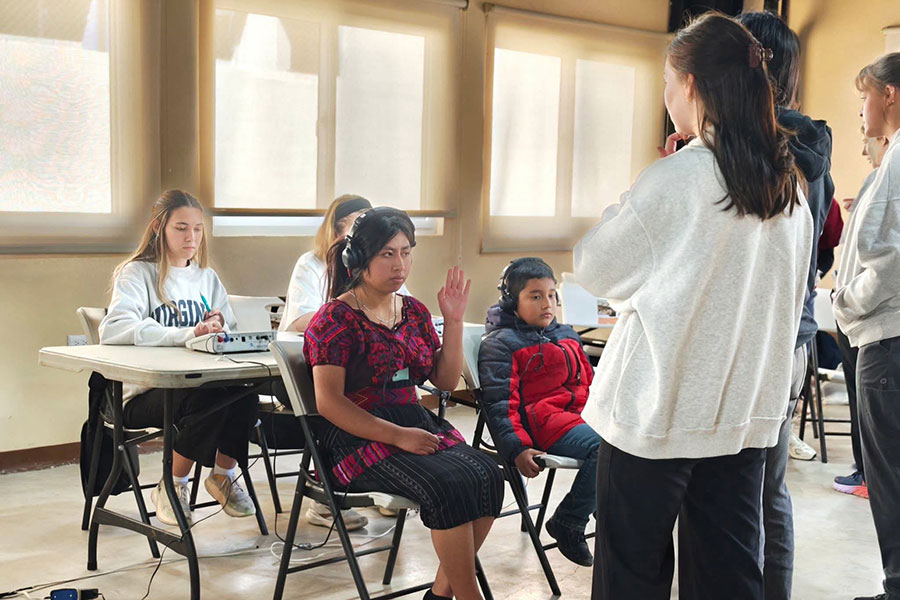
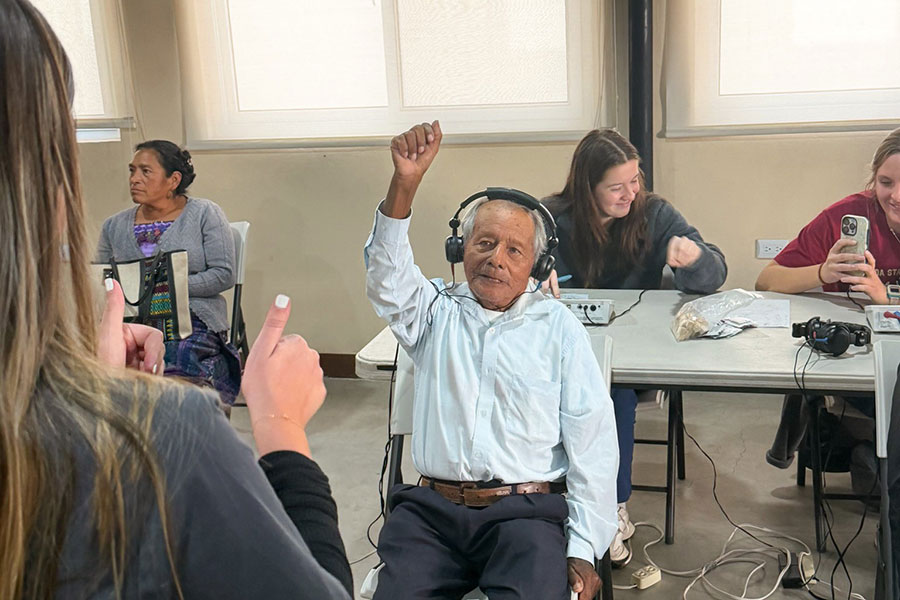
Allison Fordyce, an undergraduate student majoring in Communication Disorders, described an experience working with a young patient that reshaped her perspective on access to care.
“The moment that stands out to me the most is watching a nine-year-old girl hear for the first time,” Fordyce said. “I got to watch her hear sounds for the first time. This made me realize the weight behind the help that we were providing in Guatemala. The ability to hear and have health care that covers this is something that I take for granted every day.”
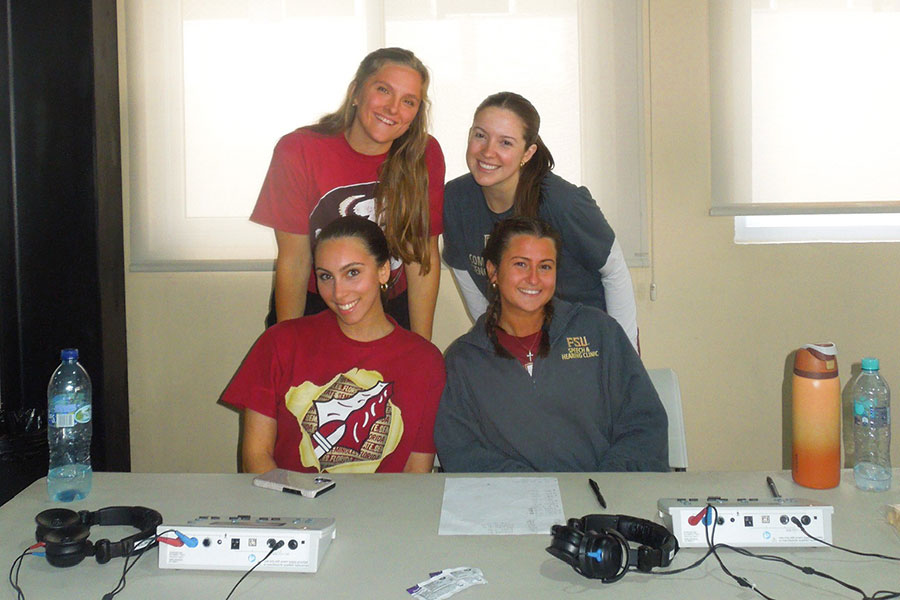
The trip is part of a long-term effort built on trust and collaboration with Guatemalan communities and partners, including Porch de Salomon, Oticon Hearing Foundation, Resound Gives Sound, WSAudiology – Signia, and numerous private donors. Audiologists Kaki Pope, Monica Walker, Ricardo Gauthier, and Chelsea Alexander all contributed to the trip as well.
For more information about the School of Communication Science and Disorders, visit its website at commdisorders.cci.fsu.edu. To learn more about FSU’s global footprint, visit the FSU Global website at global.fsu.edu.