



For international student athletes like Saofé Duval and Gabor Hornung, the transition to college in the United States involves more than practices and matches. It also means adapting to a new language, culture and academic system.
Before arriving on campus, international students whose native language is not English must demonstrate proficiency in spoken and written English through standardized testing. Undergraduate applicants are required to meet minimum score thresholds on exams such as the TOEFL iBT (Test of English as a Foreign Language internet-Based Test). Even with this foundation, adjusting to academic life in the US can present challenges — from navigating classroom discussions to understanding cultural nuances and expectations.
To support this transition, Florida State University offers Academic English Skills for International Students (EAP 1850), a course designed to help undergraduate international students strengthen their academic English and communication skills after enrollment. This past spring, Duval and Hornung enrolled in the course. It also introduces students to U.S. classroom expectations, cultural norms and the wide range of resources available to help them succeed at FSU.
The course is taught by Patrick Kennell, director of the Center for Intensive English Studies (CIES). Founded in 1980, CIES provides English language instruction for international students preparing to study at U.S. universities and operates within The Graduate School at FSU.
“This is one of my favorite courses I’ve ever taught,” Kennell said. “It’s developing their English, but it’s also developing their cultural knowledge and helping them navigate their way through their first semester here at Florida State.”
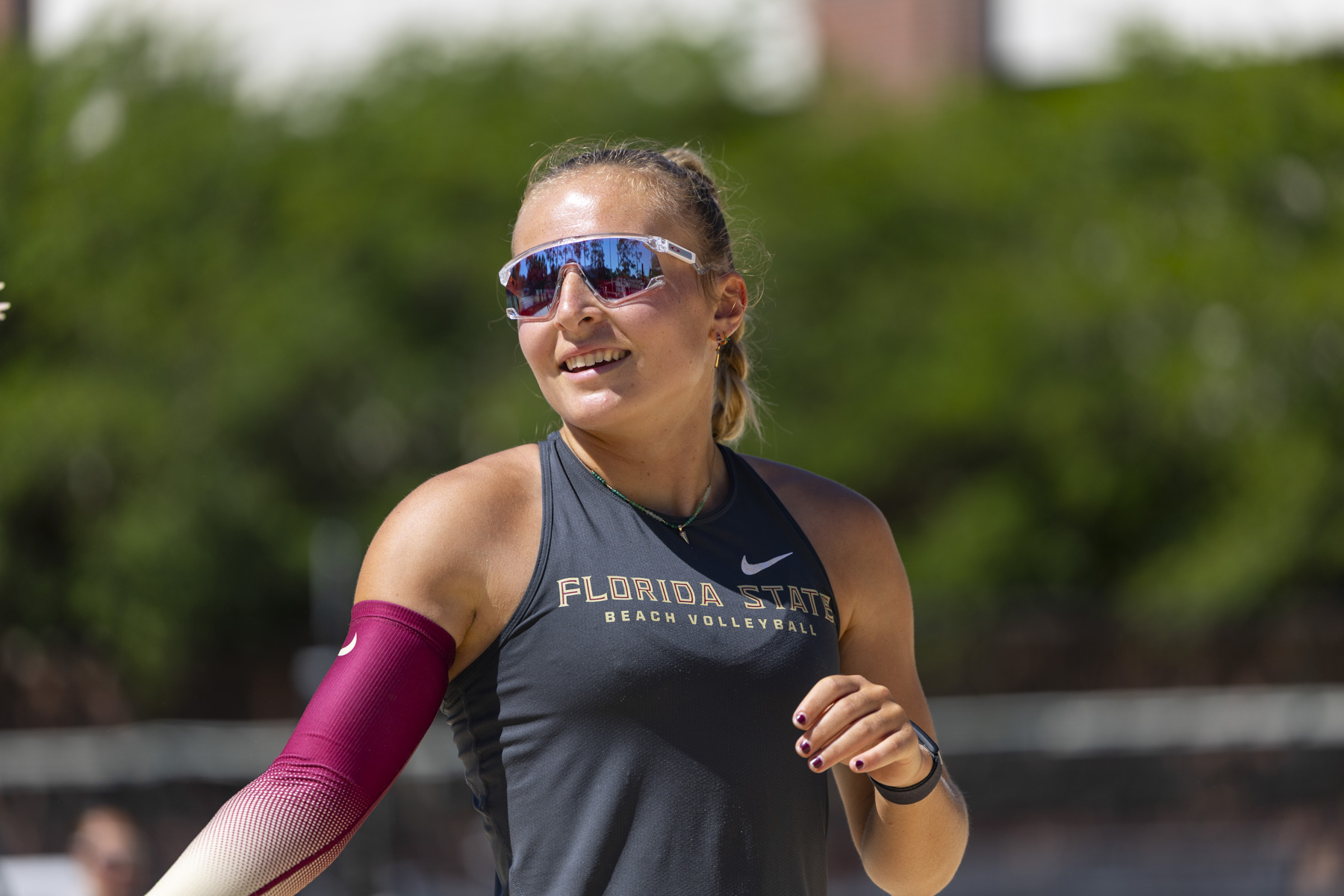
Duval, a freshman on the nationally ranked beach volleyball team, came to FSU from La Couarde-sur-Mer, a seaside village located in the center of the Île de Ré in southwestern France. She’s already noticed asignificant improvement in her English skills.
“I was pretty bad at English when I came, but now I feel more comfortable,” she said. “I can say, ‘I don’t understand, so please can you repeat?’”
Hornung, a freshman on the men’s tennis team from Budapest, Hungary, grew up in the smaller town of Kapuvár. Having already competed in professional tournaments, he remained focused on earning an international degree in the U.S. Now at FSU, he said the course is helping him strengthen his English communication skills.
“This class is very helpful,” Hornung said. “When I speak to Americans, they don’t care if I make a mistake, they understand what I mean, but I want to speak perfectly. I don’t want to make mistakes. And with Dr. Kennell, we consider every little mistake that I make.”
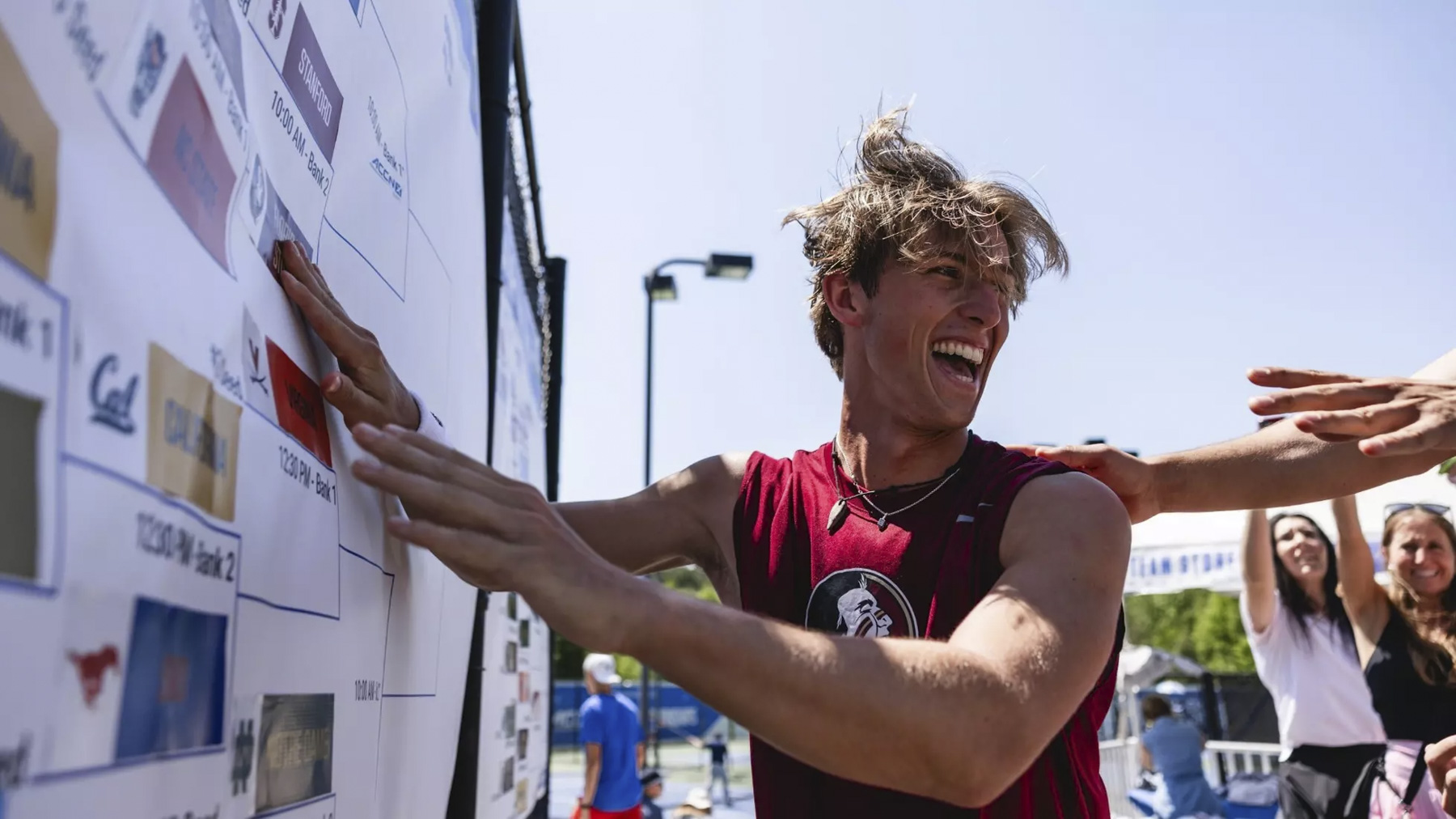
International student athletes bring elite technical skills shaped by different training environments around the world, and that impact is already evident in competition. Hornung opened his first season at FSU with a three-set single victory over the University of Florida’s Andreas Timini, while Duval began her collegiate career with a win on court two alongside sophomore teammate Gella Andrew against the University of Alabama at Birmingham.
Between competitions, both students continue to balance academics while adjusting to life in the U.S.; a process Kennell said requires more than language development.
“I’m so amazed by these students,” he said. “They’re managing their classes and Division I athletics, where the pressure is on them to perform. They’re high-achieving personalities who want to do their best, but they also need to learn about self-care and mental health, so we talk about that, too.”
For Duval, the course has strengthened not only her language skills but also her understanding of American culture.
“This is so important,” she said. “It’s not only the language, even if the language is the most difficult part, but it’s also about the culture and why people are acting like that here, because it’s so different from France.”
For Hornung, the first Hungarian native to play tennis for the Seminoles, the impact of the course will extend far beyond his time at FSU.
“I will think about this class my entire life,” Hornung said. “It’s made a huge impact on me.”For more information about CIES, visit cies.fsu.edu. To learn more about FSU’s global footprint, visit global.fsu.edu.