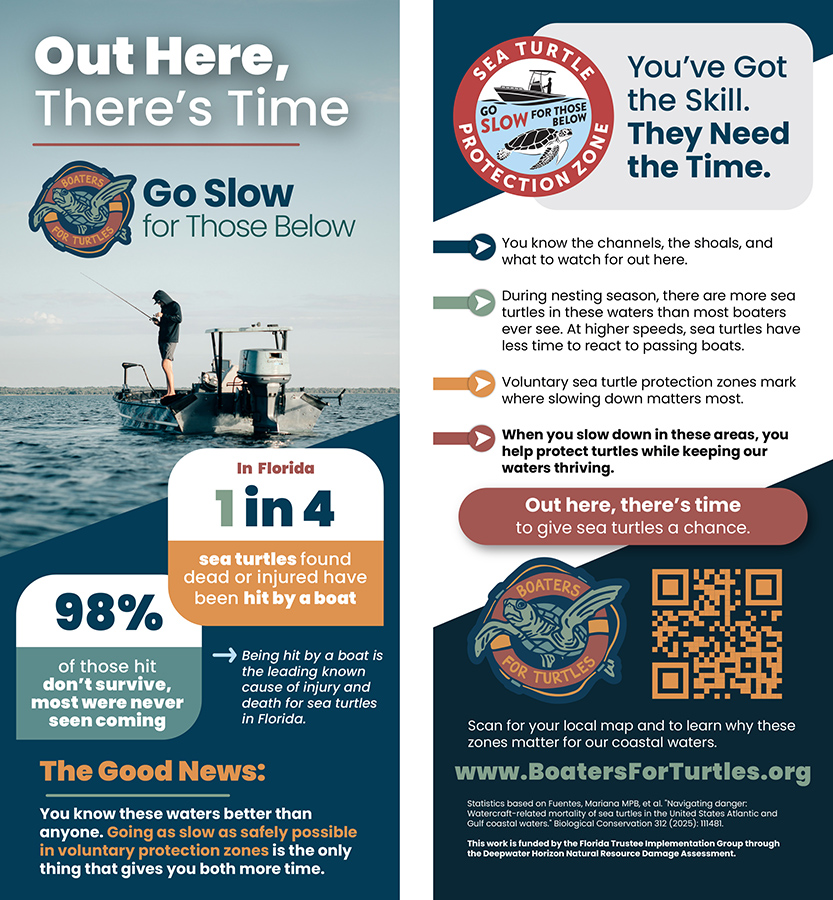



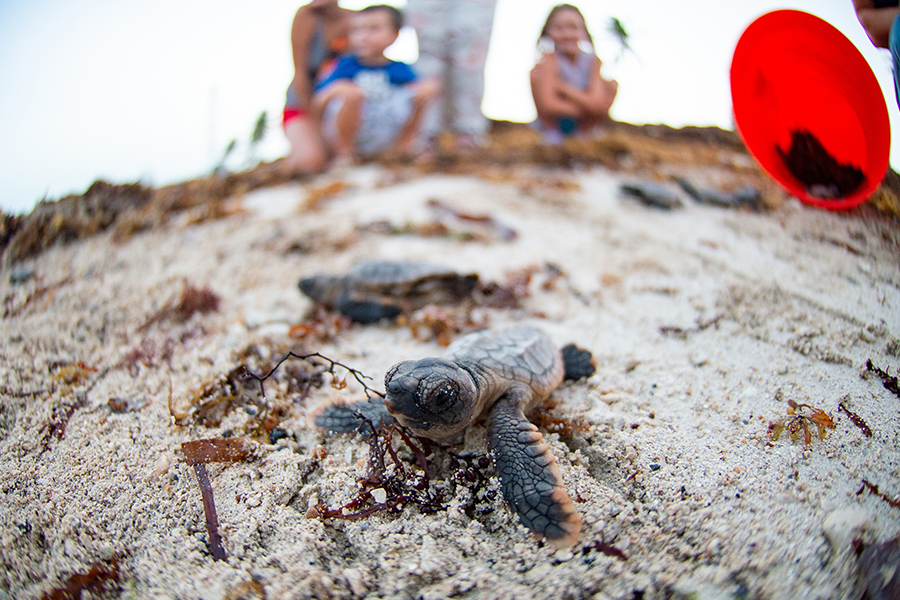
As summer approaches and more boaters take to the water, the risk of vessel strikes increases for the sea turtles that inhabit Florida’s coastal environment.

Florida State University Professor Mariana Fuentes helps reduce the impact on sea turtles by studying issues around their conservation and management. Within the Department of Earth, Ocean and Atmospheric Science, she leads the Marine Turtle Research, Ecology and Conservation Group, where her team studies sea turtles across every life stage, from nesting beaches to coastal feeding grounds.
A recent study identified places on the U.S. Atlantic and Gulf coasts that expose protected marine turtles to the highest risk of being struck by vessels. Along with partners around the state, she is part of a statewide educational campaign called “Boaters for Turtles” to reduce vessel strikes on sea turtles.
Media interested in speaking with Fuentes on conservation issues around sea turtles can contact her at mfuentes@fsu.edu.
What do we know about high-risk areas for vessel strikes?
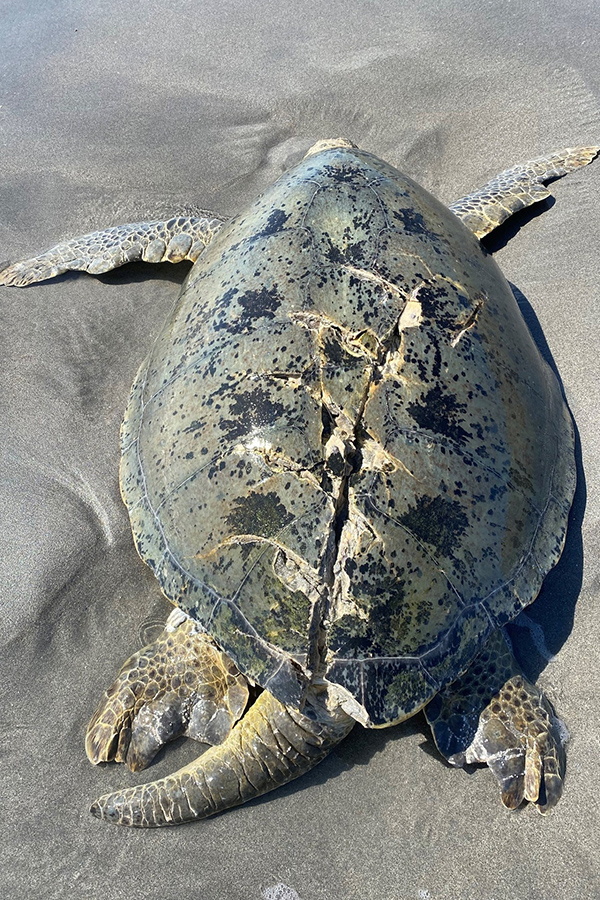
Vessel strikes are not isolated incidents. Our research reveals clear and concerning patterns. Injuries from watercraft are found in roughly 25% of stranded sea turtles, with loggerhead and green turtles among the most affected species. Geographic hotspots span heavily trafficked coastal regions, particularly in Florida, Texas and across the Gulf Coast, where boating activity overlaps with critical feeding and nesting habitats. These areas often include coastal passes and nearshore zones where turtles gather in high numbers. It’s a combination of having more boats and also having more turtles in those areas that make it risky.
Seasonal trends further intensify the issue, as peak boating months coincide with key periods in sea turtles’ life cycles, bringing human activity and marine life into closer and more dangerous contact. While previous studies examined localized trends, our research is among the first to analyze vessel strikes across a broad geographic scale.
How does the Boaters for Turtles initiative turn research into real-world impact?
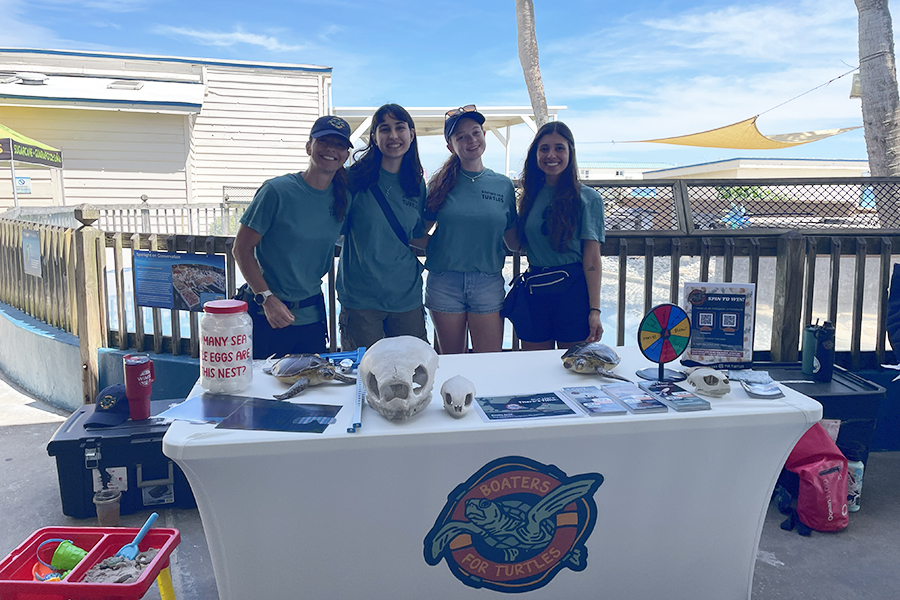
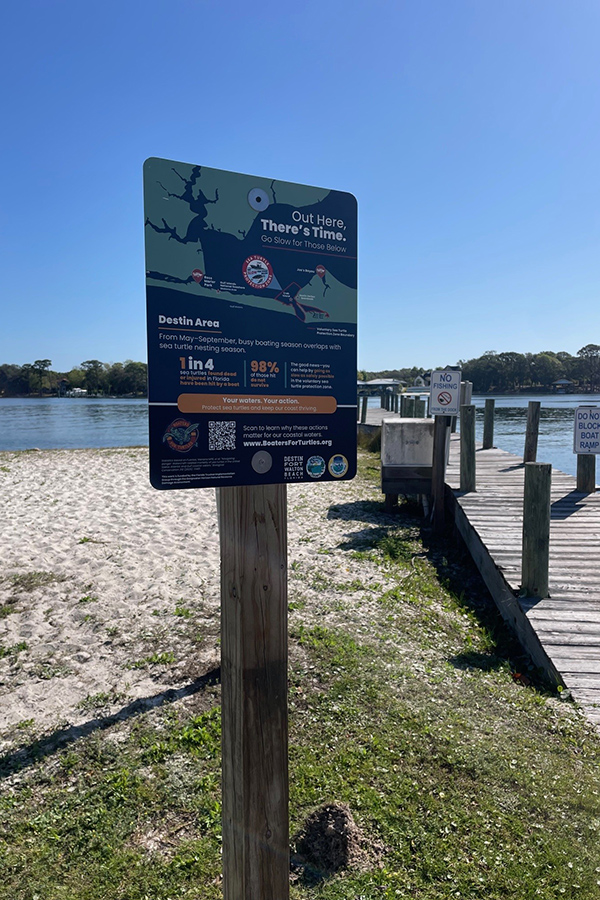
The Boaters for Turtles initiative uses science and community collaboration to help protect Florida’s sea turtles, keystone species that are crucial to a healthy ecosystem. Vessel strikes are a major threat to sea turtles, although there have been initiatives to reduce them through voluntary go-slow zones. We are expanding that work by creating a broader network of voluntary go-slow areas across the state to reduce the threat. We are emphasizing slower speeds in certain areas, highlighting other behaviors boaters can adopt to reduce their impact and working with institutions and county partners across Florida to raise awareness.
What are simple actions people can take to reduce the risk of vessel strikes on sea life?
Small changes in how people operate boats — like slowing down, keeping a careful watch, respecting wildlife zones and giving animals plenty of space — can greatly reduce both the chances of hitting marine life and the severity of injuries if a collision occurs.
What are the next steps in the Boaters for Turtles initiative?
The campaign is built on the data we have collected to identify where go-slow areas are most needed. After launching and implementing additional go-slow zones throughout Florida, the goal is to expand the campaign across the broader Gulf region. Our initial research helped demonstrate how significant vessel strike is as a threat to sea turtles, and now the focus is on scaling solutions and increasing awareness to reduce that impact. The effectiveness of our campaign will be evaluated at the end of the year, so we can learn what worked and what did not work.
What questions are researchers still trying to answer?
Our work is far from finished. While we’ve identified where vessel strikes occur, we’re now investigating how these interactions affect turtle behavior, even when collisions do not happen. This includes studying stress levels, feeding patterns and energy use, as well as how boat traffic influences these behaviors. We’re also examining how boaters respond to speed guidelines and what drives compliance. By understanding both the ecological impacts and the human dimensions, we can develop more effective strategies to reduce risks to sea turtles.