



Long characterized as a disorder known for its physical symptoms, Parkinson’s disease (PD) is becoming more understood by the psychosocial traits that can also affect it.
April is Parkinson’s Disease Awareness Month, spotlighting the progressive brain disorder that affects 10 million people worldwide according to the Parkinson’s Foundation. Recognition of loneliness as a potential root cause for PD was highlighted in an October 2023 groundbreaking study conducted by the Florida State University College of Medicine, which found that individuals experiencing subjective feelings of loneliness have a 37 percent increased risk of developing the disease.
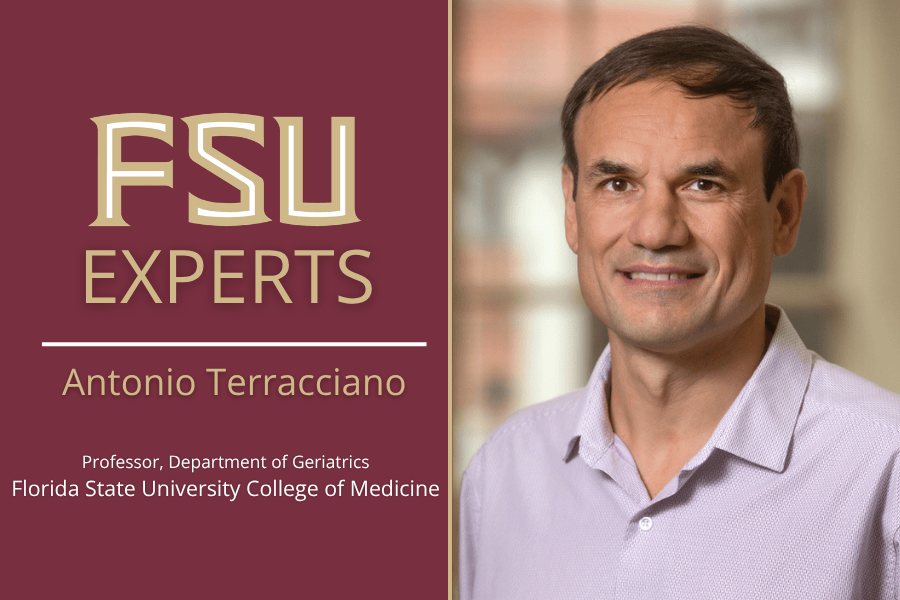
Antonio Terracciano is a geriatrics professor in the FSU College of Medicine who led the study that first identified loneliness as an early warning predictor of PD. His overall research examines the interplay of psychological, cultural and genetic factors in shaping physical and mental health across the lifespan. Terracciano’s work as a researcher focuses on how personality evolves with age, varies across cultures, and contributes to longevity and resilience against neurodegenerative diseases.
While his study has gained substantial media attention since being released, Terracciano feels continuous publicity connecting loneliness and PD is necessary.
“Promoting this connection is vital, as it shifts the focus toward proactive mental and social health interventions that could potentially reduce the long-term risk of neurodegeneration,” Terracciano said of the effect of loneliness on PD.
Media interested in interviewing geriatrics professor Antonio Terracciano on the link between loneliness and PD as part of its annual awareness month may reach out to him via email at antonio.terracciano@med.fsu.edu.
Antonio Terracciano, professor, Florida State University College of Medicine Department of Geriatrics
In terms of raising awareness for Parkinson’s disease, do you believe it’s becoming common knowledge that loneliness is associated with PD?
While awareness is growing, the link between loneliness and Parkinson’s disease (PD) is a relatively recent scientific discovery. Our 2023 study was the first to provide longitudinal evidence showing that individuals who feel lonely have a significantly higher risk of developing PD. Since its publication, the research has gained substantial media attention and is frequently cited, suggesting that the public and medical communities are increasingly recognizing loneliness as a critical psychosocial determinant of health. However, there is still work to be done to ensure this becomes common knowledge.
Since your research was published in 2023, have there been any other key findings you’ve made linking loneliness to PD?
Our 2023 study established a foundational link, showing that loneliness is associated with a 37% increased risk of incident PD, independent of genetic and clinical factors. Beyond loneliness, our broader research program explores how other psychological constructs influence neurodegenerative risk. For instance, we have investigated the roles of purpose and meaning in life, which can serve as protective factors, as well as the personality trait of neuroticism, which is associated with higher vulnerability to PD and other health conditions. These findings collectively suggest that our emotional well-being is critical for our long-term neurological health and resilience against diseases like Parkinson’s.
How can enhancing your social connection aid in preventing neurodegenerative diseases like PD?
It is important to distinguish between social isolation (the objective lack of interpersonal contact) and loneliness (the subjective distressing feeling of being disconnected from others); our research found that the subjective experience of loneliness was a predictor of PD risk. This is in part because loneliness is linked to systemic inflammation, metabolic stress, and neuroendocrine changes that can harm brain health. Furthermore, loneliness creates a state of heightened vulnerability, or a cognitive debt, where the brain is less equipped to withstand biological insults or the natural aging process, potentially accelerating the progression of neurodegeneration. These findings suggest that reducing loneliness by fostering meaningful connections (not just increasing the number of social contacts) can increase resilience against neurodegenerative diseases and promote overall brain health.