



A Florida State University researcher has published the first peer-reviewed study showcasing how a critical thinking course increases long-term reduction in common reasoning biases and errors.
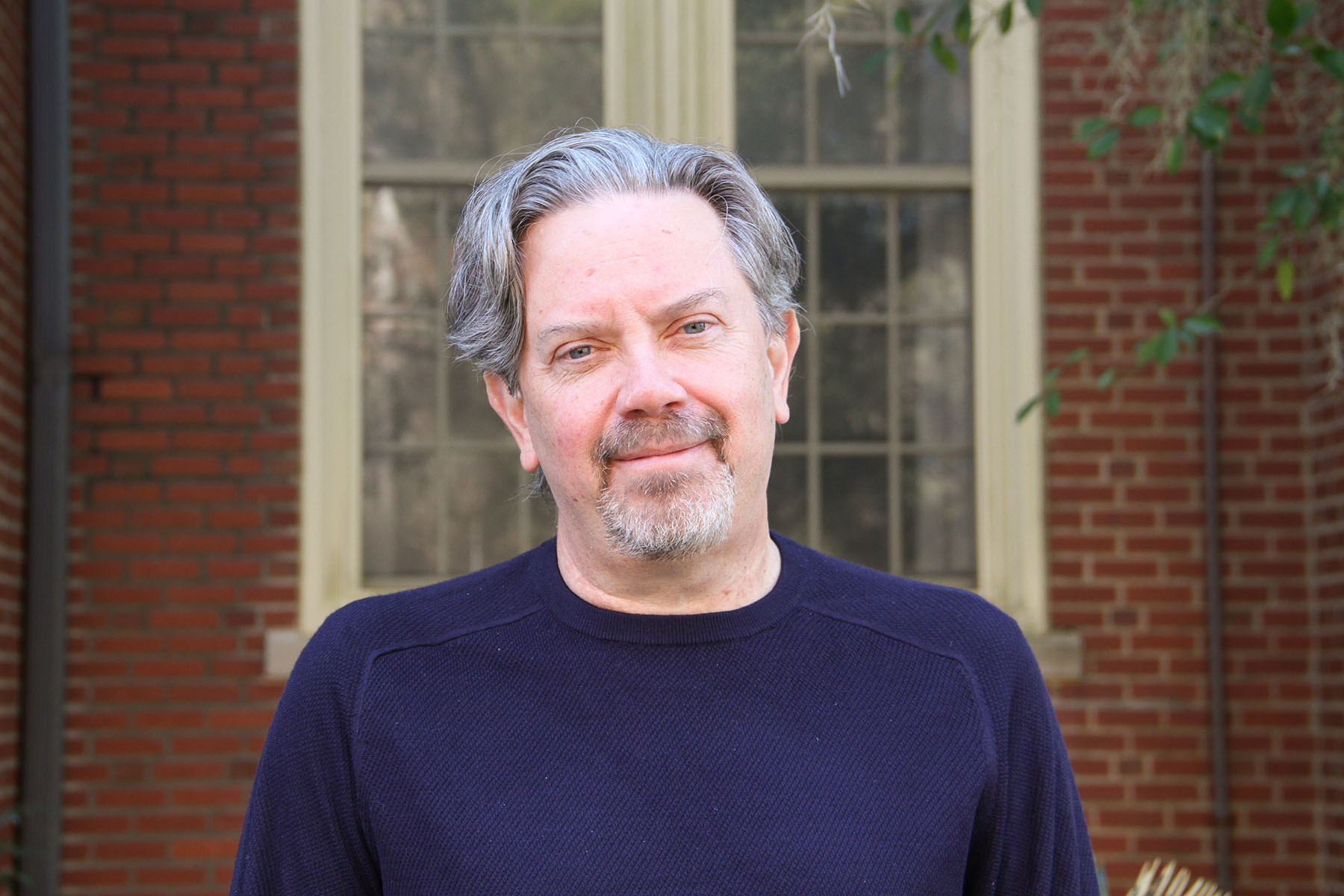
Professor of Philosophy Michael Bishop led the study that revealed that an appropriately designed critical thinking course can drastically reduce four common reasoning biases in students by boosting students’ awareness of the presence of these biases in people’s thinking and prompting them to avoid these biases in their everyday personal and professional lives.
“Critical Thinking Classes Can Reduce Common Biases: Results from a Field Experiment,” was published this month in the Journal of Experimental Psychology: Applied.
“A good critical thinking class doesn’t teach students what to think; it teaches students how to think, whether that’s about important life decisions or social and political issues,” said Bishop, whose research covers the nature of rational reasoning and the nature of happy lives. “Prior to our study, there was little evidence that people who learn critical thinking skills in class continue to use these skills once they leave the classroom. Our research shows that we can teach skills that produce large and lasting improvements in how people think about issues that are important to their lives.”
The study revealed that the critical thinking class produced long-term reductions in four judgment biases: honoring sunk costs, or our tendency to continue a project based on the money and resources already spent; inferring causation from correlation; the regression fallacy, or our tendency to give unnecessary explanations for the natural tendency of outlier events to be followed by more typical events; and overlooking opportunity costs, or making a decision without considering whether there are better alternatives.
“I spent several years developing a critical thinking class at FSU based on a theory that J.D. Trout and I defended twenty years ago,” Bishop said. “This theory says that good reasoning is easy to use, generates accurate judgments and applies to important problems. In the study, Adam Feltz, a professor of psychology at the University of Oklahoma, Paul Conway, an associate professor of psychology at the University of Southampton in England, and I found that a critical thinking class informed by this theory produces large and lasting improvements in how students think.”
Students in the critical thinking class went through two phases of learning: a commitment phase followed by a recognition phase. In the commitment phase, students settled on the right way to think about certain problems and avoid biases. In the recognition phase, students learned to recognize the full range of cases to which those rules can be correctly applied. This two-step training process specifically targeted and corrected a variety of real-life instances of poor reasoning.
“Good critical thinkers make wiser judgments about how to invest their money, raise their children, run their businesses and treat their friends,” Bishop said. “They make smarter choices about whether to stick with a relationship, a job, a major or a project. They reason more clearly and persuasively about important issues.”
At the beginning and end of the semester, students taking the critical thinking course and students taking other philosophy courses evaluated several instances of reasoning. At the end of the semester, students in the critical thinking course improved significantly on four out of five biases tested, while students not in that course still did poorly on all five.
Sixteen months after the end of the course, students were asked to evaluate different instances of reasoning. Students who took the critical thinking class still proved much better at avoiding biases than students who did not, demonstrating how the lessons of properly designed critical thinking courses stick with students far beyond the classroom.
“Professor Bishop utilized results from earlier research to shape his teaching and obtained new research findings while teaching the course,” said Randolph Clarke, Department of Philosophy chair. “This study is an excellent example of how research and teaching enhance each other.”
Bishop, who earned a doctorate in 1990 from the University of California San Diego and served as an associate professor at Iowa State University and Northern Illinois University before joining FSU’s faculty in 2006, used previous research findings and his decades of teaching experience to develop the study, the results of which hold the potential to shape future approaches to critical thinking courses.
“We all think we’re good critical thinkers,” Bishop said. “Our study suggests that for most of us, there is room — and perhaps a lot of room — for big improvements in how we think about the world.”
To learn more about Bishop’s work and research in the Department of Philosophy, visit philosophy.fsu.edu.