



Key Points
- Two Florida State University organizations won 2026 Florida TaxWatch Productivity Awards for helping taxpayers save money.
- Florida Institute for Child Welfare established immersive simulation labs, avoiding $1.09 million in statewide training costs.
- FSU Facilities negotiated tailored vendor contracts, saving up to $3.6 million across 33 off-campus facilities.
Two Florida State University teams have received 2026 Florida TaxWatch Government Productivity Awards for projects that strengthened child welfare training and reduced custodial costs at the university’s off-campus facilities.
The awards recognize public employees and organizations whose work saves money, improves efficiency and directly benefits Florida taxpayers.
This year, awards were presented to the Florida Institute for Child Welfare (FICW) for creating Florida’s first immersive child welfare learning laboratory and to a collaborative team led by FSU Facilities for restructuring custodial operations at the university’s off-campus facilities.
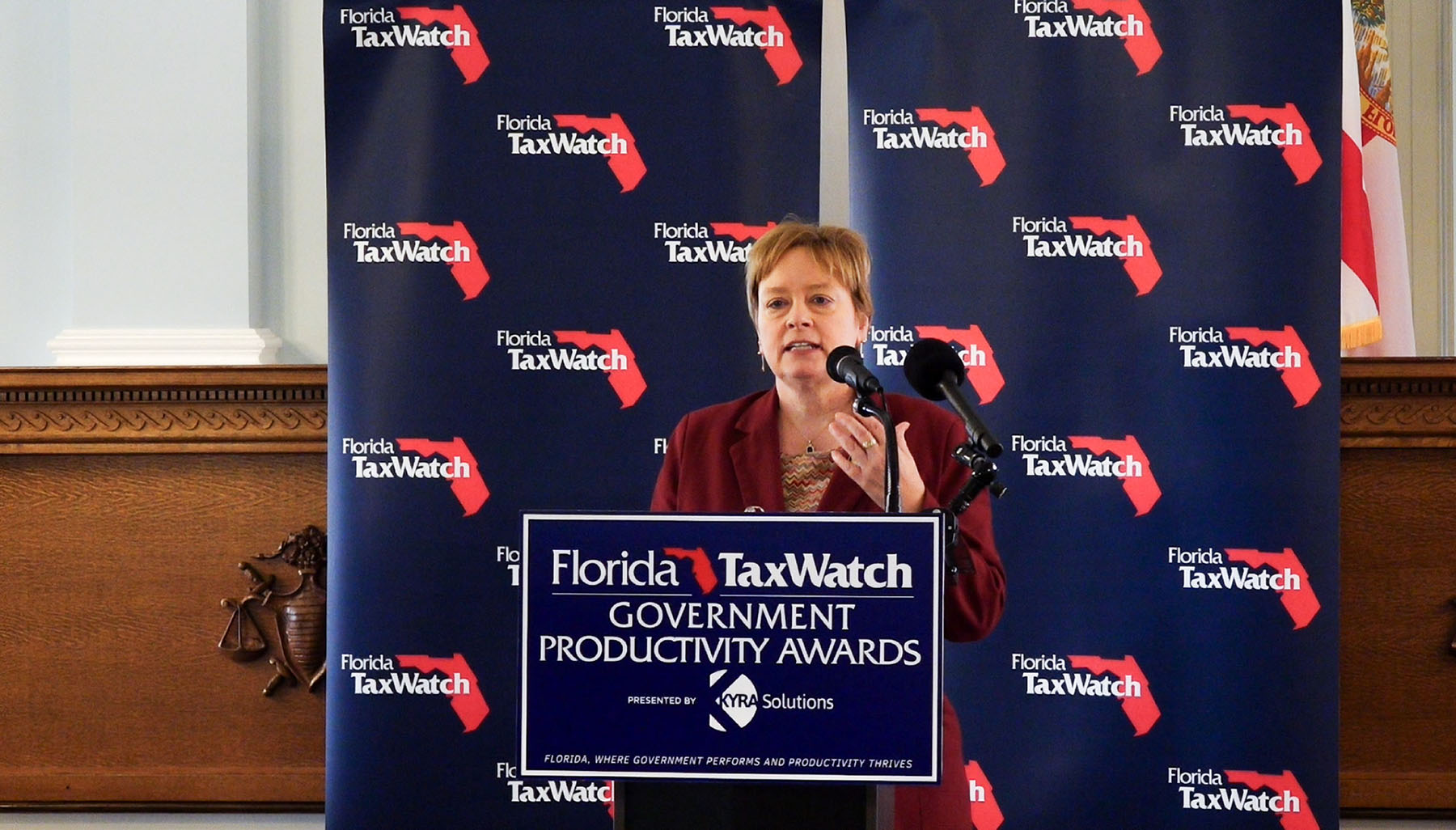
Both teams were honored during a ceremony at the Florida Historic Capitol Museum, joining state leaders and policymakers in celebrating projects that increased operational efficiency, modernized training and saved millions in public funds.
Strengthening Florida’s Child Welfare Workforce
The Florida Institute for Child Welfare earned recognition for its project, “Florida’s First Immersive Child Welfare Learning Lab.”
Child welfare professionals routinely make critical decisions that affect the safety and well-being of children and families. But because standalone simulation labs are costly, training programs across Florida have historically relied on traditional classroom instruction.
To address this challenge, FICW established Florida’s first centralized experiential learning lab. The facility offers professionally equipped simulation environments where child welfare professionals, students and community partners can practice key assessment, communication and decision-making skills before entering the field.
“We are incredibly honored to receive our first TaxWatch Government Productivity Award,” said Lisa Magruder, director of the Florida Institute for Child Welfare. “This recognition validates our commitment to developing innovative, evidence-informed solutions that strengthen Florida’s child welfare workforce.”
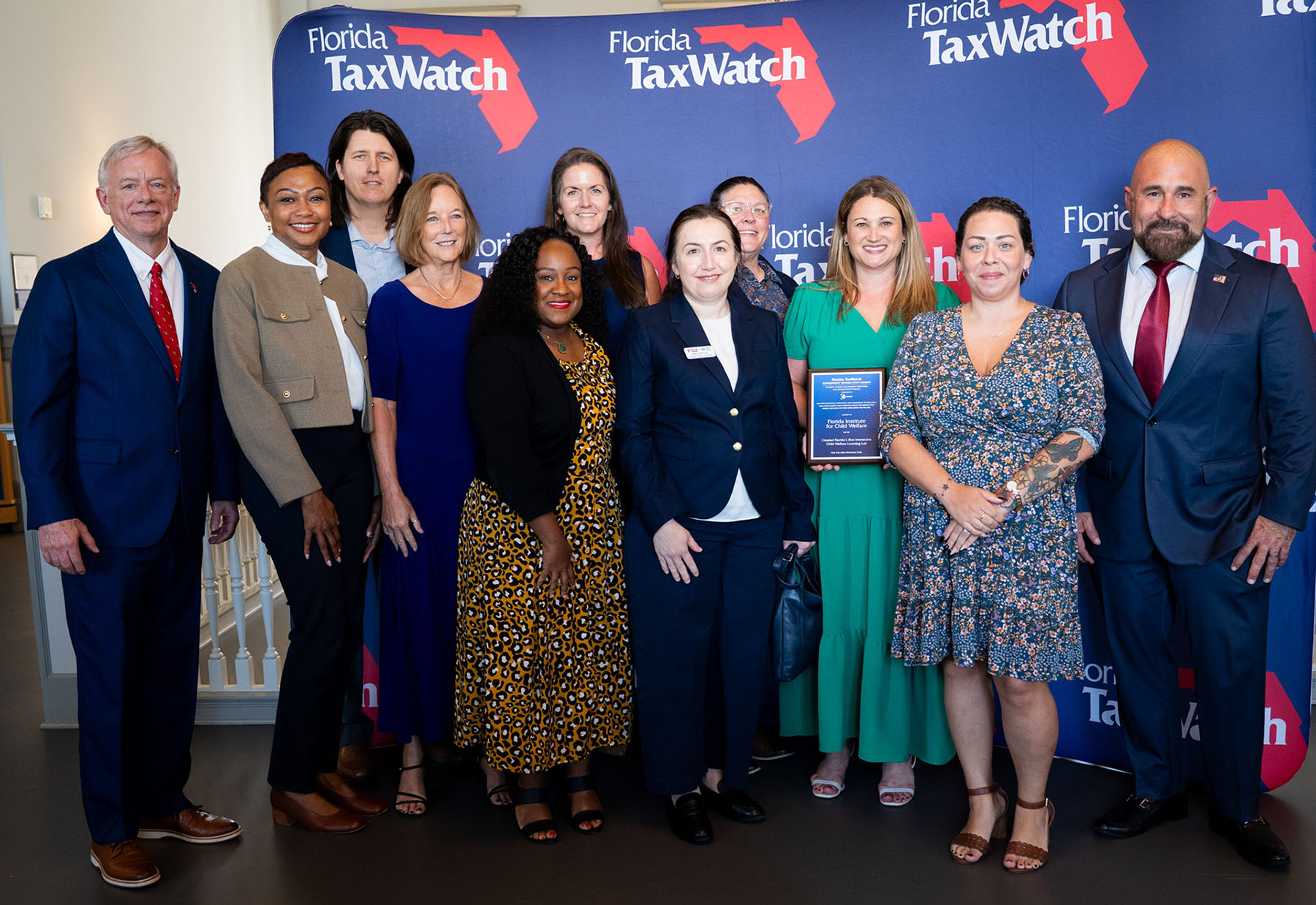
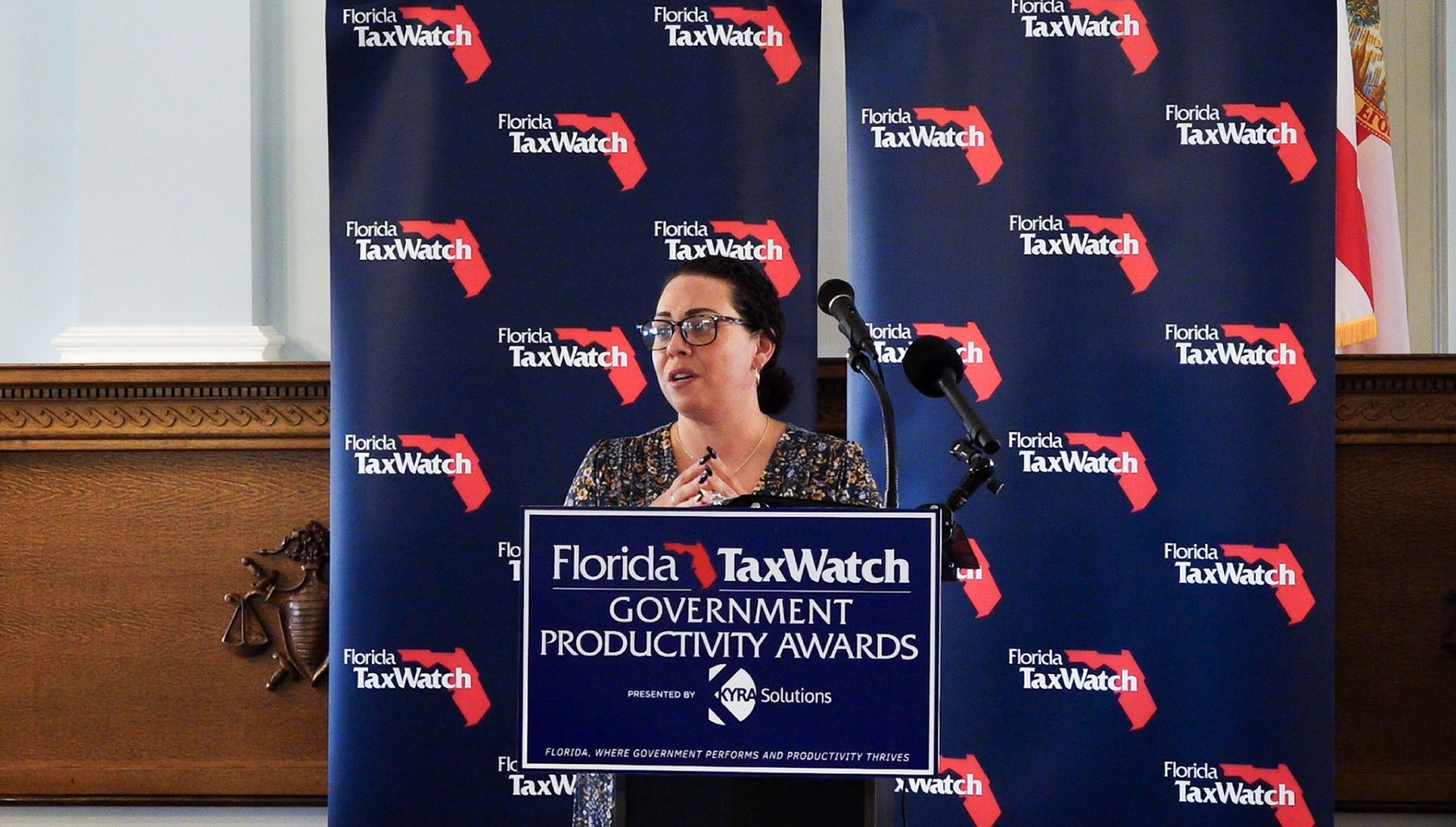
FICW also launched a virtual reality training network, deploying 195 VR headsets across 16 Florida Department of Children and Families (DCF) regional training sites and community-based care organizations. Centralized purchasing saved participating agencies about $292,500 in hardware costs and an estimated $800,000 in annual simulation licensing fees. In total, the shared-services model generated $1.09 million in direct cost avoidance and eliminated the need for separate training infrastructure across the state.
Between April and July 2026, the lab hosted more than 65 visitors during 10 events, supporting DCF preservice cohorts, Northwest Florida Health Network activities, legislative demonstrations and a site visit by Louisiana state officials exploring whether they could replicate the model.
“Through the creation of Florida’s first immersive child welfare learning lab, we have built a shared statewide resource that expands access to experiential learning, fosters collaboration and supports improved outcomes for children and families,” Magruder said. “We are deeply grateful to the Florida Legislature, Florida State University and our many partners whose support and shared vision helped make this achievement possible.”
Transforming Custodial Procurement for Off-Campus Operations
FSU Facilities, in collaboration with FSU Procurement, University Business Administrators and the FSU Research Foundation, received an award for “Beyond the Bid: Transforming Custodial Solutions for FSU’s Off-Campus Facilities.”
FSU manages nearly 400 buildings on its main Tallahassee campus using a centralized staffing model. The university also operates 33 geographically dispersed off-campus facilities, including specialized research laboratories, clinical medical suites and studio production spaces. These facilities require custom cleaning schedules, varying staffing levels and specialized security protocols.
Recognizing that a one-size-fits-all approach would not best serve these specialized facilities, the collaborative FSU team designed an Invitation to Negotiate process that allowed vendors to propose tailored solutions based on each building’s needs.
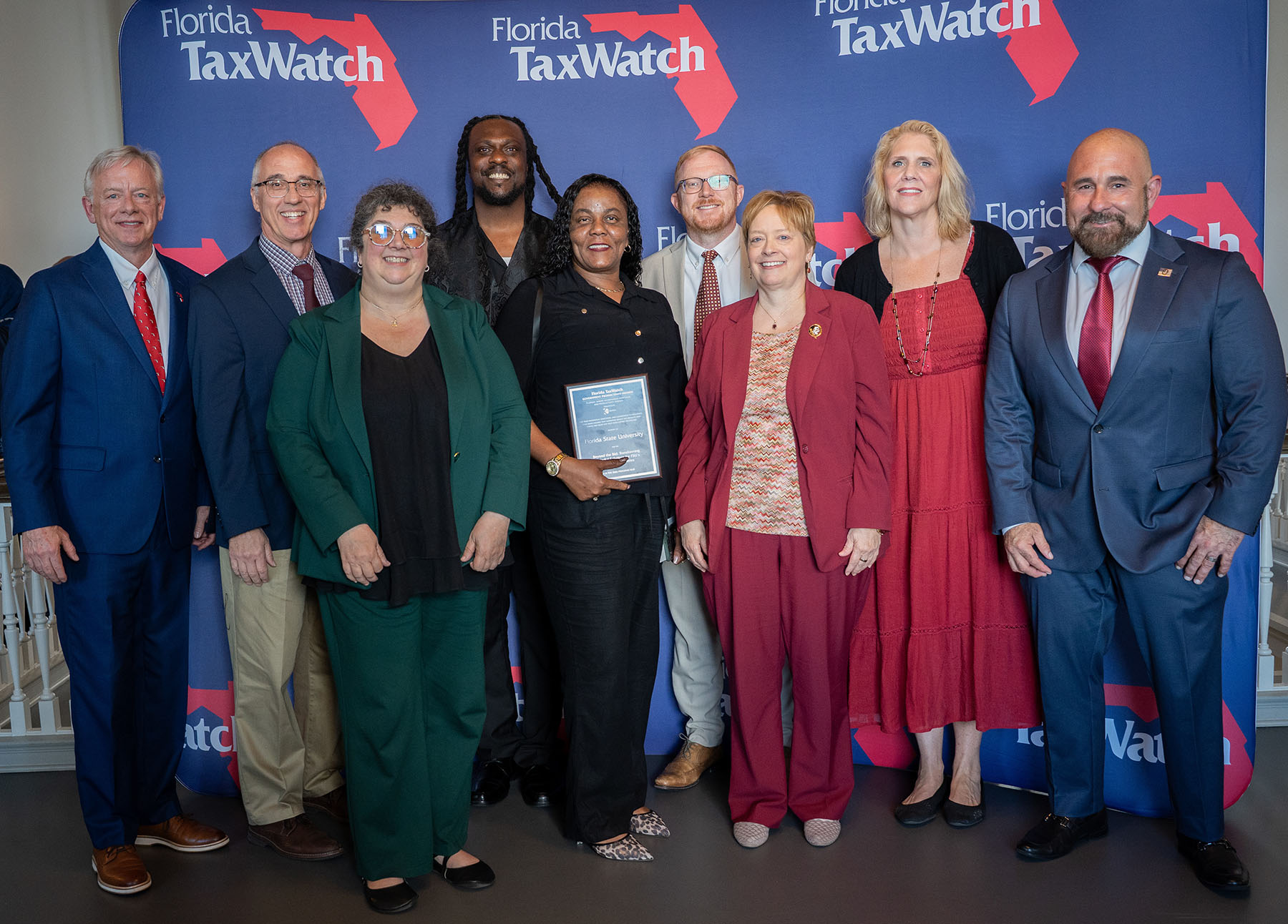
The new strategy gives vendors the flexibility to align staffing and schedules with daily operations, creating a model that can expand as the university grows.
The solicitation generated 34 competitive proposals, allowing the university to establish flexible contracts with clearly defined service expectations and minimize disruptions to patient care, active research and media production.
The resulting multiyear agreement reduces monthly custodial expenditures from about $138,000 to $97,500, saving approximately $485,000 annually. Over the initial five-year contract term, the university is on track to save more than $2.4 million, with total projected savings of as much as $3.6 million over nine years.
“We are honored to receive this TaxWatch Productivity Award, which highlights our team’s dedication to efficiency and responsible stewardship of university resources,” said Zach Newswanger, associate vice president for Facilities and chief facilities officer. “By rethinking how we support our off-campus facilities, we created a model that delivers millions in long-term savings while ensuring our faculty, researchers and students have the world-class environments they need to succeed.”
For more information about the Florida Institute for Child Welfare, visit the FICW website. To learn more about campus operations and services, visit the FSU Facilities website.