


A Florida State University researcher has received a prestigious international award recognizing his work developing the next generation of pharmaceuticals by creating new strategies for synthesizing complex molecules from scratch.
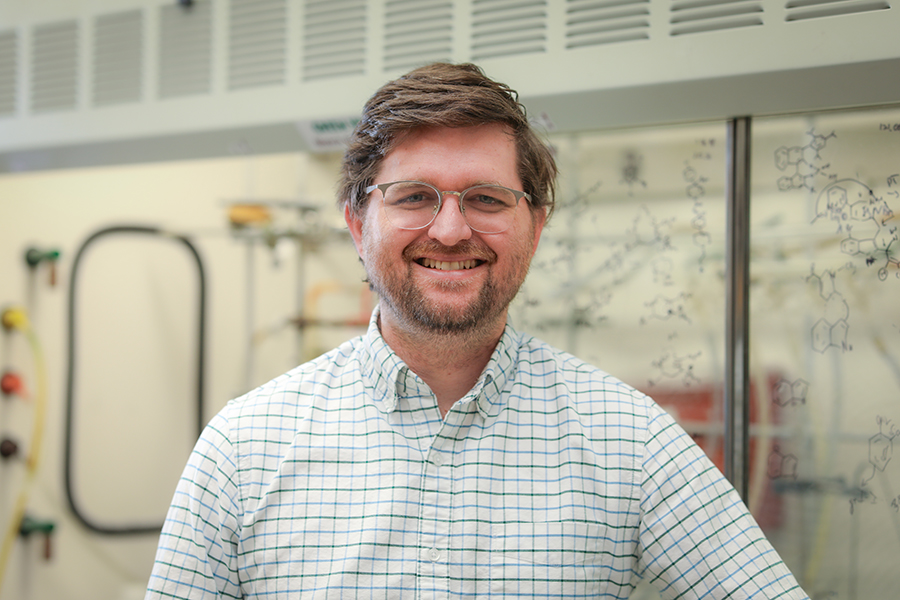
Associate Professor of Chemistry and Biochemistry Joel M. Smith is the first from FSU to earn a Grantee Award from pharmaceutical giant Eli Lilly and Co. In addition to highlighting the significance of his research, the award provides $150,000 in support to the Smith Laboratory as it continues to explore new ways of synthesizing complex molecules, laying the scientific foundation for creation of novel small-molecule drugs to treat various neurological disorders such as migraines, severe depression and Parkinson’s disease.
“I feel an immense sense of gratitude, not only to Lilly but also to my family, the FSU community, and the students and postdoctoral researchers who have driven the lab’s discoveries,” Smith said. “This award is significant because it recognizes the importance of the lab’s work, as well as the department and university’s forward momentum toward greater scientific achievement.”
At 150 years old, Indianapolis-based Eli Lilly and Co. is a world leader in the pharmaceutical industry. In 1988, the company introduced Prozac, marking the first commercially available selective serotonin reuptake inhibitor, or SSRI, to treat depression and anxiety. Today, the company is the maker of blockbuster diabetes and weight-loss drugs Mounjaro and Zepbound. Lilly Grantee Awards have supported emerging young leaders in organic chemistry since 1965 and are unique for winners being “secretly” selected by Lilly scientists, without the need for an application or nomination.
“Dr. Smith is an innovative synthetic organic chemist — or in layman’s terms, a molecule maker,” said Wei Yang, chair of FSU’s Department of Chemistry and Biochemistry. “From the shining list of Lilly Grantee Award winners, which includes Nobel Prize winners and prominent figures in chemistry, it’s clear that the department has successfully built up its strength in synthetic organic chemistry.”
Many drugs on the market today are derived from natural products, or molecules found in living organisms, including plants, fungi and even poisonous frogs. For example, despite their different functions, morphine and the opioid-reversal drug naloxone are both derived from opium poppies. Ergotamine, which is often combined with caffeine to treat migraines, comes from ergot, a group of fungi that are parasitic to cereal grains like rye. As an organic synthesis lab, the Smith Laboratory conducts the hypothesis-driven work standing between transforming a natural product and the commercialized prescription that eventually waits for your pickup at a local pharmacy.
“I feel an immense sense of gratitude, not only to Lilly but also to my family, the FSU community, and the students and postdoctoral researchers who have driven the lab’s discoveries.” — Associate Professor of Chemistry and Biochemistry Joel M. Smith
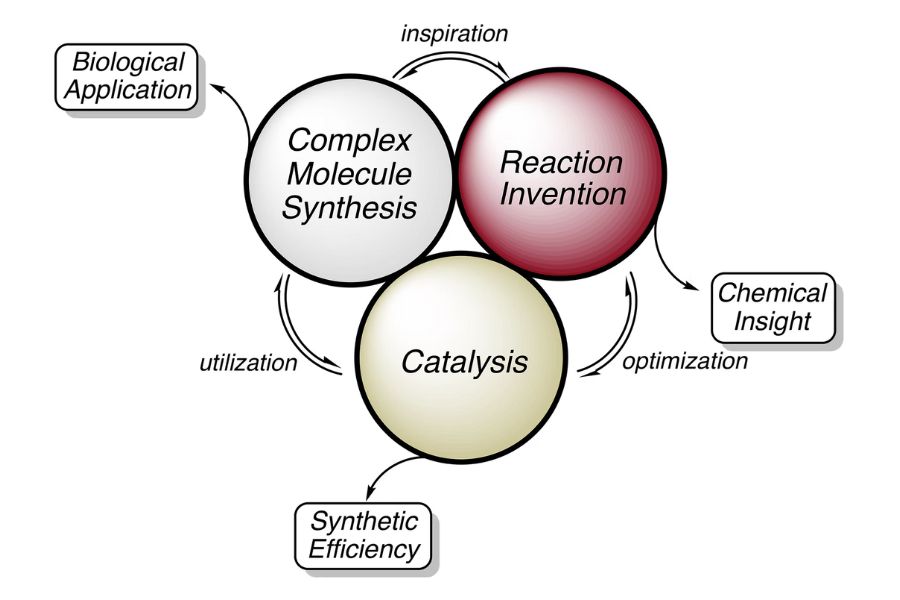
“Much like using Legos, we strive to find the most concise way to assemble naturally occurring molecules, which often inspires the invention of brand-new chemical reactions in an effort to realize the full potential of each substance,” Smith said. “Ultimately, most drug molecules, whether inspired by a natural product or not, require chemical synthesis to explore their biological efficacy. In essence, you often can’t evaluate a molecule’s pharmaceutical or medical potential if you haven’t made it in the laboratory.”
Beyond its significance in medicine, organic synthesis has far-reaching applications in areas such as the cosmetics industry, agrochemical industry and the energy sector. Smith plans to use the funding to support more exploratory and adventurous research, which could lay the groundwork for future academic and industrial collaborations as well as government-funded research endeavors.
“Organic chemists are the ‘infantry’ that serve on the front lines of research and development, tackling the science of molecular assembly and design that will result in the medicines of the future,” Smith said. “Concurrent with the discoveries that we unveil, our laboratory also serves as a training ground for the next generation of synthetic chemists that will tackle the biomedical challenges that will face us as a society in the coming decades.”
For more information about Smith’s work and research in the Department of Chemistry and Biochemistry, visit chem.fsu.edu.