



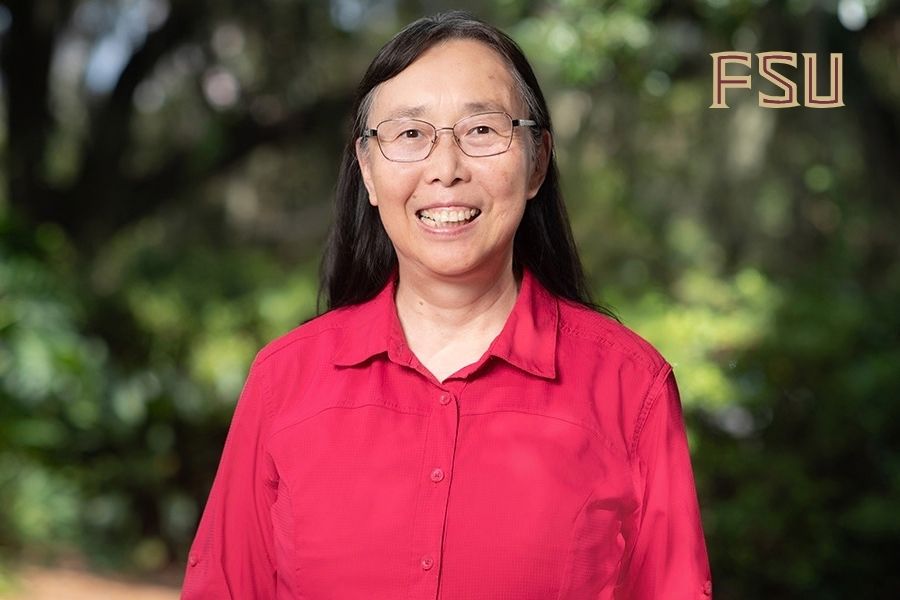
A Florida State University researcher will use a combination of artificial intelligence tools and laboratory testing to find innovative treatments for brain cancer, particularly for children.
Qing-Xiang “Amy” Sang, the Diane and Michael Bruton Professor for Cancer Research in the Department of Chemistry and Biochemistry, received more than $500,000 from the Florida Cancer Innovation Fund to determine which existing cancer drugs have the potential to also effectively treat rare pediatric brain cancers. Sang will use AI to quickly sort through a large volume of data to identify which drugs show the most promise as brain cancer treatments before testing them in the laboratory to investigate how they interact with various brain cancers at the molecular level.
Created in 2024 under the Florida Department of Health, the Florida Cancer Innovation Fund aims to strengthen collaborations between oncologists and scientists by supporting cutting-edge cancer research and treatment models.
“Brain cancers are among the deadliest and hardest-to-treat cancers in both children and adults,” Sang said. “There are many types of brain cancers, so a drug that works well against one may do nothing against another. However, different tumors often share hidden similarities in their underlying biology. This grant will help us examine drugs that are already known to work against certain cancers and test whether they can also treat different, less-studied types of brain cancer.”
There are nearly 600 cancer-fighting drugs on the market today, made possible by countless hours of research, culminating in the production of more than 1 million cancer-related scientific publications worldwide from 2010-2019 alone. These publications contain valuable findings on cancer biology, cancer-drug interactions and patient response to different treatments.
However, because the volume of research is so vast, it would be nearly impossible for one person, or even one laboratory group, to spot crucial patterns across this data set even if they had the time and funding to do so. Sang will use AI to bridge this gap, quickly analyzing which of those nearly 600 cancer drugs have the highest potential to effectively combat specific understudied brain cancers, such as atypical teratoid rhabdoid tumors and diffuse intrinsic pontine glioma — both of which are rare and presently incurable pediatric brain cancers.
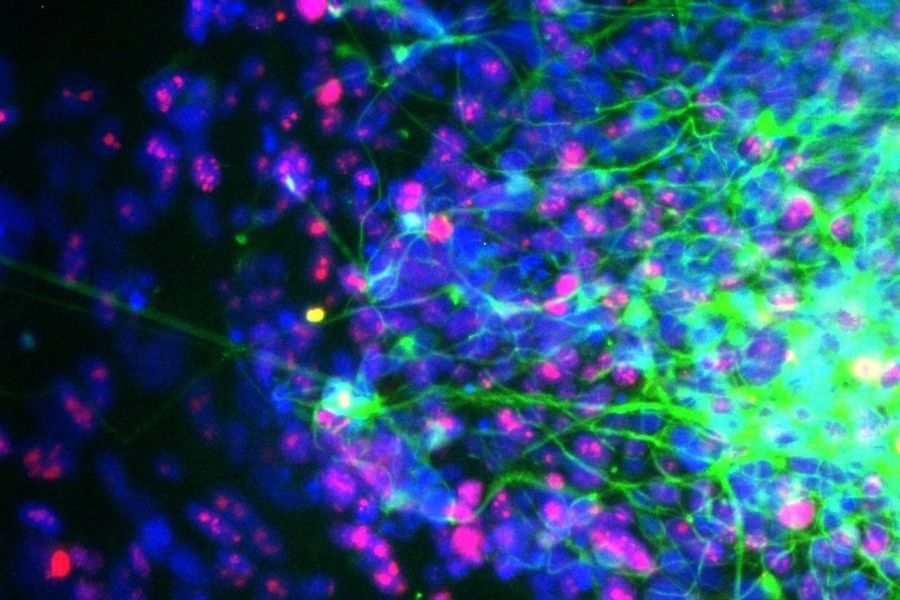
Repurposing existing medicines for cancer-fighting benefits
Sang will expand her search to include drugs already approved by the U.S. Food and Drug Administration for non-cancer conditions. For example, tamoxifen was first approved as a contraceptive pill, but scientists later discovered it can treat breast cancer and even lower the risk of tumor development in high-risk patients.
“By identifying molecular similarities among tumors, we can make educated, data-driven hypotheses about which existing drugs might work in a new biological setting,” said Sang, who is also affiliated with FSU’s Institute of Molecular Biophysics. “We will take our top candidates for novel brain cancer treatments into the lab and test them directly on brain tumor cells to demonstrate that our approach works in practice, not just theory.”
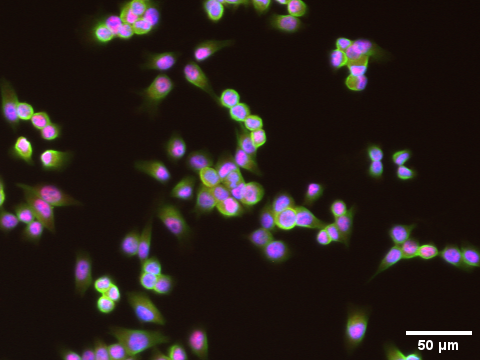
In the lab, Sang will test how the recommended drugs interact with real, patient-derived organoids — three-dimensional, ball-shaped clusters of cells — which behave much more like a whole tumor than a single flat layer of cells. This method aligns with a national shift away from animal testing, driven by the U.S. Food and Drug Administration’s preference for use of computer-based tools and realistic human-cell models when possible.
“Dr. Sang is a highly regarded biochemist with remarkable creativity, persistence, and a research program yielding unique insights,” said Wei Yang, Department of Chemistry and Biochemistry chair. “Her new grant is also a testimony to the advancement of A Strategic Plan to Inspire Research Excellence, or the FSU ASPIRE mission, developed to identify strategic areas of focus and investment, ensuring the sustained growth and impact of FSU’s research enterprise, particularly in the area of drug discovery.”
While Sang primarily focuses on rare pediatric brain cancers, she also seeks treatments for more common forms, like glioblastoma tumors. Compared to more prevalent cancers, such as prostate and breast cancer, brain tumors account for less than two percent of all new U.S. cancer cases, according to the National Foundation for Cancer Research.
“Because we research drugs that are already approved or have gone through early-stage clinical trials, the odds of successfully moving them toward new patients are much higher than trying to build a brand-new compound,” Sang said. “This is especially important for rare brain cancers, which often attract little interest from pharmaceutical companies simply because the number of patients is small and potential profit is limited.”
Sang’s work also supports FSU Health, an academic health system combining the expertise of hospitals, physicians, clinics, research, education and innovation to improve the health of our community.
“Our goal is to extend the lives of cancer patients, enhance quality of life and when possible, provide a cure,” Sang said. “I hope that in our efforts to repurpose existing drugs, we have a realistic shot at finding effective treatments for difficult brain cancers in a quicker timeframe.”
To learn more about research conducted in the FSU Department of Chemistry and Biochemistry, visit chem.fsu.edu.