



Key Points
- Florida State University Cecil B. Day Distinguished Professor Nathan Line provides his expertise on what is causing fall travel numbers to rise, rivaling the summer travel season.
- Line believes the rise of fall travel benefits smaller towns and local economies despite the unpredictability of the weather in the months of October and November.
Once considered a slow season for travel, fall is becoming an increasingly popular time to take trips and enjoy the year’s most picturesque scenery.
According to Airbnb, fall has become a popular season for weekend getaways, particularly among younger travelers visiting lesser-known towns. These trips may include viewing peak foliage, apple picking, attending concerts or sporting events or simply relaxing.
A survey conducted by market research platform Focaldata involving 2,000 U.S. adults showed that 60% of respondents were planning a short trip in the fall, a trend that is showing how weekend getaways are eclipsing longer vacations. Global luxury travel network Virtuoso referred to the season as “the new summer” after its own bookings increased nearly 60 percent year-over-year.
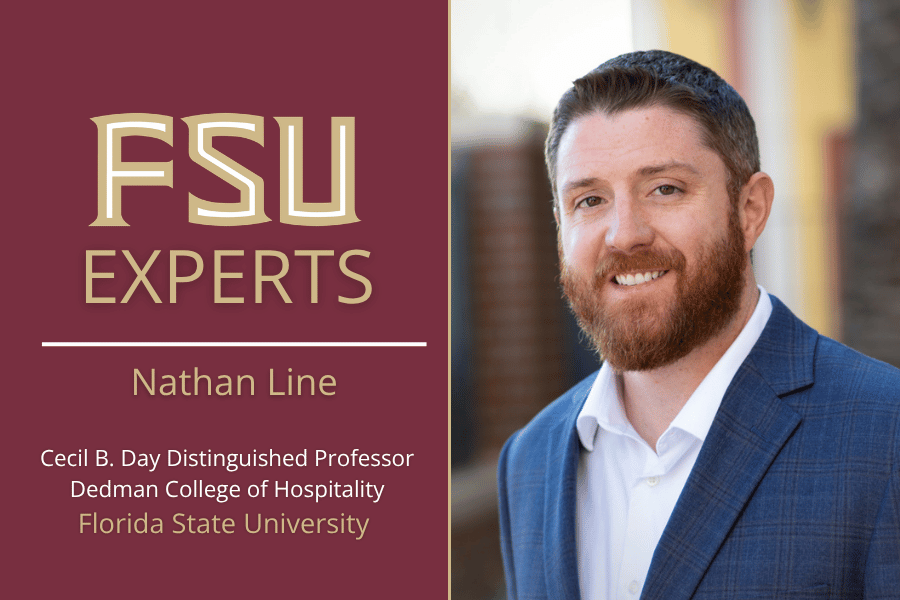
Florida State University’s Nathan Line, the Cecil B. Day Distinguished Professor, is an expert on hospitality marketing, consumer behavior and hospitality and society within the Dedman College of Hospitality. He mentions that the rise of fall travel benefits smaller towns and local economies despite the unpredictability of the weather in the months of October and November.
“Fall travel is a major economic driver in destinations where it is a core season,” Line said. “New Hampshire expects about 4 million fall visitors, while communities throughout the Appalachian Mountains, Catskills, Adirondacks, northern Michigan and New England experience a tremendous influx. However, foliage tourism is weather-dependent. Temperature, precipitation and elevation can shift peak color from early October in the mountains to several weeks later in the valleys, making ‘leaf chasing’ unpredictable. Even with that uncertainty, fall visitors generate substantial economic activity for communities large and small.”
Much of the increased travel is attributed to Gen Z, who find value in these trips because of their relative affordability and ability to explore under-the-radar destinations. According to Line, social media has a heavy influence on the younger generation, but it can also work against them.
“Social media certainly influences fall travel, although it is difficult to isolate its impact from factors such as increasingly flexible work schedules,” Line added. “Influencers and trends have a chicken-and-egg relationship: influencers can create trends, but trends also create influencers. They can draw attention to smaller, lesser-known destinations and spread demand beyond traditional fall travel hubs in Vermont, New Hampshire, Tennessee and Virginia. However, artificial intelligence complicates the picture because creators can now generate fall foliage content from places that may not even exist.”
Media interested in understanding the rise of fall travel and the factors behind it may reach out to Professor Nathan Line via email at nline@dedman.fsu.edu.
Q&A with Nathan Line, Cecil B. Day Distinguished Professor, Florida State University
How recent is this phenomenon of increased travel during the fall season?
“Fall travel has deep roots. Places like New England, the Blue Ridge Mountains and the Great Smoky Mountains have drawn visitors for generations. I’m from Gatlinburg, Tennessee, the gateway to Great Smoky Mountains National Park, where October rivals July as the busiest month because of fall foliage. College football adds to that appeal, with fans traveling to games at schools such as the University of Tennessee and Virginia Tech while also enjoying the foliage. What has changed more recently is that some families who once traveled only in summer are shifting their trips to the cooler fall months.”