



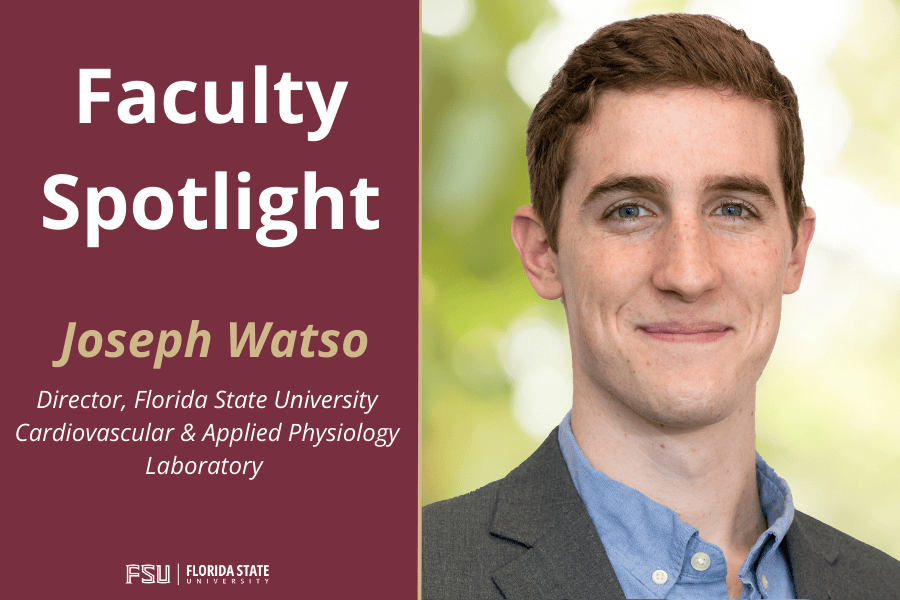
As the director of Florida State University’s Cardiovascular & Applied Physiology Laboratory (CAP Lab), Joseph Watso is leading the way on research aimed at supporting better heart health.
Cardiovascular disease continues to be the leading global cause of death. Watso’s team at the CAP Lab, part of the Anne Spencer Daves College of Education, Health, and Human Sciences, works daily to advance knowledge on the modifiable factors that people can change to reduce their risk of developing chronic diseases.
One area of advancement is studying the calming effects of breathing through your nose. In 2023, their study found that nose breathing lowers blood pressure and can relax one’s heart rate — indicating a calming effect for the nervous system. These critical findings were published in large news outlets like BBC, and Watso noticed the applied exercise being used in clinical settings.
“I heard from a colleague at a local hospital that there was a clinic where some of the nurses would actually coach individuals who had high blood pressure to just breathe through their nose to try to relax them,” Watso said. “The fact that some of the work they were doing has direct application is always the best takeaway for our impact. It means a lot to me and especially to the team members.”
The CAP Lab involves a true team effort of students training to become the next generation of scientists and health care practitioners. Watso’s path to the profession included mentorship from others who always had answers for his curiosities, and he takes that same approach with his students. Many have progressed to other impressive industries, including physical therapy, public health and physician health.
“Everybody comes from a different background; they have different ideas, and we try to create a culture that allows them to share those ideas,” Watso said of his CAP Lab team. “But it’s also safe enough to question each other’s thoughts and ideas from a scientific point of view. I empower the students to help them get experiences leading and coming up with ideas and making decisions.”
Watso’s areas of focus include applied physiology, cardiovascular physiology, exercise physiology and environmental physiology. His inspiration in these fields came when he was a kid running around the playground, noticing he wasn’t as quick as some others and connecting his interest to human physiology and athletics.
Narrowing his scope of interest, he became passionate about helping others from a health perspective.
“I sort of shifted to more of a health focus, specifically on cardiovascular health,” he added. “As we know, heart disease, heart attacks and strokes are major causes of death. And I found a lot of curiosity in how the body works and trying to understand that and trying to help people.”
The CAP Lab studies how the body responds to everyday physical stressors, such as standing, blood pressure changes or even heat, to produce actionable insights about human physiology. Watso’s major focus right now is blood pressure regulation as it relates to hypertension — the clinical term for chronic high blood pressure that is the leading modifiable risk factor for cardiovascular disease.
Watso believes more attention should be given to hypertension and ways it can be limited.
“That’s what we’re trying to address by using different interventions like exercise, diet and little tweaks and refinements for different individuals or populations on how to help keep their heart healthy as they age,” Watso said of educating others on hypertension.
Finding simple ways for individuals to reduce their own blood pressure is a sticking point for Watso and the CAP Lab. Hypertension is often referred to as the silent killer because its symptoms rarely show. But there are easy solutions to better monitor it.
“The best investment is spending 20 bucks on a home blood pressure monitor and checking it a few times a month,” Watso suggested.
The CAP Lab is producing several more studies in relation to heart health and the circulatory system. Their work is heavily supported by FSU as the university continues investing in this focal point of health and wellness.
“There’s a lot of great collaborators on campus that I’ve worked with across departments and colleges,” Watso said. “I’ve been lucky enough to receive a few internal pilot grant awards that have really helped springboard our research.”
As the CAP Lab produces influential studies and pioneers interventions, it stands as a leader in the fight against heart disease and hypertension, shaping the future of cardiovascular health. Their work is a signature part of the FSU Health initiative that is transforming health care in Florida through the collaboration of research, education and clinical care.