



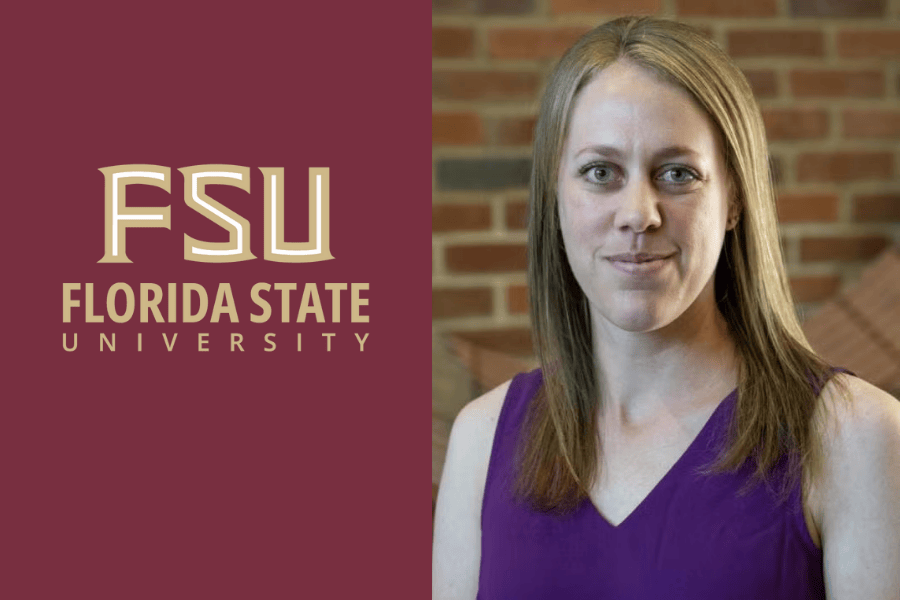
Andrea Lobene, assistant professor in the Florida State University Department of Health, Nutrition, and Food Sciences within the Anne Spencer Daves College of Education, Health, and Human Sciences (Anne’s College), has received a $300,000 grant from the U.S. Department of Agriculture (USDA) to research a new approach to offsetting sodium intake in a typical diet.
Lobene’s study explores whether it is more effective to promote a high-potassium diet rather than encourage a low-sodium diet. High-potassium foods like fruits, vegetables and dairy products have been shown to reduce the negative effects of high-sodium diets in controlled studies.
Worldwide, high-sodium diets contribute to about 1.65 million cardiovascular-related deaths annually. Lobene aims for her research to play a role in lowering this significant statistic.
“I’m honored to receive this grant,” said Lobene. “This was the first major external grant I applied for as an assistant professor, and I am grateful to the USDA for supporting this work that I’ve been wanting to do since I was a postdoctoral researcher.”
“I am grateful to the USDA for supporting this work that I’ve been wanting to do since I was a postdoctoral researcher.”
Andrea Lobene, Assistant Professor of Health, Nutrition, and Food Sciences
In Lobene’s study, she will divide participants into randomly assigned groups, with some participants receiving education about reducing sodium intake while others will be coached on how to increase potassium in their diet.
High-sodium foods are a challenge for a variety of reasons, Lobene explains.
“We know that a lot of our food tends to be high in sodium, especially foods that come pre-packaged or prepared outside our home,” said Lobene. “Foods prepared outside the home are the biggest sources of sodium in our diet. People are busy, they don’t always have the time or energy to cook a meal from scratch but still need to put food on the table, and food prepared outside the home tends to be more convenient.”
The USDA-funded grant continues Lobene’s research by taking her experiment on high-potassium diets to see if the positive results can still be achieved in real-world settings. Her research aligns with the university’s FSU Health initiative in combatting the risk factors of cardiovascular disease.
As a registered dietitian who holds a doctorate in nutrition science, Lobene emphasizes taking research verified in a laboratory setting and making sure it works with the lifestyle of everyday people.
“From both a research and public health perspective, I hope this work provides strong preliminary evidence that increasing potassium intake is both feasible and effective to counteract the harmful effects of excess sodium,” she added. “This could represent a paradigm shift from only targeting a reduction in sodium intake.”
Visit the FSU Department of Health, Nutrition, and Food Sciences website for more information on its innovative programs and institutes.