




Florida State University researchers are part of a multi-institutional team awarded a $5 million grant from the U.S. Department of Health and Human Services to develop new tools using artificial intelligence to help children with speech and language limitations communicate.
Andrea Barton-Hulsey and Michelle Therrien, associate professors in the FSU School of Communication Science and Disorders, will lead two of six projects supported by the five-year Rehabilitation Engineering Research Center on Augmentative and Alternative Communication grant.
The team’s work focuses on developing AI-enhanced tools to help children with significant speech and language limitations communicate more easily and precisely. Notably, the collaborative effort also includes a constituent board of adults who use augmentative and alternative communication (AAC), ensuring that the research is guided by the expertise and lived experiences of people with disabilities.
“I am thrilled that the work of Dr. Therrien and Dr. Barton-Hulsey is being supported through this significant funding,” said Dean Michelle Kazmer of FSU’s College of Communication and Information. “Their combined expertise and innovative application of AI will help improve the lives of young people, both those who use augmentative and alternative communication tools as well as those who interact with them. Their impactful solutions in application of health technologies align beautifully with FSU Health and with the needs of children in Florida and across the globe.”
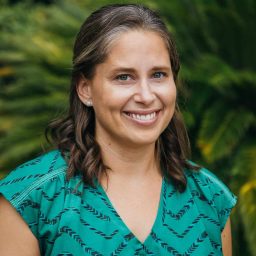
Therrien’s research project focuses on identifying “social zones” on playgrounds, analyzing the language used in those zones and developing technology supports to help children who use AAC communicate more effectively with their peers.
“Friendships are protective factors for physical health, mental health, academic performance, and community engagement,” Therrien said. “Giving children a voice is critical to building relationships and preventing social isolation.”
Barton-Hulsey leads the literacy assessment portion of the grant, which aims to create and evaluate new technology for assessing literacy in children with intellectual or developmental disabilities who use AAC.
“Providing young children with communication tools not only gives them credibility but also prevents judgment about their true abilities, opening doors to academic learning and further development,” Barton-Hulsey said.
Both projects are part of a larger collaborative effort involving researchers from FSU, University of Arkansas, Auburn University, Penn State University and Temple University, as well as the constituent board of adult AAC users. The team’s efforts also include ensuring that participants are fairly compensated for their expertise and time.
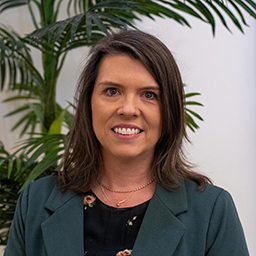
“These grants allow us to address gaps in supporting early communication and literacy development for children who use limited or no speech,” Barton-Hulsey said. “Our collaboration with engineers, educators and adults who use AAC is essential to developing effective tools and strategies.”
The projects under the grant add to the growing body of research based at FSU that help generate and share innovative strategies for improving human communication across the entire lifespan.
“This grant is a testament to the expertise and innovative approaches of Dr. Barton-Hulsey and Dr. Therrien to solving real-world challenges,” said SCSD Director Carla Wood. “This award positions our school as a vital hub for cutting-edge AAC research that will directly impact clinical practice, inform how we prepare the next generation of practitioners, and strengthen our collaborative work through FSU Health to serve children and families in our community and beyond. We are incredibly proud that their work helps ensure that every child has access to the communication tools they need.”
For more information about FSU’s College of Communication and Information, visit cci.fsu.edu. To learn more about FSU’s School of Communication Science and Disorders, visit commdisorders.cci.fsu.edu.
FSU Health is a transformational initiative to improve health in Florida by leveraging Florida State University’s cutting-edge research capabilities and academic offerings to forge new collaborations with clinical partners.