



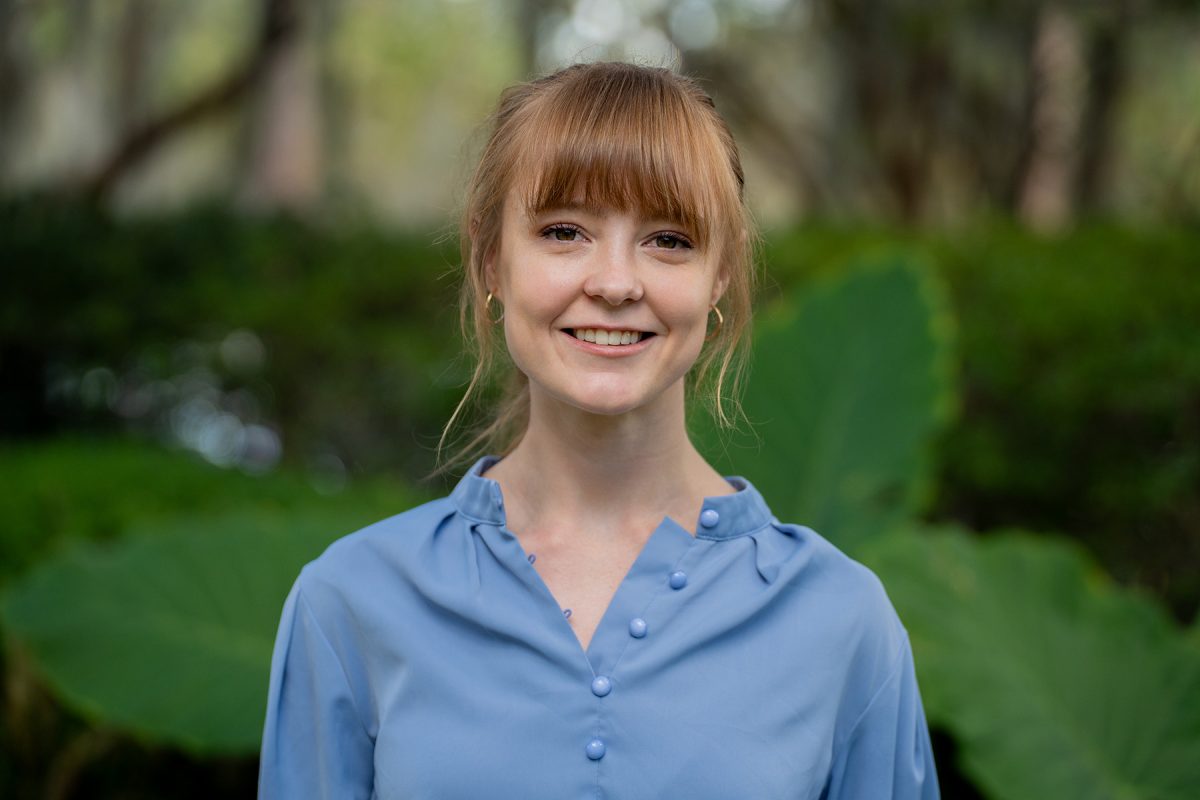
“I was drawn to FSU’s opportunities to engage in cutting-edge cardiovascular research and its emphasis on translating science to increase public understanding.”
Fast Facts
- Cat-lover: Has two orange cats named Waffle and Pancake
- Driven: Aspires to open an independent lab at an R1 research institution
- Sports Fan: Loves FSU softball and tries to go to all the games
- Honors Student: Was a member of the FSU Honors Program during her undergraduate degree
- Favorite Study Spot: The Student Union
Emily Shiel is a generous and driven doctoral student who dedicates her time to research and giving back to her community.
As a leader in the Biomedical Sciences Graduate Student Association, Shiel creates a supportive environment for other graduate students and volunteers with the Tallahassee Science Festival every fall.
She has received a Predoctoral Individual National Research Service Award from the National Heart, Lung, and Blood Institute and a Predoctoral Fellowship Award from the American Heart Association for her research on immune signaling in cardiac diseases. Shiel presented her research to Florida legislators and scientists at the 2025 Rare Disease Day symposium.
What drew you to attend Florida State University?
I chose to attend Florida State University because of its strong biomedical sciences program, collaborative research environment and supportive faculty. I was drawn to FSU’s opportunities to engage in cutting-edge cardiovascular research and its emphasis on translating science to increase public understanding. The welcoming atmosphere at FSU made it clear that I could thrive in my academic and personal life.
What are your proudest academic accomplishments?
My most significant academic accomplishments include receiving a National Institutes of Health Predoctoral Individual National Research Service Award from the National Heart, Lung, and Blood Institute and a Predoctoral Fellowship Award from the American Heart Association. These competitive and prestigious grants not only supported my dissertation research but also recognized the significance of my work on immune signaling in cardiac diseases. Receiving these awards has been an honor and recognition of my potential as an independent scientist.
How do you give back to your community?
In 2025, I presented my research on the impact of inflammatory signaling in heart diseases at the Rare Disease Day symposium hosted by the College of Medicine’s Institute for Pediatric Rare Diseases before an audience that included scientists, Florida legislators and individuals living with rare diseases. This experience taught me to translate complex biomedical findings into language accessible to the public while also emphasizing the importance of continued investment in rare disease research. Sharing my work in this setting highlighted both the human impact of scientific discovery and the role researchers play in advocating for patients and their families.
How have you seen the impact of your community service?
Through my research, I have contributed to FSU’s reputation as a hub for innovative cardiovascular science, advancing knowledge that will improve patient outcomes. I have disseminated my findings at national conferences. Beyond the lab, my leadership in the Biomedical Sciences Graduate Student Association has fostered a more inclusive and supportive environment for graduate students. Through BSGSA, I work to foster a love for science in K-12 students by participating as a judge in the Capital Regional Science & Engineering Fair and volunteering at the Tallahassee Science Festival each fall.