



Key Points
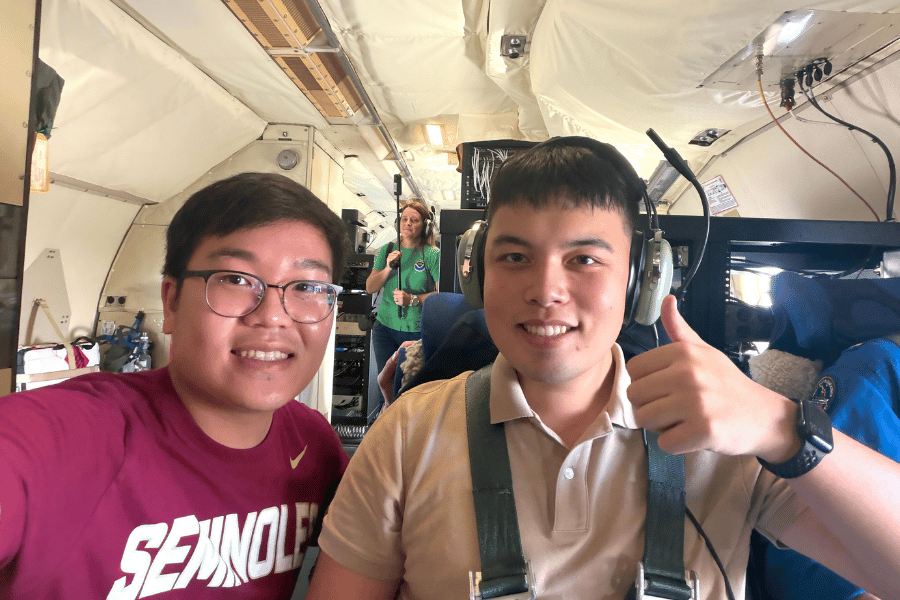
- Florida State University students Tan Dao and Diego Barbero embraced the opportunity to fly into Hurricane Isaias on Oct. 9 as part of a NOAA Hurricane Hunters mission.
- The flight gave both students an opportunity to apply what they've learned in FSU's meteorology program and see firsthand how hurricane research informs forecasting.
For most meteorology students, studying hurricanes involves satellite imagery, weather models and classroom discussions. For Florida State University students Tan Dao and Diego Barbero, hurricane research took on a different perspective: from inside a storm.
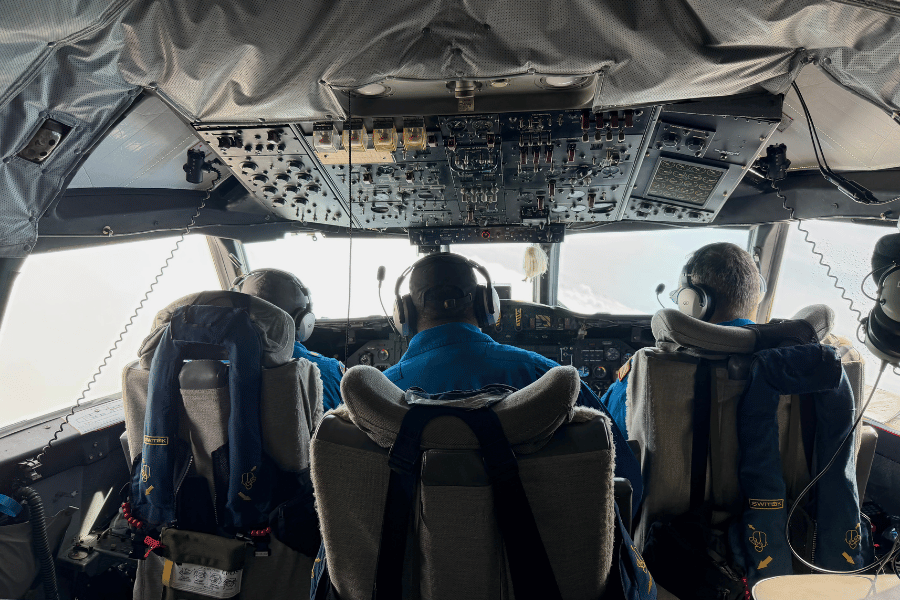
On Oct. 9, both students boarded a National Oceanic and Atmospheric Administration’s (NOAA) NOAA P-3 aircraft and flew into Hurricane Isaias, giving them a firsthand look at how scientists collect data that improve forecasts, inform the public and help protect communities.
While their paths to the aircraft differed, both students said the experience reinforced their passion for meteorology and hurricane research.
Barbero, an undergraduate meteorology major, received the invitation through a previous NOAA internship, during which he had flown on other missions.
“Just being able to experience it again, and this time with the hurricane, especially such an impactful hurricane being near landfall, I of course said yes,” said Barbero.
For Dao, a graduate meteorology student at FSU, the opportunity came unexpectedly when his adviser learned during class that a seat had become available.
“It was a complete surprise,” Dao said. “Very few students ever have the opportunity to do it; nonetheless, during their graduate careers.”
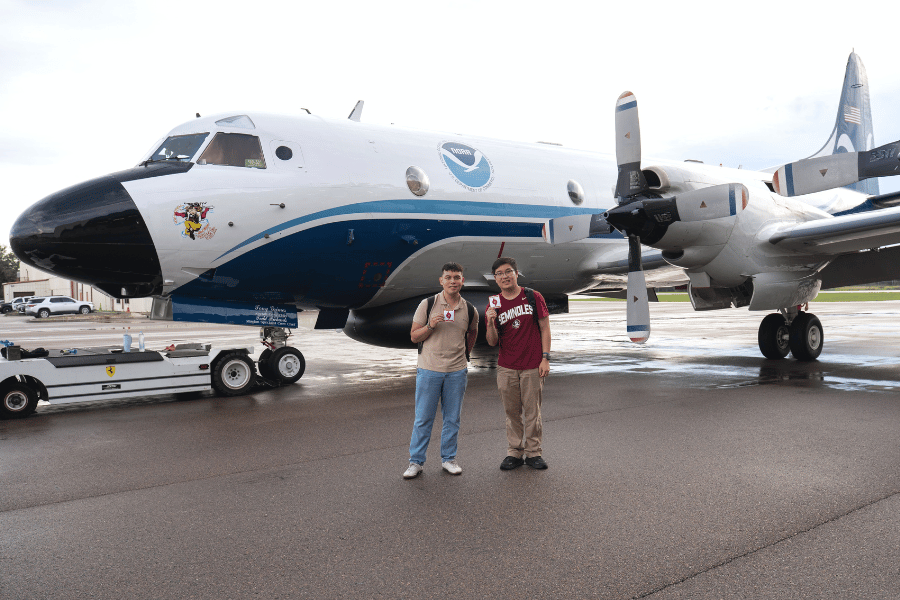
Before the flight, pilots, meteorologists and flight directors gathered to evaluate conditions, discuss research objectives and prepare equipment. As student observers, Barbero and Dao watched the preparations and learned how hurricane research missions operate. But even after the briefings, neither knew quite what to expect.
Flying from Lakeland, Florida, the 30-minute flight included plenty of turbulence as they entered the southern eyewall of the storm. The students were part of a mission that flew in and out of the eye three separate times.
“I thought we’d be upside down, frankly,” Dao said. “I was really preparing myself to be terrified.”
Barbero had flown on previous NOAA missions and understood what to expect, but flying into a hurricane was a new experience.
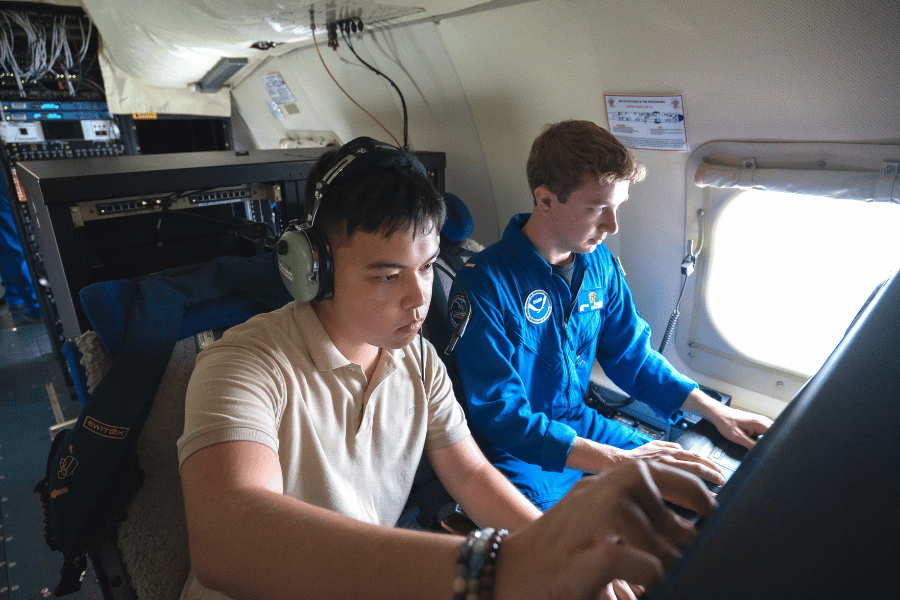
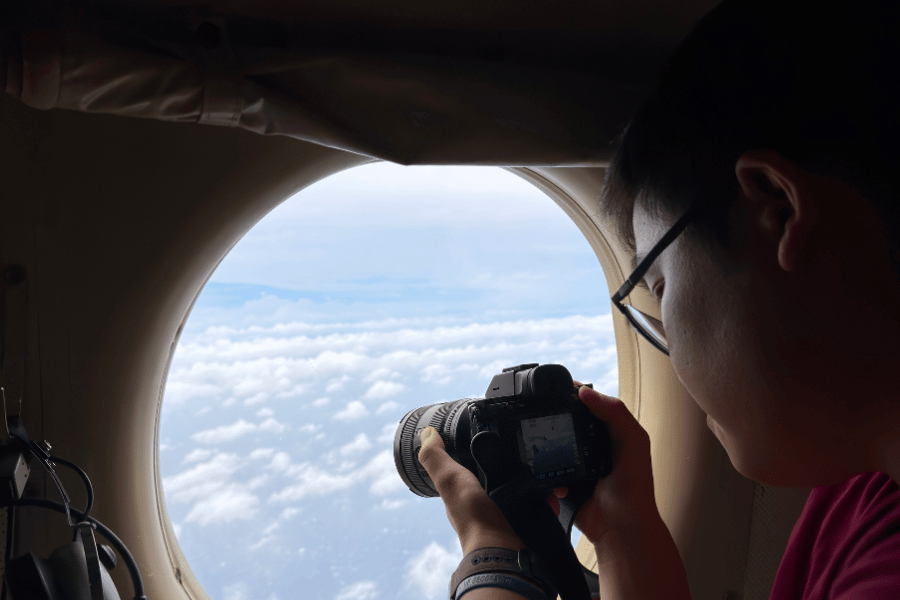
Neither student had operational responsibilities, but both spent the flight learning from researchers and crew members and documenting the experience through photos and videos.
“My whole point was to absorb it all in and enjoy what’s happening outside,” Dao said.
Hurricane Isaias made landfall near Destin, Florida, as a Category 2 storm, the first major hurricane to make landfall in the Atlantic since Milton in 2024. For Dao, the storm’s movement up close was a surreal experience.
“One of the cool things is that, because these hurricanes spin counterclockwise, you can actually see the winds imprinting themselves on the ocean,” Dao said. “You can see the water vapor converting straight into clouds and becoming part of the structure. For me, that was a very cool experience. It’s something that you study so much in the classroom, and then you can finally see it for yourself.”
For Barbero, reconnecting with NOAA researchers and crew members was another highlight.
“Just meeting all the people there and being able to involve myself again in that office, it’s full of amazing people who have crazy cool careers,” Barbero said. “Being able to go there again was the best part.”
The flight gave both students an opportunity to apply what they’ve learned in FSU’s meteorology program and see firsthand how hurricane research informs forecasting.
For both students, the flight also reinforced their career goals.
“It’s my goal to actually become a hurricane hunter,” Barbero said. “Interning there helped a lot, and every time I revisit, it just strengthens my passion for the job and what they do. The data that they get is lifesaving. Without them, the forecasts would not be accurate, and you can’t get that data from satellites or anything, so you literally have to fly through it.”
For Dao, the flight offered a new perspective on his research into tropical cyclones and their effects on communities.
“This is directly related to my research. Going through the storm helped me realize how the cyclone works with its environment from the ocean all the way to the atmosphere,” Dao said. “Rain has been an impactful feature of tropical cyclones because everybody gets impacted by rain and flooding events. It’s important to investigate how these impacts translate to communities and how we can better forecast them.”