



Key Points
- FSU Professor Emerita Sharon Nicholson has earned the American Meteorological Society’s 2027 Hydrologic Sciences Medal, its highest honor for a hydrologic scientist, recognizing her career-long contributions to understanding rainfall, drought and climate patterns, particularly in Africa.
- Nicholson’s research overturned long-held ideas about Africa’s climate and improved understanding of drought and rainfall. Her discoveries about El Niño, the Sahara Desert, rainfall systems and jet streams have helped strengthen forecasts that communities can use to prepare for droughts and floods and protect food and water supplies.
A Florida State University meteorologist has been recognized for contributions to researchers’ understanding of rainfall and drought patterns in arid environments. This work addresses the globally relevant topics of freshwater availability, changing climate, drought and famine.
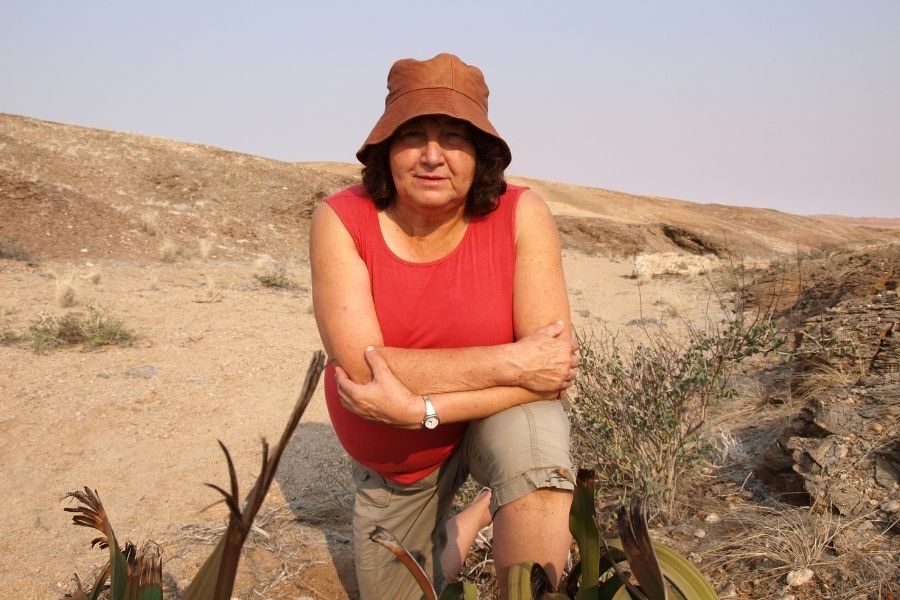
Sharon Nicholson, Robert O. Lawton Distinguished Professor Emerita of Meteorology and Environmental Science, has earned the 2027 Hydrologic Sciences Medal from the American Meteorological Society. This is the highest honor AMS can bestow upon a hydrologic scientist and reflects breakthrough achievements made during Nicholson’s career, which include disproving accepted climate concepts and discovering several previously unknown phenomena, with a focus on the African continent.
“Sharon is a leading expert in tropical meteorology and climate, particularly in Africa,” said Michael Stukel, chair of the Department of Earth, Ocean, and Atmospheric Science. “This is a career-capping award and significant recognition of both Sharon’s outstanding career and the department’s status at the forefront of tropical meteorology.”
Founded in 1919, AMS advances atmospheric science and its related fields, technologies, applications and services for public good. The Hydrologic Sciences Medal is granted annually to a researcher who contributes outstanding scientific knowledge in hydrology, hydrometeorology, or hydroclimatology, including interactions between Earth’s surface and the atmosphere.
“For me, this award says that the meteorological community really respects my contributions, and my name is now associated with some outstanding scientists, prior medal winners, whom I greatly admire,” Nicholson said.
Before her 2025 retirement from FSU, Nicholson studied African rainfall and drought patterns to assess their evolution from 20,000 years ago to today. This work employs a unique combination of traditional meteorological observations, satellite remote sensing, climate dynamics theory and historical records.
In 2018, she disproved a longstanding scientific explanation related to the Intertropical Convergence Zone, or ITCZ, a region in the low latitudes bordering the equator where northerly and southerly winds meet.
“Researchers believed the ITCZ explained the seasonal cycle of rainfall throughout Africa’s tropical and subtropical regions, which span most of the continent,” Nicholson said. “My research showed that ITCZ does not exist over most of Africa and that even where it is present in western countries like Senegal and Mali, it is still not the cause of rainfall. This is my most important work because the ITCZ has in the past been used to predict and explain climate changes.”
Nicholson also discovered that the El Niño-Southern Oscillation — particularly its El Niño phase, spurred by unusually warm conditions in the Pacific — is a primary driver of drought and famine on the continent. Her work has strong implications for forecasting droughts and floods and has been recognized by the heads of several African meteorological services, such as the Ghana Meteorological Agency, as well as former leaders of Senegal and Morocco.
However, Nicholson’s first landmark discovery was made in 1999, well before her breakthrough ITCZ-related work. After examining nearly two decades of satellite data from the Sahel — a strip of semi-arid land immediately south of the Sahara Desert — Nicholson proved that the Sahara Desert was, in fact, not expanding indefinitely as researchers previously thought. Instead, she found that year-to-year rainfall and drought conditions shaped the desert’s continuously shifting borders, giving the illusion of its growth.
“Before my work challenged and overturned the concept, researchers believed the Sahara Desert was expanding at the hands of humans,” Nicholson said. “Although I certainly believe humans have an impact on climate, I was able to definitively show the desert’s changes were caused by meteorological factors and the Sahara was not expanding.”
Nicholson also demonstrated the existence of several previously unknown jet streams: fast-moving air currents that steer storms, drive temperature fluctuations and even trigger extreme weather. Scientists had long been stumped by the presence of deserts on the Horn of Africa — which includes countries like Djibouti, Eritrea, Ethiopia and Somalia — as equatorial regions are typically known for lush vegetation and syrupy humidity, not dry air and sand dunes. The Turkana jet, one of the jet streams analyzed by Nicholson, suppresses rainfall, explaining how desert conditions are supported on the equator in East Africa.
“Highlighted by the Hydrologic Sciences Medal, Sharon’s work to understand Africa’s complex and highly variable climate has led to improved rainfall forecasts that can help communities prepare for droughts and floods and better ensure food security, water availability and the livelihoods of millions,” Stukel said.
To learn more about research conducted in the FSU Department of Earth, Ocean, and Atmospheric Sciences, visit eoas.fsu.edu.