



Scientists Tackle Critical Gap in Fire Prediction With Current Models That Fail to Capture How Living Trees Influence Wildfire Behavior
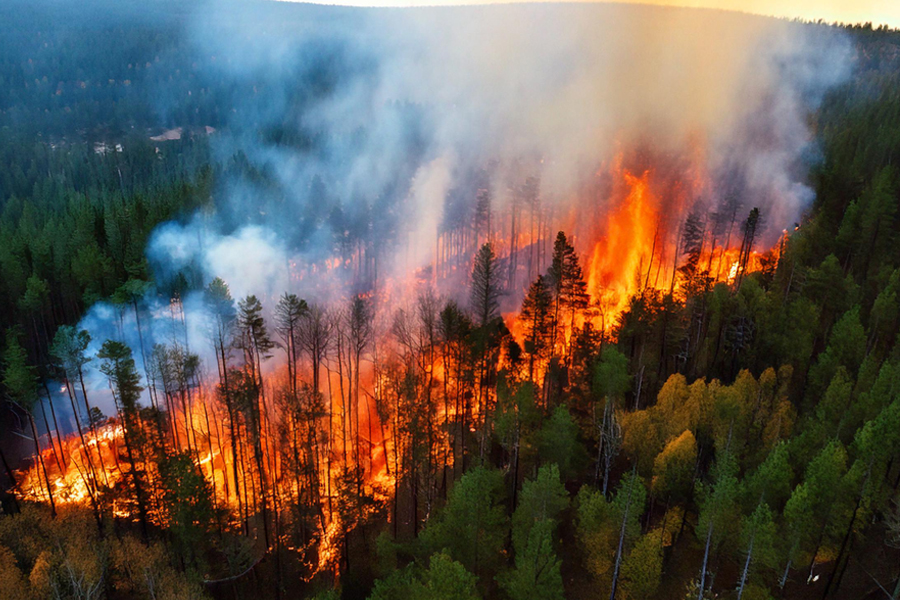
When wildfires rage through forests, current prediction models treat trees as static obstacles, ignoring their swaying movement and dynamic influence on flames. Researchers at the FAMU-FSU College of Engineering are developing the first computational models that capture how living, moving trees influence fire behavior, research that will help improve predictions for these disasters.
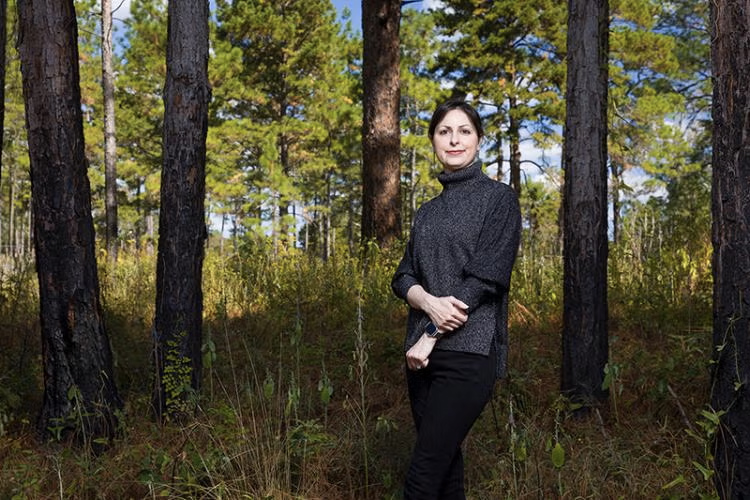
Through a $1 million grant from the National Science Foundation, Associate Professors Neda Yaghoobian and Kourosh Shoele from the Department of Mechanical and Aerospace Engineering are leading research to solve one of fire science’s most pressing challenges: the inability to accurately predict how fires spread through dynamic forest environments where trees interact with wind and flames.
“Current fire models oversimplify forests as static blocks and do not accurately capture how trees sway, bend and influence airflow and fire dynamics. These oversights can lead to inaccurate forecasts of fire behavior, which may limit the effectiveness of prescribed burns and emergency planning,” Yaghoobian said.
The research comes at a critical time when wildfires have become more frequent, intense, and destructive over the past 20 years. According to recent studies, wildfire activity across the United States has approximately doubled over two decades, with economic impacts now estimated in the hundreds of billions of dollars annually.
Challenges in fire modeling
What sets this research apart is its unprecedented focus on tree biomechanics — the study of how trees respond to mechanical loads and resist failure —and how vegetation movement affects fire spread patterns.
“Tree movements in the wind play a powerful yet little-understood role in how wildfires spread,” Shoele said. “The main challenge is how to capture this effect in models. In this project, we are tackling this problem by developing tools that, for the first time, let us predict how trees’ bending and swaying movements shape wildland fire behavior.”
This innovative approach combines advanced computational fluid dynamics, biomechanical principles and combustion science to better understand the complex interactions between wind, vegetation and fire in forest environments.
The engineering team is developing models to investigate how tree canopy aerodynamics affect fire dynamics and how surface fires become high-intensity blazes in a canopy. Collaborators at Worcester Polytechnic Institute (WPI) in Worcester, Massachusetts, will conduct experiments in their fire science laboratory to provide data to validate the FSU model.
The computational models will require supercomputer capabilities to handle their complexity. The enhanced models represent a significant advancement in wildfire modeling technology, with the team expecting these tools to provide more realistic predictions of fire behavior, enabling land managers to anticipate and respond more effectively to wildfire threats.
Innovative Laboratory-Field Research Partnership
The collaboration with WPI creates a unique research ecosystem that combines theoretical modeling with practical experimentation. While the FAMU-FSU team focuses on developing advanced computational models, their WPI partners conduct critical laboratory experiments that validate and refine these models.
This partnership approach ensures that the theoretical advances translate into practical tools that can be used by fire management professionals. The laboratory experiments provide essential data for model validation, while the computational models offer insights that inform future experimental designs.
Implications for Fire Management and Public Safety
The enhanced predictive capabilities could play a critical role in supporting proactive fire management strategies, improving prescribed burn planning and helping communities prepare for the inevitable challenges that wildfires present.
“This understanding is pivotal for improving fire response strategies and ensuring public safety in areas vulnerable to wildfire,” Yaghoobian said.
Training the Next Generation of Wildfire Scientists
A key component of the project involves extensive collaboration between fire management practitioners and engineering students. The team is working with natural resource management entities to create unique training opportunities for students from both institutions.
Students trained in computational and experimental modeling will receive hands-on training in fire management practices and real-world case studies. In return, these students will share their research expertise with fire professionals and the broader public, creating a valuable knowledge exchange.
The project’s educational impact extends to improving public safety, enhancing wildfire resilience, and developing the next generation of interdisciplinary wildfire scientists who understand both the technical and practical aspects of fire management.