



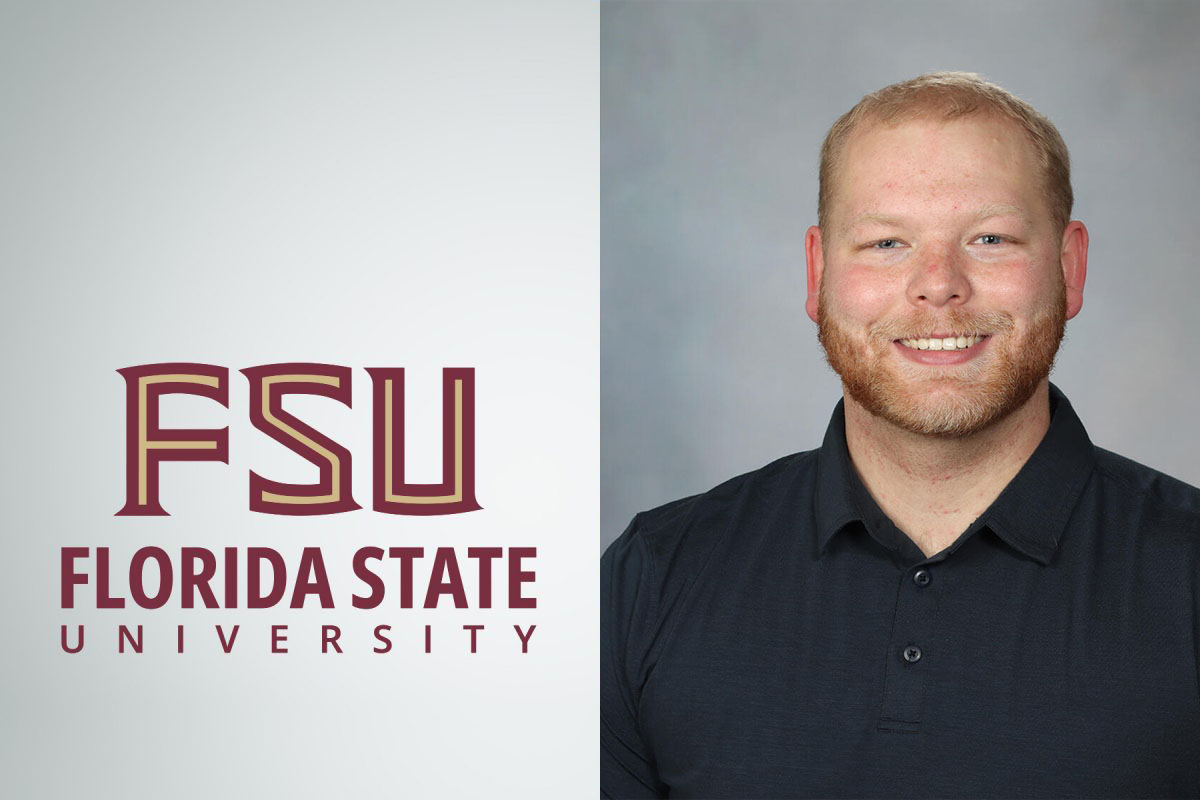
A Florida State University graduate student has received the American Heart Association Predoctoral Fellowship to support his work connecting heart and brain health.
Exercise physiology doctoral candidate Thomas Bissen received the highly competitive national award that supports promising doctoral students pursuing innovative cardiovascular research. The fellowship provides funding and advanced training opportunities, allowing early career scientists to focus more deeply on their research while preparing to become leaders in improving heart health and overall well-being .
Originally from Tonka Bay, Minnesota, Bissen earned his bachelor’s in biology from St. Olaf College before completing his master’s in exercise physiology at The College of St. Scholastica. After completing his master’s degree, Bissen gained hands-on experience in a cardiovascular research laboratory at the Mayo Clinic.
“After seeing the real-world benefits of clinical research with patients with heart failure, I wanted to continue my education to design my own studies focused on improving cardiovascular and cerebrovascular health,” Bissen said.
The positive experience at the Mayo Clinic inspired him to pursue a doctorate, joining the Cardiovascular and Applied Physiology (CAP) Lab at Anne’s College under the mentorship of Assistant Professor Joseph Watso.
Bissen’s current research examines inspiratory muscle strength training and its potential to improve brain health in adults with obesity, connecting heart health and brain function. Inspiratory muscles are the muscles used to breathe in, primarily the diaphragm and muscles between the ribs, which play an important role in supporting healthy blood flow and oxygen delivery throughout the body.
His other interests include cardiovascular disease prevention and rehabilitation. His recent work has examined high-intensity interval training as a way to improve exercise capacity during cardiac rehabilitation for patients with heart failure.
Receiving the AHA Predoctoral Fellowship allows Bissen to dedicate more time and focus to his research.
“I designed my fellowship to incorporate collaboration, including in-person training with a leading expert in cerebrovascular function, to provide me with the skills to complete my proposed research,” he said.
He credits the mentorship and teamwork within the CAP Lab for helping him develop a competitive fellowship proposal and refine his skills as a researcher.
“The process has meant a lot, and receiving the award has given me more time to focus on my project,” he added.