



Three members of Florida State University’s Learning Systems Institute (LSI) will present at European conferences focusing on AI in education, reinforcing the institute as a leading force when it comes to AI in teaching and learning.
Rabieh Razzouk, director of LSI; Carrie Meyers, director of education and workforce talent at FSU’s Institute for Strategic Partnerships, Innovation, Research, and Education, or FSU InSPIRE; and Jim Reynolds, LSI’s director of STEM outreach, will represent FSU at international conferences this semester in Paris and the Netherlands.
The presentations highlight the recognition LSI’s work has earned internationally in the field of AI in education. Meyers and Reynolds are leading the development of an AI education pathway as part of FSU’s InSPIRE project and have delivered presentations on this topic to numerous audiences throughout Florida. Razzouk has developed and implemented an AI-assisted instructional support system for Florida’s teachers and is using AI on the Early Grade Education Activity in Jordan, which aims to strengthen Jordan’s early grade education system.
“We are honored to have our team asked to join the global conversation on how to utilize AI in education,” Razzouk said. “LSI has worked to become a leader in utilizing AI for education, workforce development, AI-powered learning tools and research and innovation in the field. We are thankful that FSU champions innovative research in the field and understands this work raises public awareness and fuels lasting impact in this rapidly growing field.”
Razzouk will present at UNESCO’s Digital Learning Week 2026 in Paris, which takes place Sept. 8-11 this year under the theme of “Education in the age of AI: Facts, Frictions, Frontiers. The annual event aims to foster critical reflection and meaningful collaboration in advancing the ethical and human-centered digital transformation of education. His presentation, “Customizing Standards-Aligned Lessons with AI: The CPALMS Experience,” will demonstrate an AI-assisted instructional support system designed to help teachers efficiently adapt existing standards-aligned educational resources to better meet students’ needs.
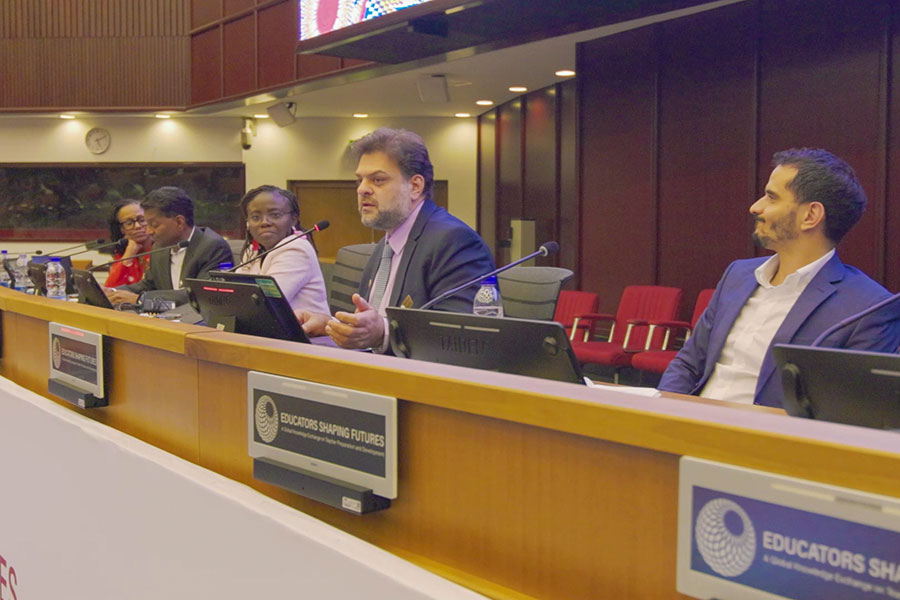
Razzouk has previously spoken on AI in education. Last year, LSI partnered with the World Bank and UNESCO to host “Educators Shaping Futures: A Global Knowledge Exchange on Teacher Preparation and Development.” During the event, which took place Nov. 2-4, 2025, in Addis Ababa, Ethiopia, and drew more than 340 policymakers, teacher educators, researchers and practitioners from 41 countries, Razzouk participated in a panel examining the roles and risks of AI in teacher education and development.
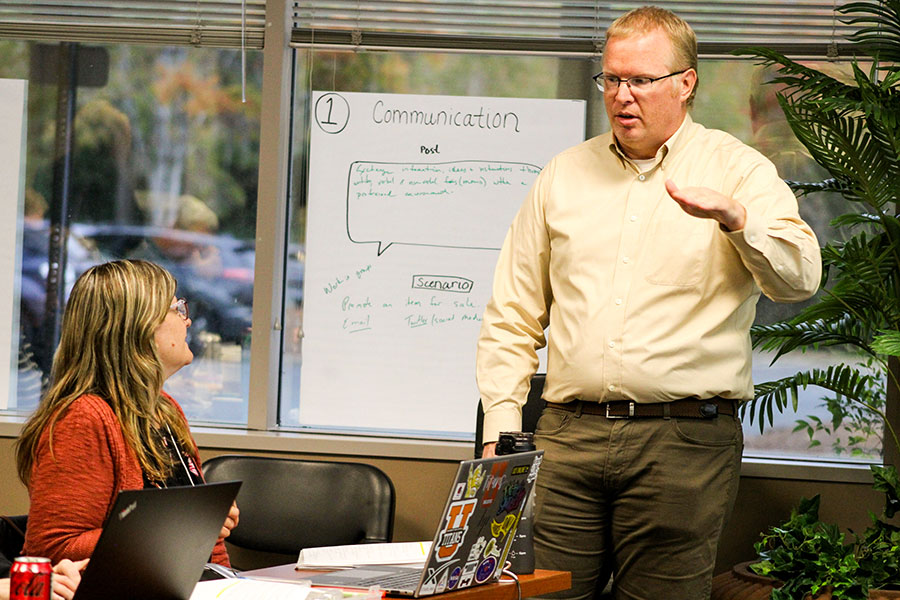
“At LSI, we made a commitment to artificial intelligence as a core capability that strengthens every aspect of work,” Razzouk said. “The vision is already becoming reality as our team has been building and delivering high-quality professional learning that equips educators to effectively and responsibly integrate artificial intelligence into teaching and learning.”
Next month, Meyers and Reynolds will present at the inaugural “Teaching and Learning with AI in Europe” conference in Breda, Netherlands. The conference, which takes place Oct. 19-20 and is co-hosted by Breda University and University of Central Florida, aims to establish cross-border collaboration in Europe to share ideas, best practices and innovation in AI in higher education.
“It is exciting to share the AI in education work we are leading for FSU InSPIRE and to showcase the pathways we are creating for educators and students,” Meyers said. “Just as important is the opportunity to learn from others and to discover where our challenges intersect, exchange successful approaches, and identify innovative ideas from around the world. Our students are entering an increasingly global and competitive workforce, and collaboration like this helps ensure they are prepared not only to participate in that future, but to lead it.”
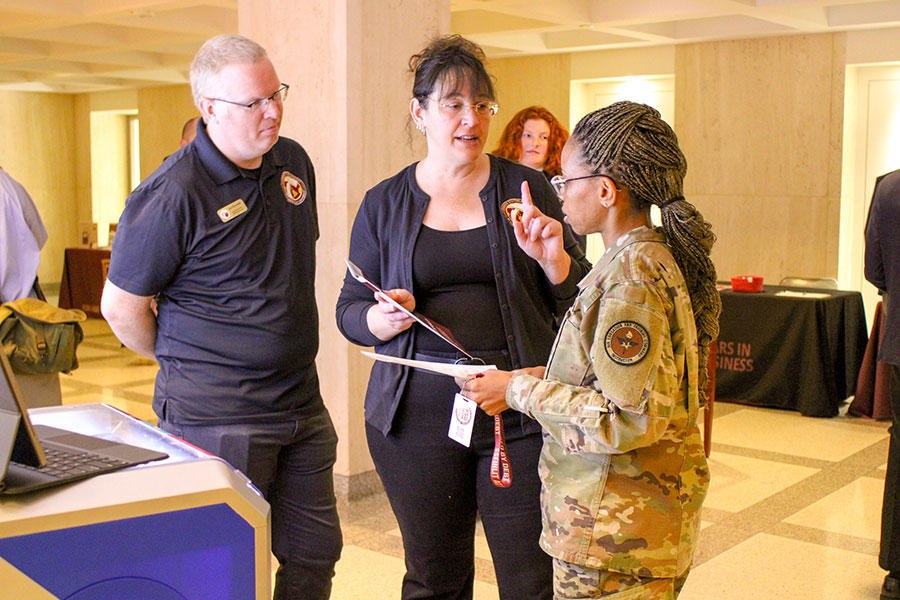
Drawing on examples created by educators in FSU’s InSPIRE program, Meyers will lead the presentation “From Content to Comics: Using AI-Supported Graphic Novels to Teach Complex Concepts,” discussing how AI can help faculty and instructional designers create comics, graphic novels, e-readers and other visual learning materials that invite students into challenging ideas without reducing rigor.
Reynolds will lead the presentation “From Prompt to Possibility: Co-Designing Thought-Revealing Activities with AI,” where he will explore how educators can use prompt engineering to co-design authentic, thought-revealing activities grounded in the research behind model-eliciting activities.
“When other public universities look at what FSU is accomplishing — from our data-driven campus culture to our deeply engaged faculty, staff and students — they see a path forward,” said Paul Marty, associate vice provost for Academic Innovation and professor in the School of Information in the College of Communication and Information. “We are proving that a top public research university can lead the nation in adopting disruptive innovations while keeping student learning and the public good at the center of everything we do.”
For more information about LSI, visit lsi.fsu.edu. To learn more about FSU’s global footprint, visit global.fsu.edu.
About LSI
The Learning Systems Institute (LSI) partners with schools, universities, governments and industry to research, develop, implement and evaluate AI solutions that improve educational outcomes while promoting responsible and human-centered use of artificial intelligence. LSI combines educational research, AI software development, instructional design, open educational resources, professional learning and large-scale implementation into integrated solutions. From developing AI-powered technologies to preparing educators and institutions for responsible AI adoption, LSI helps partners move beyond experimentation to meaningful, evidence-based impact.