



Key Points
- FSU’s APPLE program is welcoming its fifth cohort, marking continued growth for the experiential political science program.
- Students gain hands-on experience in local, state and national government through coursework, internships and alumni mentorship from Tallahassee to Washington, D.C.
- The program has produced tangible community impact, including a student Civic Action Plan idea that Leon County incorporated into its 2026 strategic plan.
Four years after Florida State University’s Department of Political Science launched the Applied Politics and Policy Learning Experience (APPLE), the program is welcoming its fifth cohort with a growing record of student achievement, community impact and partnerships stretching from Tallahassee to Washington, D.C.
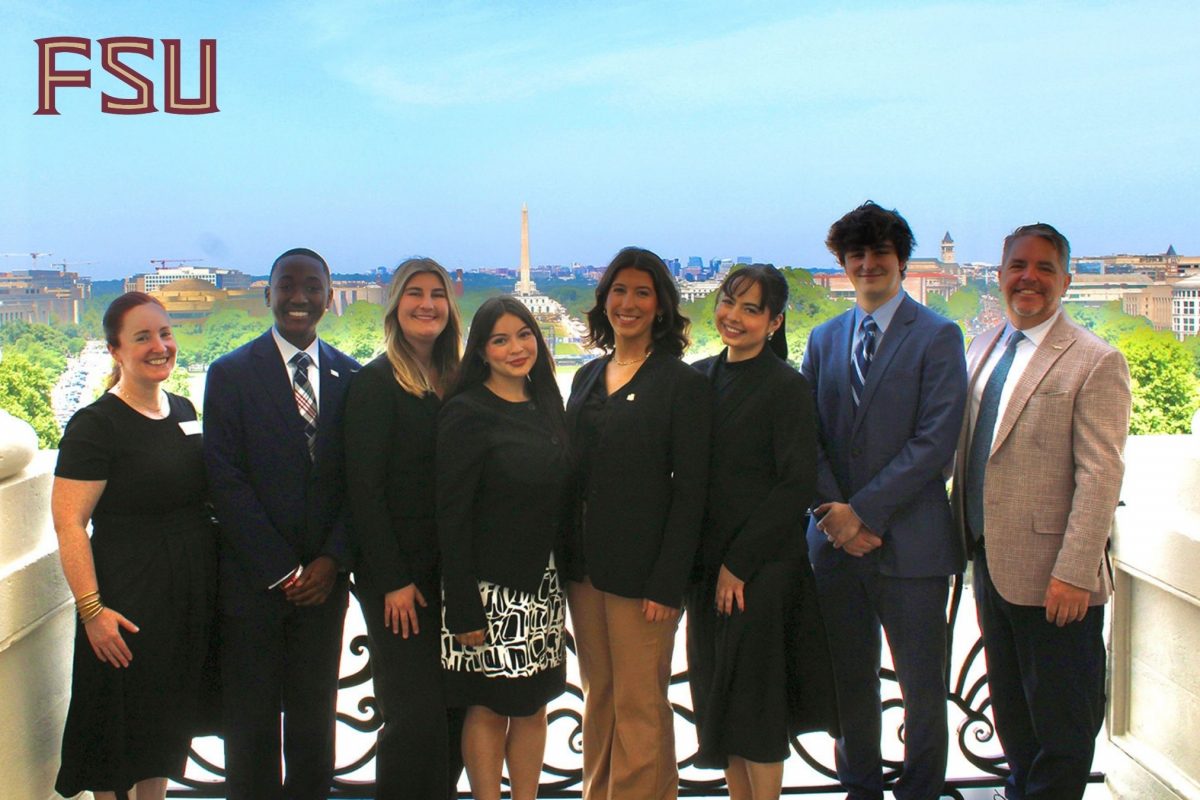
The milestone follows another summer in the nation’s capital, the final stage of APPLE’s three-semester journey through local, state and national government. Students gained firsthand experience in national policymaking through internships in Congress, government relations and advocacy organizations while connecting with FSU alumni working in Washington, D.C.
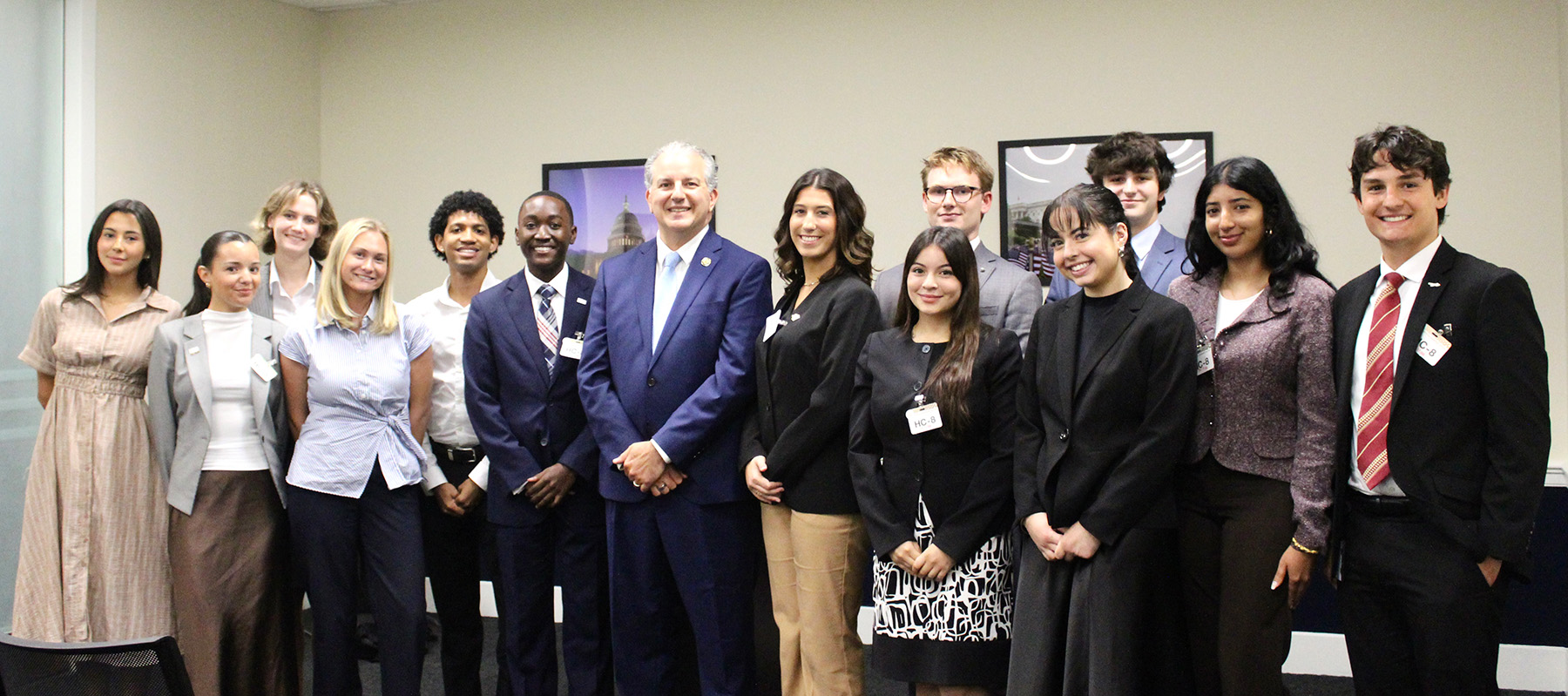
At the capstone celebration on Capitol Hill in July, students from across the university also met with Congressman Jimmy Patronis (B.S. ’96, Political Science) and other distinguished alumni to discuss public service, leadership and professional success on Capitol Hill. Patronis, Florida’s former chief financial officer and a 2022 Distinguished Alumnus of the College of Social Sciences and Public Policy, offered three practical lessons: arrive early, listen carefully and treat every interaction as an opportunity to make a strong first impression.
These encounters draw students into FSU’s extensive Washington, D.C. network of alumni working in government, politics, law, advocacy and public affairs. Mentors provide undergraduates with professional guidance and a clearer view of the career paths an FSU political science degree can open.
APPLE takes a select cohort of Political Science undergraduates through three consecutive semesters of experiential learning. Students begin by examining a community problem in Tallahassee and Leon County, spend the spring working in government during Florida’s legislative session and conclude with full-time summer internships in Washington, D.C.
“The program is premised on the idea that students learn government differently when they have the opportunity to experience it from the inside,” said co-founding director and Political Science Professor Amanda Driscoll. “By the end of the program, they have not simply studied local, state and national government. They have worked alongside the people who make those institutions function and see themselves as capable of contributing to them.”
For the 2025-26 cohort, that journey began with a question: How does a community prepare for an emergency? Students met with elected officials, local administrators, emergency-management professionals and other stakeholders to examine local government’s role in preparedness and essential services. Leon County Commissioners Brian Welch and Christian Caban and county officials Kevin Peters, Mathieu Cavell and Pamela Monroe spoke candidly about the coordination required among governments, agencies, nonprofit organizations and residents during emergencies.
“By the end of the program, they have not simply studied local, state and national government. They have worked alongside the people who make those institutions function and see themselves as capable of contributing to them.”
– APPLE co-founding director and Political Science Professor Amanda Driscoll
Students translated those lessons into Civic Action Plans, proposing practical responses to local challenges. One team recommended expanding Leon County Public Library’s Library of Things to give residents access to emergency-preparedness resources. Leon County subsequently incorporated the idea into its 2026 strategic plan — one of the clearest examples yet of APPLE students turning classroom learning into tangible community impact.
“This is exactly what we hope students take away from the local semester,” said APPLE co-founding director Bradley Kile. “They learn that local government is accessible and that thoughtful research, strong relationships and a good idea can make a meaningful contribution to their community.”
In the spring, students shifted their focus to the state Capitol. Through FSU’s Governmental Relations Internship Program, they received professional training and served in internships across Florida government, including the Legislature and the Office of the Governor. FSU Governmental Relations, as well as the continuing expertise of Director of Federal Relations Josh Duncan, have been fundamental to APPLE’s success in Washington. Substantial financial support from the FSU Institute for Governance and Civics has also made the summer experience accessible to students regardless of their financial circumstances.
Support from the College of Social Sciences and Public Policy, the Department of Political Science, The Washington Center, university benefactors, alumni and local-government partners has transformed APPLE from an ambitious new program into an increasingly established part of FSU’s experiential education.
Students say the effects extend well beyond their résumés. One Cohort 4 student described APPLE as “nothing short of transformative,” crediting the program with building confidence, strengthening an appreciation for the legislative process and making a return to Washington attainable and affordable.
Those experiences now extend across cohorts. APPLE alumni have entered law and graduate school and begun careers in politics and policy; many return to mentor the students who follow them. Together, they form a growing community grounded in professional excellence, civic engagement and public service.
The fifth cohort arrives in Fall 2026 with a new local policy challenge: how Tallahassee and Leon County provide nonhazardous residential solid-waste services, including garbage collection and recycling. Students will again learn from public officials and community stakeholders before developing Civic Action Plans of their own.
After four completed cohorts, the subject will change, but the model will not. Students will begin locally, carry those lessons into the Florida Capitol and Washington, D.C. and build the knowledge, relationships and confidence to imagine their own place in public service.
For more information about the APPLE program and College of Social Sciences and Public Policy, visit the college’s website.