



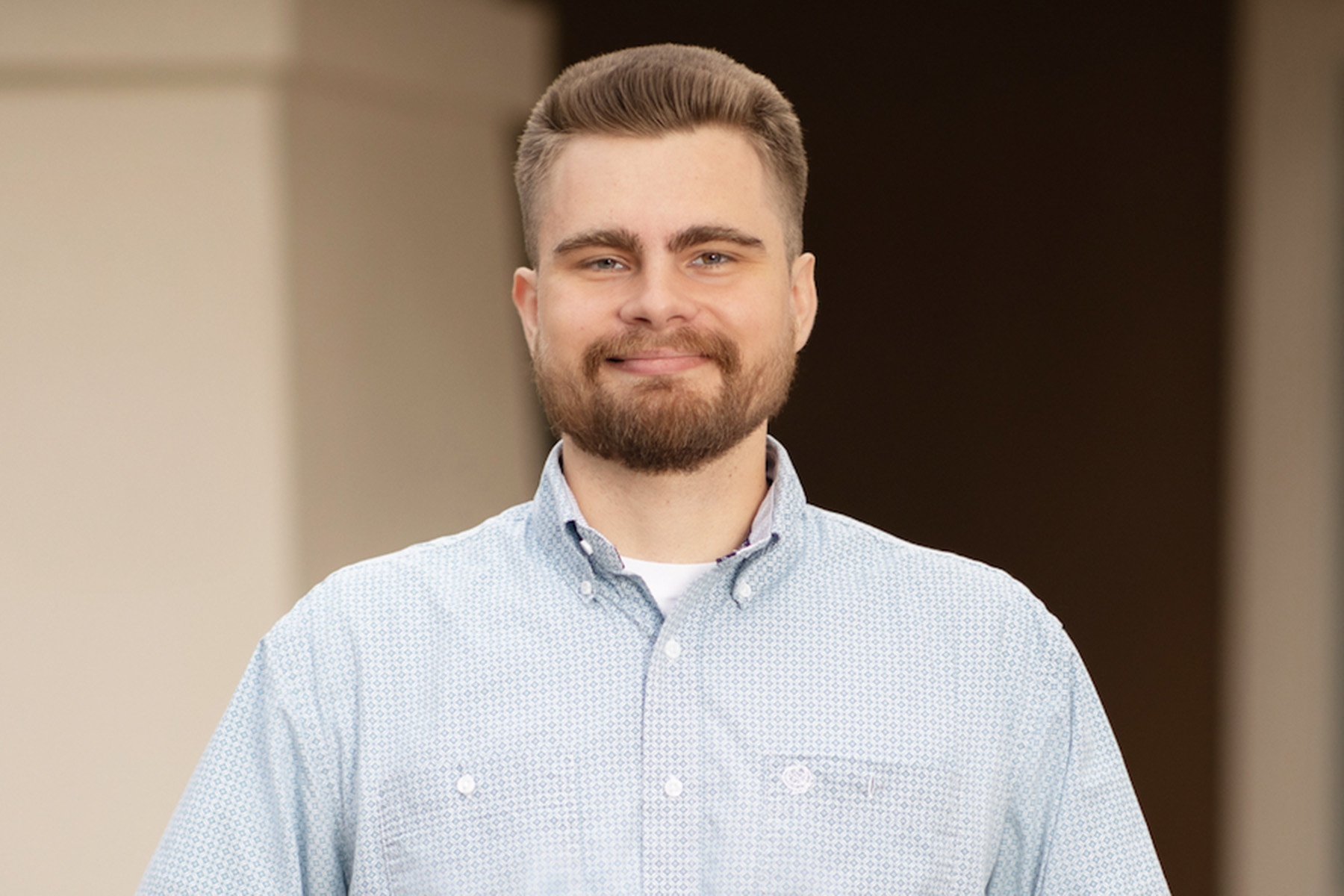
A Florida State University graduate student has earned a prestigious writing award for his research into Indigenous landscape histories and sacredness that informs modern land-management practices.
Dean Michel, a Department of History doctoral candidate, has earned the $25,000 Carter Manny Writing Award for 2025 from the Graham Foundation for Advanced Studies in the Fine Arts to support the completion of his dissertation, “A Watery Grave in the Desert: Termination, Survivance, and the Chemehuevi Indian Tribe.” He is the first student from FSU and from any Florida university to earn this award.
“The writing award will allow me to really buckle down in making sure my dissertation is ready for me to defend this spring,” Michel said. “I see it as an investment from the foundation and them saying they believe in my project and want me to give it my full attention. This is also a great way to show the significance of my research.”
“The writing award will allow me to really buckle down in making sure my dissertation is ready for me to defend this spring. I see it as an investment from the foundation and them saying they believe in my project and want me to give it my full attention. This is also a great way to show the significance of my research.”
— Dean Michel, Department of History doctoral candidate
The Carter Manny Awards, first granted in 1996, support outstanding doctoral dissertations contributing to new narratives of current interpretations and knowledge of architecture. The Graham Foundation promotes architecture’s role in culture, art and society, and the writing award recognizes emerging scholars during the writing stage of a doctoral dissertation, whose work challenges and impacts the architectural field at large.
Michel, an enrolled member of the Chemehuevi Indian Tribe, focuses on Indigenous studies and Indigenous knowledge related to climate, land and water management.
His doctoral research bridges Indigenous and governmental perspectives regarding land management and our relationship with different lands, such as the Acquisition of Indian Land for Parker Dam and Reservoir Project Act passed in 1940. The act allowed the U.S. federal government to acquire land owned by Native Americans to construct Parker Dam, subsequently destroying the reservation.
“My research connects Indigenous perspectives with the ideas of colonialism, built environments and architecture,” Michel said. “When we’re looking at infrastructure, there are tremendous consequences from it. Land where Native Americans are typically forced to live, such as reservations, are areas that are only meant to camp on temporarily. I’ve spoken with tribe elders that witnessed tremendous death and trauma on these lands. How do people return to these areas, build their homes there and build their lives?”
His dissertation highlights how modern resource management depends on Native Americans and the environment to sustain built environments like large cities.
One of Michel’s priorities is helping people gain a better understanding of the respect with which land should be held, along with clearer intentions for how land should be managed.
“I couldn’t be prouder of Dean,” said Andrew Frank, Native American and Indigenous Studies Center director, Allen Morris Professor of History and Michel’s doctoral adviser. “He’s tackling an important, complicated, and deeply personal project, and this award recognizes him as an emerging leader in the field. The Carter Manny Award provides more than financial support. He’ll lead scholars from various disciplines to pay attention to new paths he’s charting for scholars of Native America and to the important work being done in FSU’s NAIS Center.”
“I couldn’t be prouder of Dean. He’s tackling an important, complicated, and deeply personal project, and this award recognizes him as an emerging leader in the field.”
— Andrew Frank, Native American and Indigenous Studies Center director
A first-generation college student, Michel received his bachelor’s degree in history from Chadron State College in Nebraska in 2018. In 2022, he earned his master’s degree in history from FSU.
Michel is currently conducting research in Washington D.C. thanks to a Mellon Fellowship in Democracy and Landscape Studies presented through the Dumbarton Oaks Fellowship and supported by Harvard University. The nine-month fellowship, which began in September, includes a nearly $20,000 stipend and funds research on landscape histories and neglected or forgotten narratives.
This fall, Michel was also awarded the Department of History’s Walbolt Dissertation Fellowship, granted based on rigorous research in addressing historiographical questions.
“Dean’s work is unique because it combines the history of architecture, public policy and Native American history,” said Department of History Chair Jennifer Koslow. “In the 1930s, the federal government embarked on numerous infrastructure projects with the goal to better people’s lives, but these projects came at a cost for many Indigenous peoples. Dean’s research investigates the complexity and unexpected consequences on Indigenous peoples, such as those that stemmed from New Deal programs. His ability to tackle difficult stories and make them relevant to the present makes his project stand out.”
To learn more about Michel’s work and research conducted in the FSU Department of History, visit history.fsu.edu.