



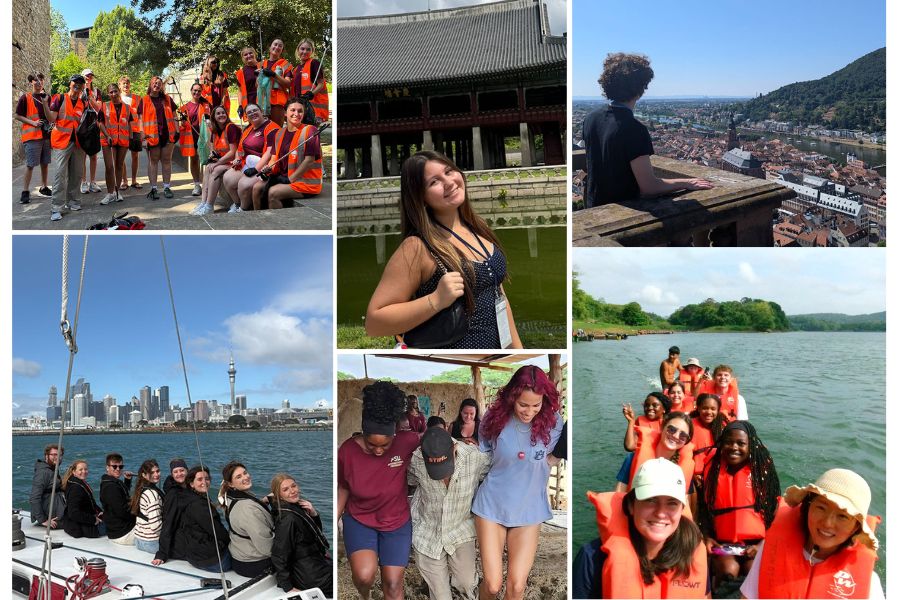
As the fall semester gets underway at Florida State University, students and faculty are settling into a new academic year while reflecting on the experiences that took them beyond campus this summer.
Whether taking classes at one of FSU’s study centers abroad, completing an international internship or volunteering in a new community, FSU students and faculty spent the summer learning, growing and making connections around the world.
Italy
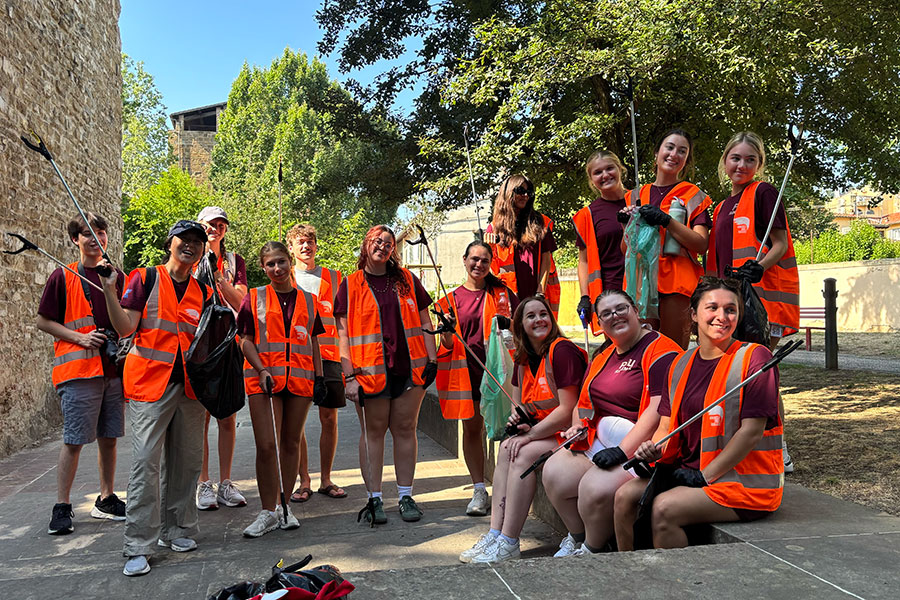
At the FSU Florence Study Center, students enrolled in the Communication and Media in Florence program through International Programs and spent five weeks producing the summer issue of “Il Ponte,” a magazine publication promoting both the program and the local community.
The program provides students with unique hands-on communication and media experience through direct interactions with Italian clients, giving students an opportunity to learn more about the editing, writing, design and social media aspects of publishing.
Each summer, the students and instructor work together to choose a theme for that edition of the magazine. The theme for this summer’s issue was “Reducing Overtourism and Promoting City Beatification.”
“We want our magazine to go beyond simply showcasing Florence as a beautiful spot for tourists,” said Jaejin Lee, professor at the College of Communication and Information and the course instructor this summer. “Instead, I encouraged students to think critically about how visitors can enjoy and appreciate the city while respecting its residents, environment and cultures.”
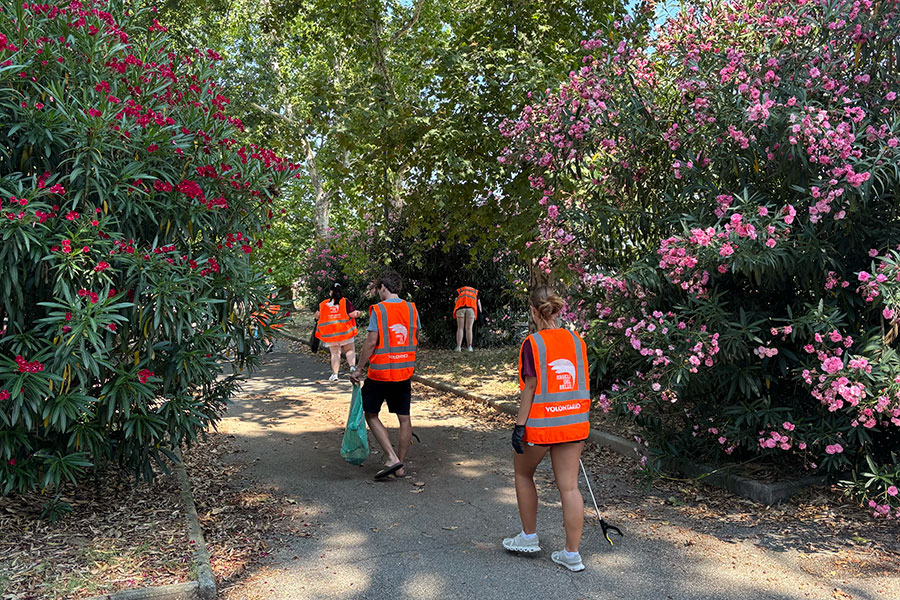
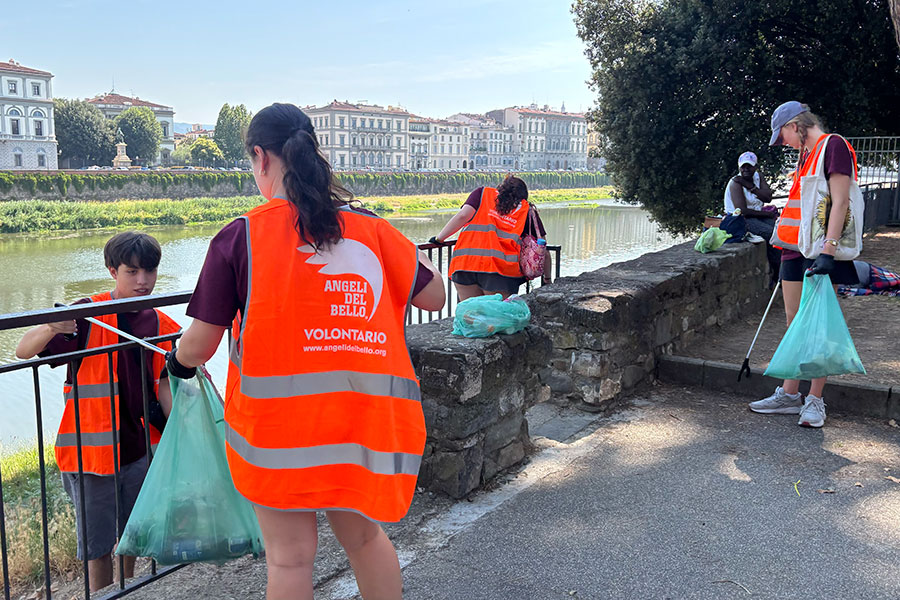
The cohort volunteered with Fondazione Angeli del Bello (“The Angels of Beauty Foundation”), a local nonprofit dedicated to protecting Florence’s environment and improving its shared urban spaces. The cohort collaborated with the foundation on cleaning and beautification projects, giving students a broader perspective on their experience abroad as temporary residents of Florence rather than tourists.
“I hope that future students of FSU Florence continue to strive to keep the city beautiful by properly discarding their waste and volunteering with foundations like Angeli del Bello to fully participate as a temporary citizen of Italy,” said Rachel Wynn, a senior pursuing a bachelor’s degree in business administration and management from the Herbert Wertheim College of Business at FSU who participated in the program this summer.
South Korea
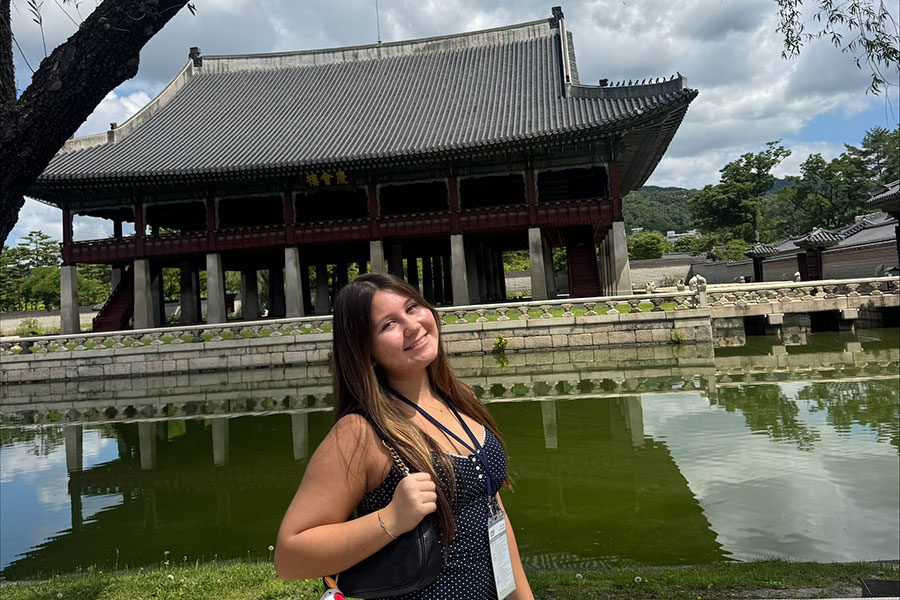
Amelia Beanland, a junior majoring in management information systems, took courses at Seoul National University (SNU) in South Korea through their International Summer Program (ISP).
She discovered the opportunity through the FSU Global Exchange programs website. As an FSU exchange partner institution, SNU is one of the many universities where students can study abroad through FSU’s Global Exchanges program. Offered through the Center for Global Engagement, FSU’s Global Exchanges provides students with the opportunity to attend an international partner university as an exchange student for a semester or academic year while earning credit and paying FSU tuition and fees.
Many of the Global Exchange partners also offer summer direct enroll transient programs. These specific programs, such as SNU’s ISP, are administered through the Global Exchanges office but are set up differently from a regular exchange. Credits earned on these programs are transferred to FSU and students pay a program fee directly to the host institution instead of paying FSU tuition and fees.
“Since I’m half Korean, I always wanted a chance to be able to explore the country my mom is from, and I never got the chance to go growing up,” she said. “So, I began searching to see if there would be an opportunity to study there and I was lucky enough to find one through the global exchanges website.”
After exploring the exchange options available, SNU became Beanland’s dream school, but she only wanted to go abroad during the summer. She was thrilled to learn about the summer program and immediately applied to be one of the first participants from FSU.
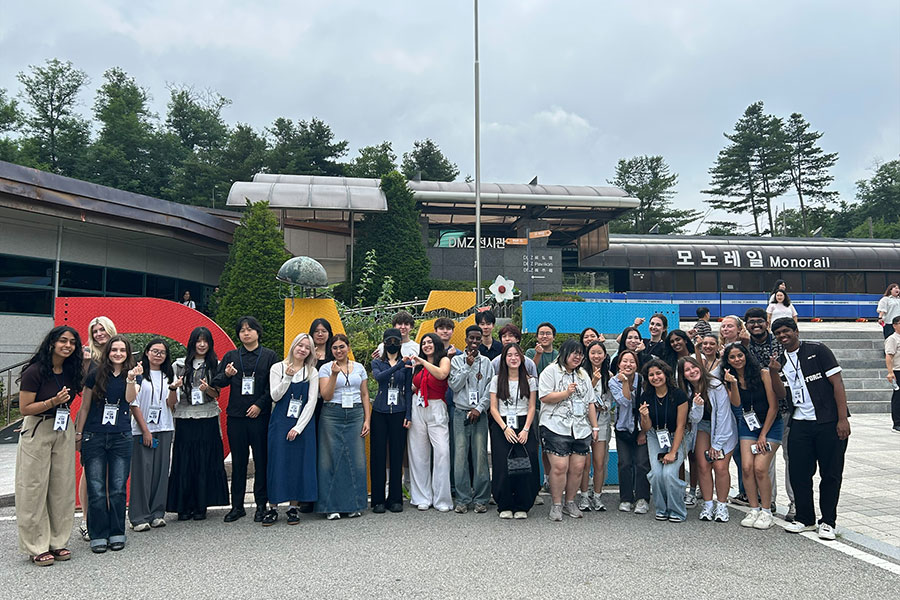
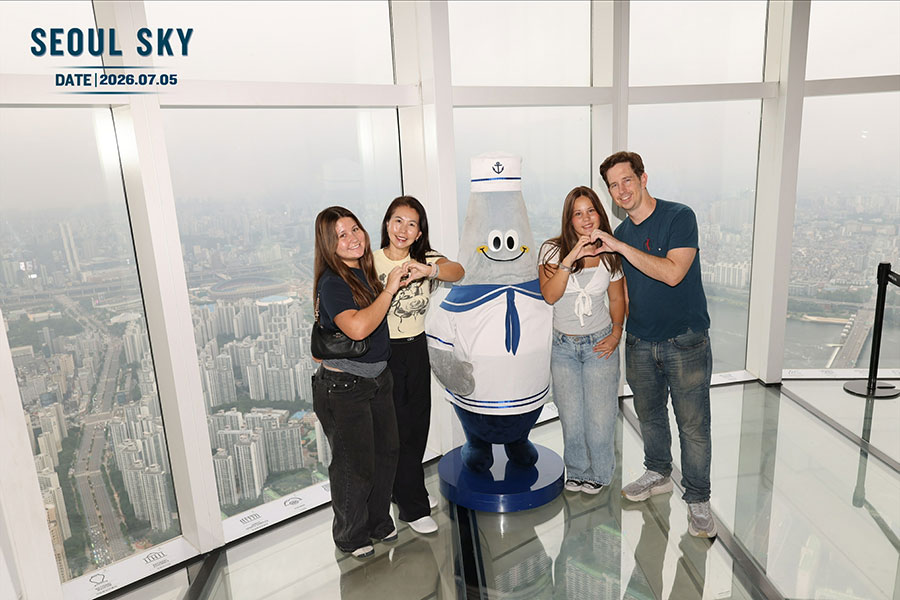
“My favorite part was being able to meet people from all over the world and being able to travel freely around the country and experience new sites,” she said.
Japan
Liam Kerner, a sophomore majoring in cellular and molecular neuroscience, spent six weeks this summer studying at Waseda University in Tokyo, Japan, through their Summer Program. He was drawn to the urban environment of Tokyo and wanted to immerse himself in the culture. Like the ISP at SNU, FSU currently has an exchange agreement with Waseda University, and their Summer Program is also a direct-enroll opportunity.
While the experience introduced Kerner to a new culture, he said some of his favorite memories were the simplest ones — late-night trips to convenience stores, walks back from sightseeing and taking in Tokyo’s landscape with friends from FSU and around the world. Living and learning in Japan also gave him new perspectives that he hopes to carry into his personal and professional life, particularly when connecting with people from different cultures and backgrounds.
“Not only did I get to meet so many lifelong friends who gave me new perspectives on life outside of the U.S., but being able to learn about Japanese society and live it firsthand was very eye opening and something I can use in my professional and personal life to be able to connect with people from all different cultures and walks of life,” he said.
Panama
This summer also marked the beginning of the Global Public Health program at FSU’s regional branch campus in Panama City, Republic of Panama (FSU Panama). Offered by International Programs and the Public Health Program, the new curriculum allows students to explore global public health challenges and opportunities in the region.
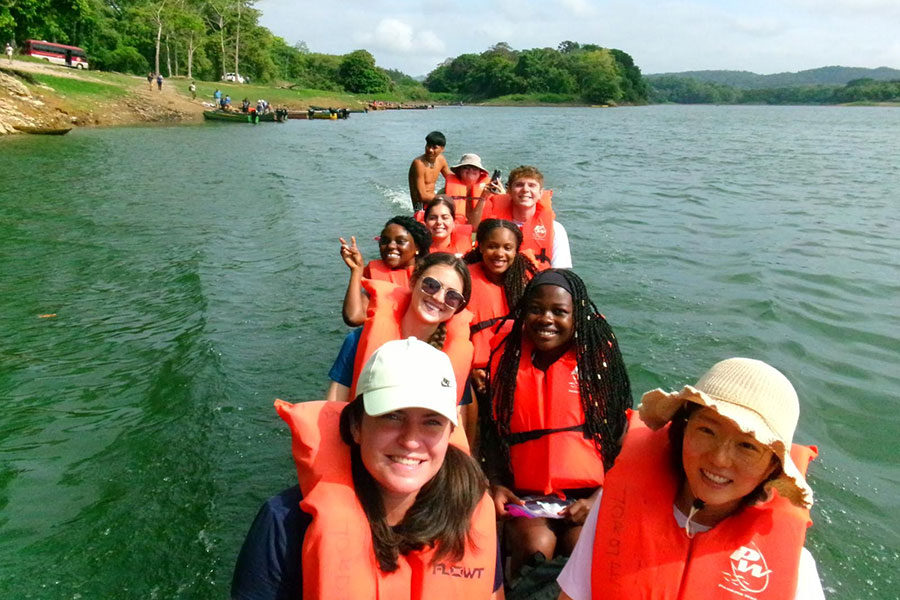
Students resided in the City of Knowledge, a complex of various educational and research organizations that FSU Panama is a part of, allowing them to visit other relevant institutions such as the new Regional Center for Innovation in Vaccines and Biopharmaceuticals (CRIVB-AIP) and the United Nations World Food Program in Panama.
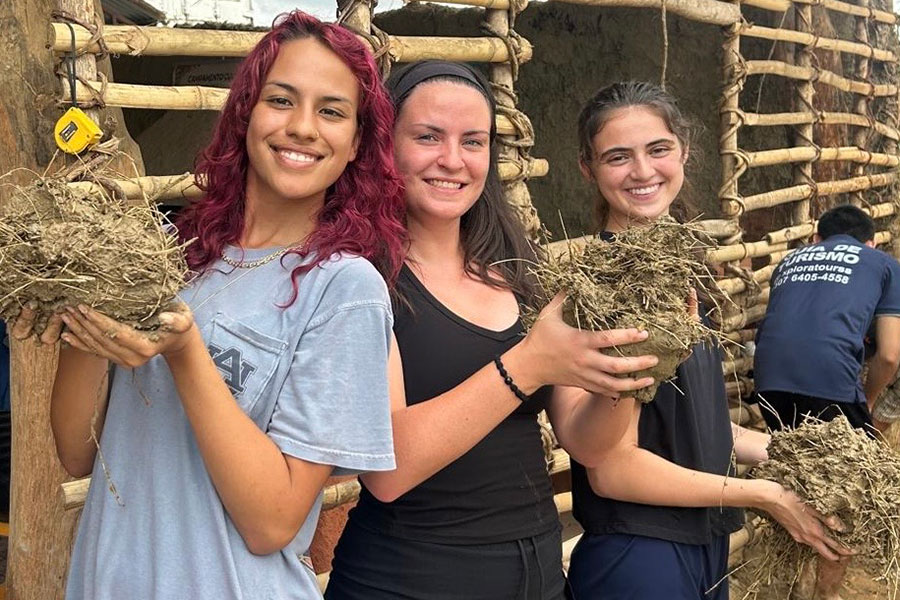
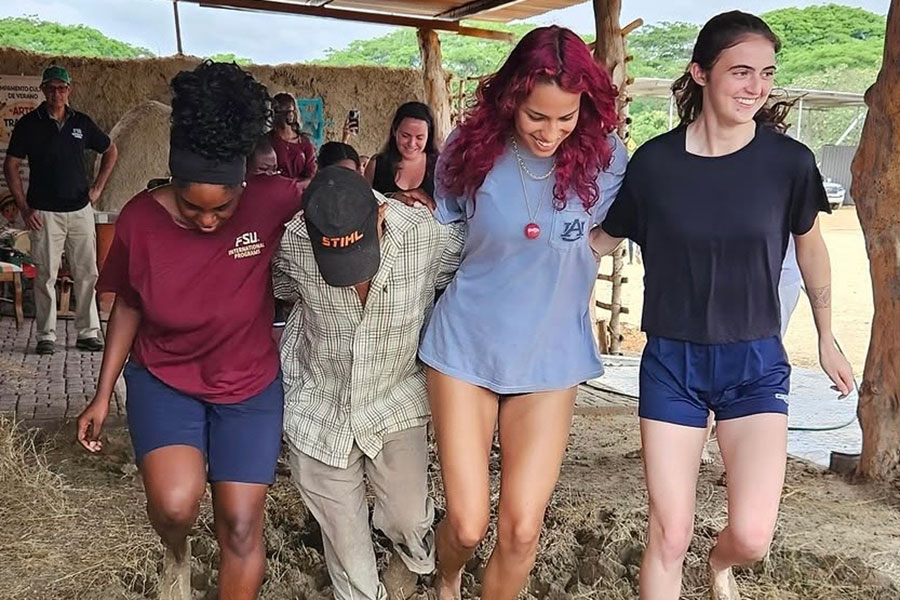
Abbey Jackson, a sophomore majoring in dietetics and exercise physiology, was part of the inaugural cohort. She said her favorite experience was participating in a traditional junta de embarre, in which community members build a structure that uses local clay, straw and wood as natural insulation without relying on industrial materials that degrade the local ecosystem. The junta de embarre was recently inscribed on UNESCO’s Urgent Safeguarding List for Intangible Cultural Heritage.
“This experience will heavily influence my career by reminding me to look at the bigger picture,” Jackson said. “I will not just see nutrition as an individual health choice, but as a vital public health tool that is shaped by culture, environment and community solidarity.”
Cambodia
Shovik Saha, who graduated in the spring with a degree in interdisciplinary social sciences and the Global Citizenship Certificate, spent his summer in Siem Reap, Cambodia for the Junior Resident Fellows Program. The program invites U.S., French and Cambodian students to learn more about Cambodian history and Southeast Asian relations through coursework and field visits.
In addition to taking classes on Cambodia’s culture, political history and positioning in international politics, Saha received language instruction in Khmer, the official language of Cambodia. The program also includes visits to historical and cultural sites and connects participants with regional organizations working in human rights, journalism, development and other sectors.
“I am glad I found this program because it offered the chance to step outside of my comfort zone more than my previous study abroad experiences,” he said. “As someone who plans to attend law school, I believe experiences like these are valuable because they help me better understand people, communities and perspectives that may be very different from my own.”
New Zealand
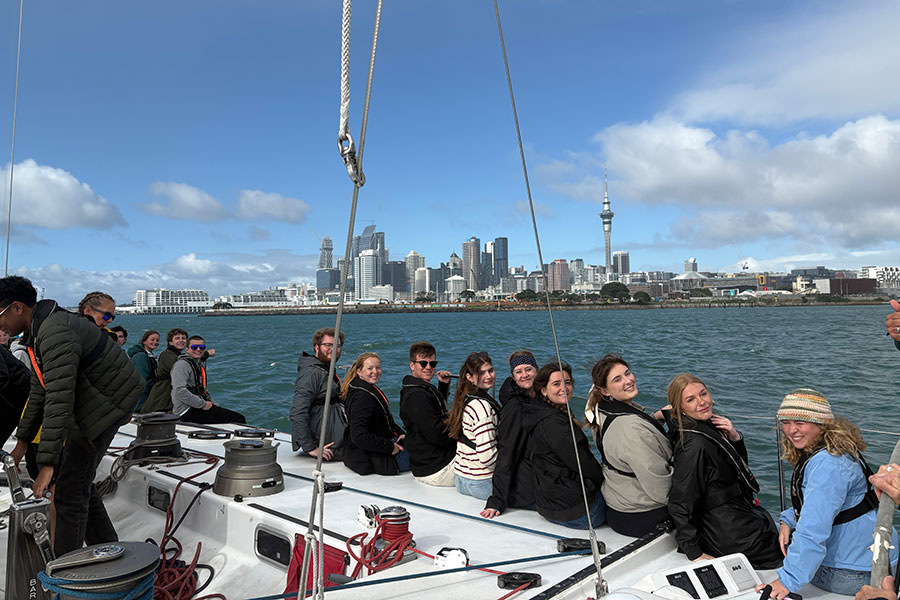
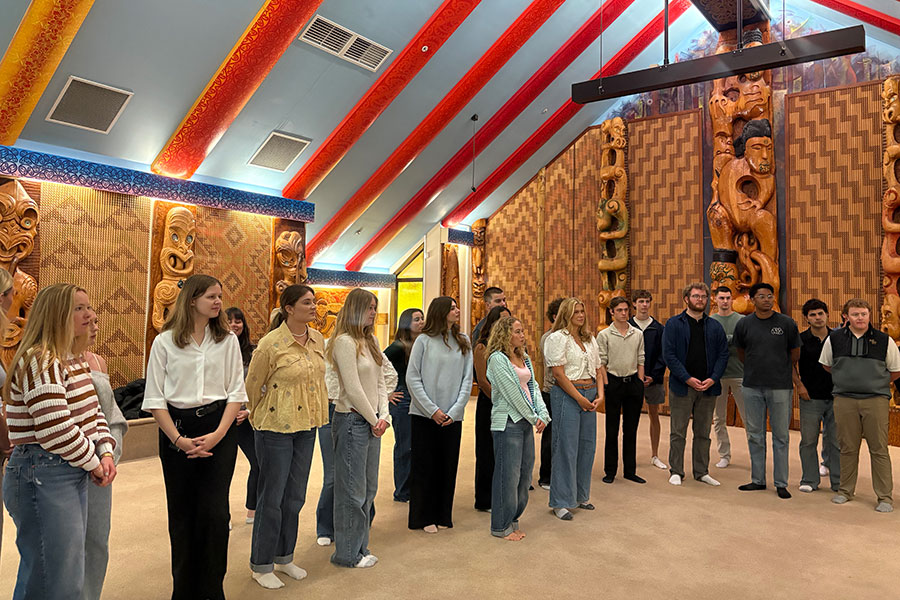
International Programs also launched the new Adventure Tourism program in Auckland, New Zealand this summer. The program, which is open to all students but is of particular interest to students in the Dedman College of Hospitality, allows students to explore various aspects of the hospitality industry through a wide range of experiences.
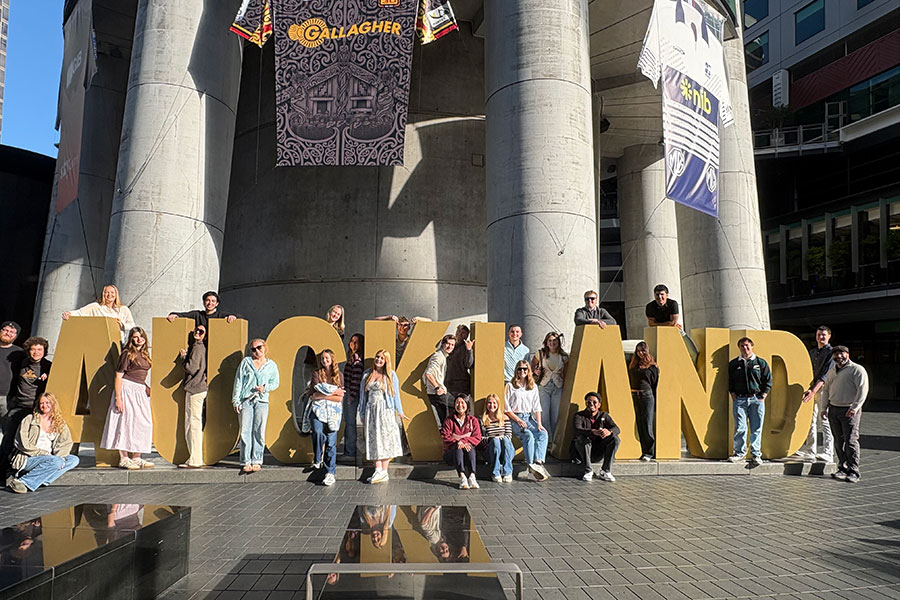
Sean McGinley, associate professor and director of International Studies at the Dedman College of Hospitality, served as the program’s leader along with Jieun Song, teaching faculty and director of Recreation and Tourism Management at the college. Creating this program for students was a “passion project” for McGinley, who had previously worked as a manager at the Crowne Plaza Auckland just two blocks away from where the cohort stayed.
“The experience really changed my life for the better, and I wanted to share that with FSU students,” he said. “New Zealand is a special place in the world, and I had the unique ability to open doors to our students that would otherwise have remained closed, even if they had traveled there independently.”
Through activities ranging from hiking to a geyser and visiting natural geothermal mud baths to participating in a traditional Māori feast and sampling local wines, students explored the interconnected roles of tourism, culture and economics in New Zealand.
“At its heart this is a hospitality and tourism program, and New Zealand is uniquely positioned to provide excellent learning opportunities to students on the topic,” McGinley said. “It’s an exciting place that allows for deep cultural exchange, experiential learning, and does it all with some of the most beautiful views and flavors you can imagine.”
Germany
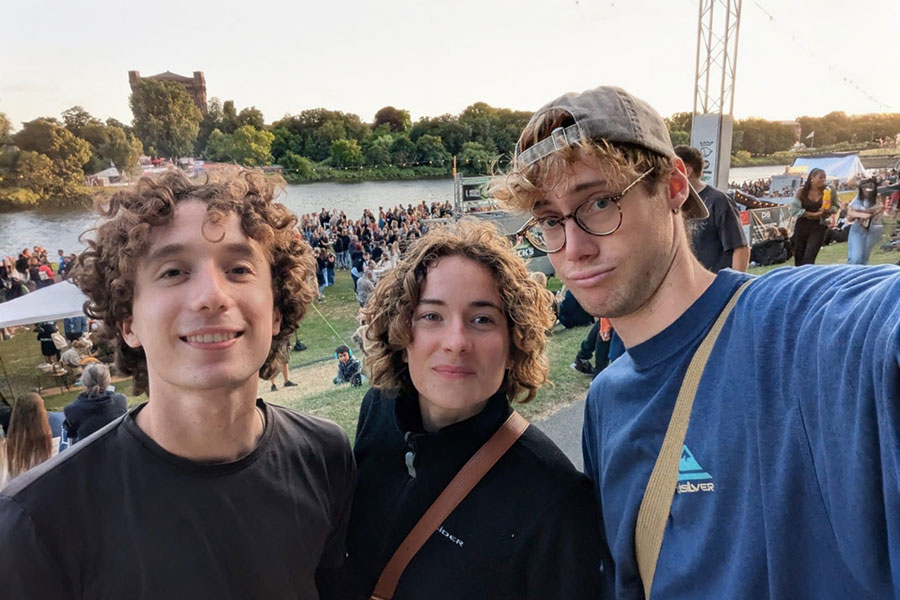
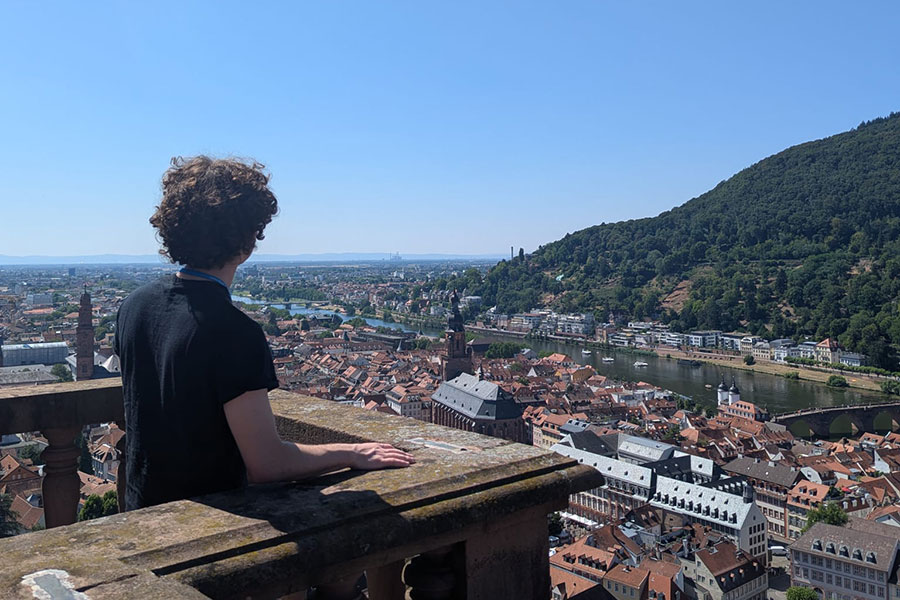
Jake Scalabrin, a senior earning a degree in computational sciences with a minor in mathematics, traveled to Bremerhaven, Germany to spend the summer interning at the Alfred Wegner Institute for Polar and Marine Research (AWI) through the German Academic Exchange Service (DAAD), a joint organization between German universities and student bodies that was founded to encourage international exchange in higher education.
Through the DAAD’s Research Internships in Science and Engineering (RISE) Germany program, which offers competitive internships at German institutions to undergraduate students in North America, the United Kingdom and Ireland, Scalabrin spent his summer working with the AWI’s Sea Physics section. There, he helped test and expand a new machine learning framework that would enhance sea ice classification using satellite radar altimeter data.
“Because I have worked with remote sensing data before, I had familiarity with its data structure, which definitely allowed me to do my job better,” Scalabrin said. “The researchers at AWI come from vastly different backgrounds, and they conduct amazing research. Seeing and being a part of that has made me even more of an advocate for international collaboration in scientific inquiry than I already was.”
To learn more about study abroad opportunities offered through FSU’s International Programs, visit international.fsu.edu. For more information about FSU’s Global Exchange Programs, visit cge.fsu.edu/fsu-global-exchange-programs. To learn more about external awards for students to go abroad, visit onf.fsu.edu or ogfa.fsu.edu.
To learn more about FSU’s global footprint, visit global.fsu.edu.