



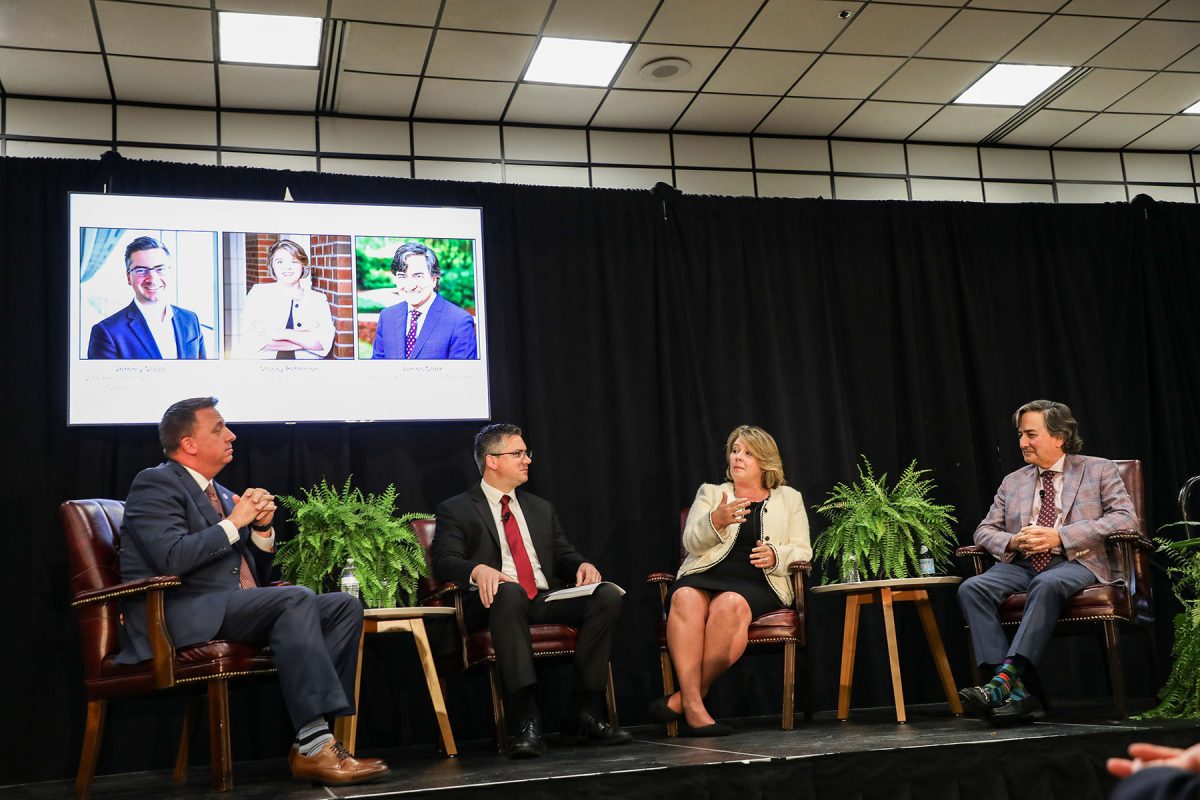
Florida State University’s Information Technology Services highlighted strategy, innovation and partnerships April 7 during the 2026 ITS Spring Town Hall and RISE Together Showcase, a daylong event highlighting how technology is accelerating the university’s academic, research and service missions.
Hosted at the Donald L. Tucker Civic Center and the Augustus B. Turnbull III Florida State Conference Center, the event brought together hundreds of ITS staff, faculty, students and university leadership for institution-wide updates and hands-on demonstrations of emerging technologies.
During the morning town hall, Jim Clark, FSU provost and executive vice president for Academic Affairs; Stacey Patterson, vice president for research; and Jeremy Slaga, FSU’s vice president and chief clinical operations officer, told attendees that Florida State University’s rise into the nation’s top 25 public universities was driven not only by ambition, but also by the people and systems supporting that growth.
“I am thrilled to be in the top 25 public universities in the United States — it’s an incredible achievement,” Clark said. “But our focus today is to talk about the role you all play in helping us thrive and become even more excellent in the years ahead.”
Clark said that success became possible only when the pursuit of national prominence evolved into a coordinated effort supported by aligned systems, infrastructure and service.
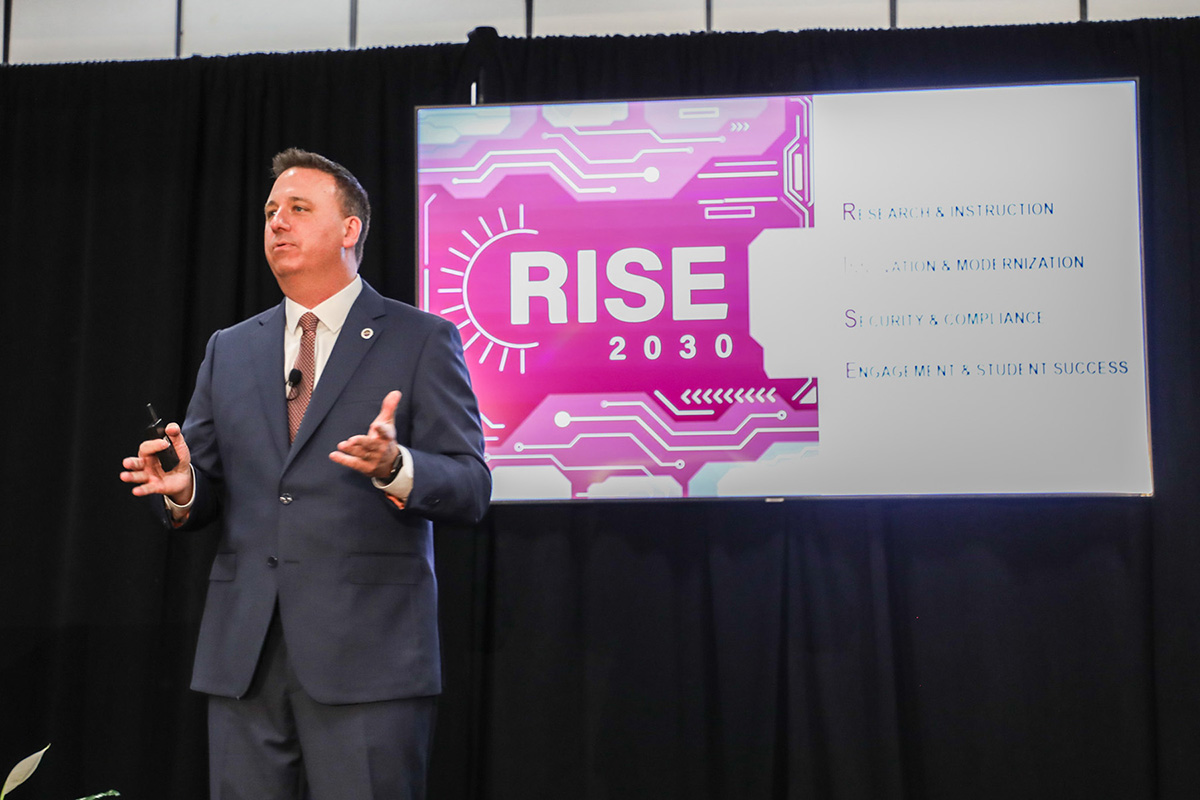
“These are the teams that are making that happen,” said Jonathan Fozard, associate vice president and chief information officer. “These are the teams that are helping support the students, faculty and staff achieve our collective goals and aspirations for this amazing university.”
Slaga highlighted Florida State’s expanding health and research initiatives.
“FSU Health has an opportunity to serve as a vehicle — a backboard — that allows all of these amazing components to plug in,” Slaga said, emphasizing the need for standardized systems and shared data to support collaboration.
Patterson provided an update on ASPIRE, or A Strategic Plan to Inspire Research Excellence, emphasizing people, partnerships, infrastructure and excellence as the four pillars of the plan.
“When we talk about infrastructure, it’s not just buildings,” Patterson said. “It’s the processes and the systems behind the operations. None of us can do what we do without all of you.”
Patterson noted that Florida State has more than doubled its number of National Academy members in the past year and a half, a key measure of research prominence and that a strong digital infrastructure and service support are essential to recruiting and retaining elite faculty.
After the conversation with university leadership, Fozard emphasized that ITS’s greatest strength is its people. He outlined plans to invest in skill growth, foster trust and psychological safety to support innovation, and continue the shift from a ticket-based service model to a trusted strategic partner across campus.
While the morning town hall focused on strategy and alignment, the afternoon RISE Together Showcase was designed to promote collaboration, highlight projects and drive technological innovation across the university.
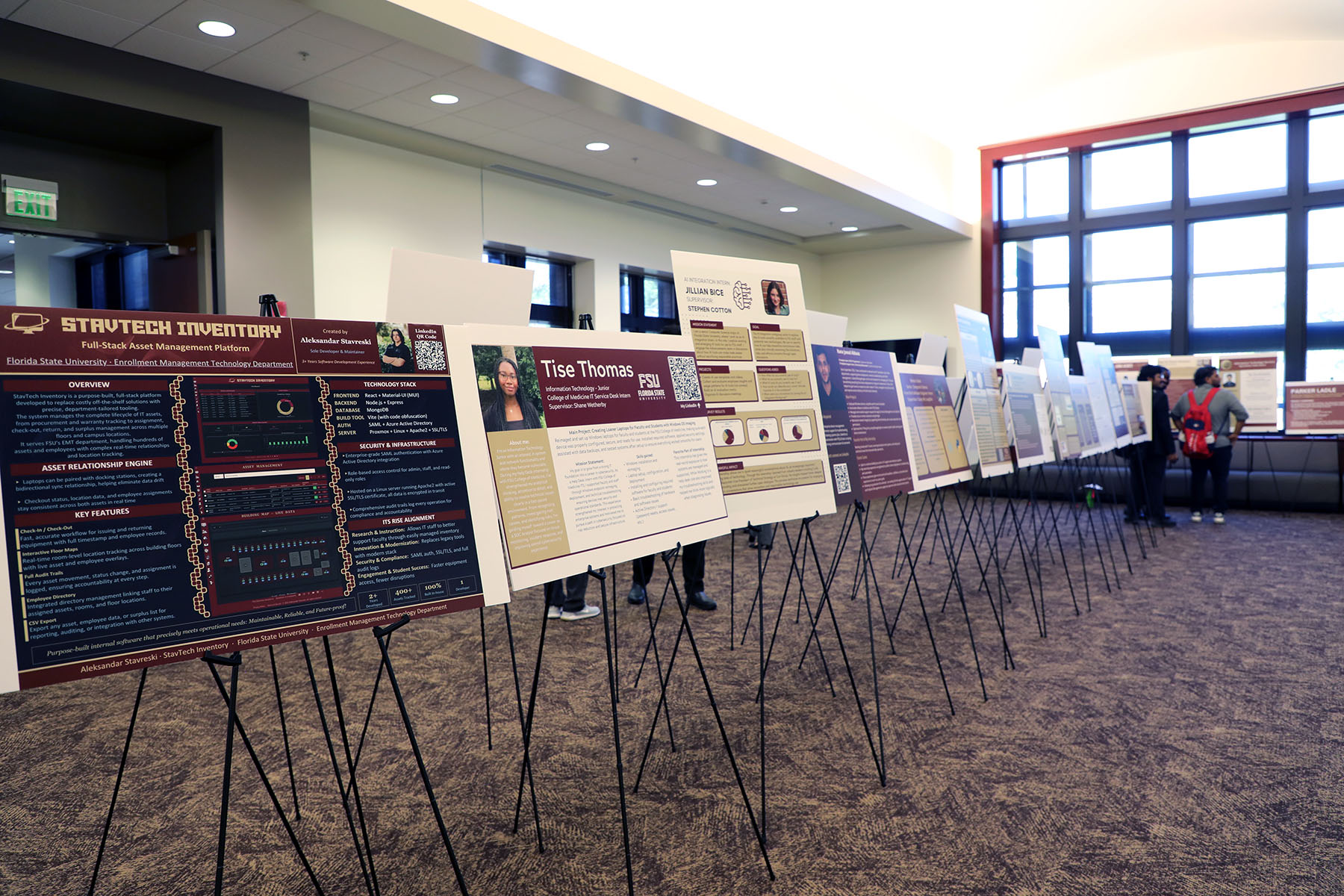
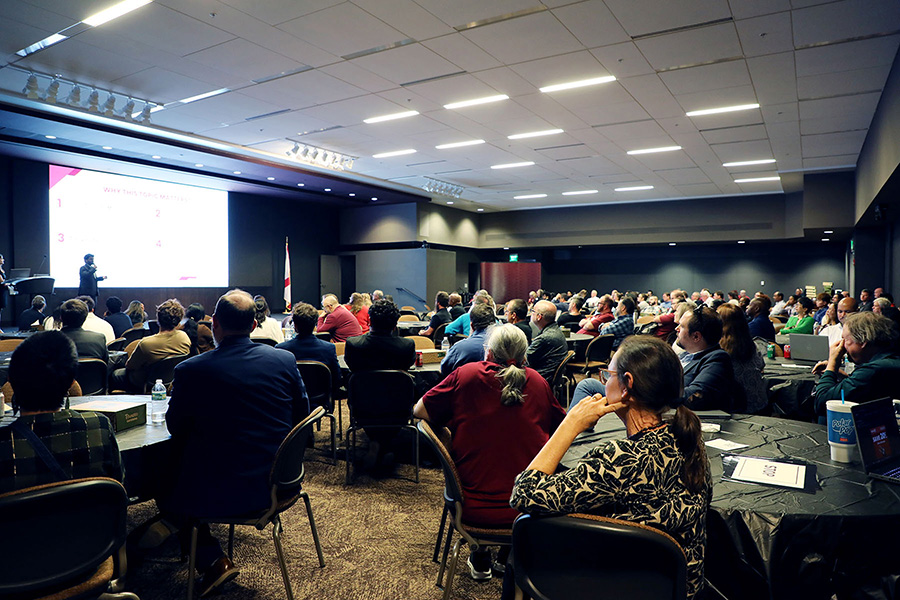
Now in its third year, the half-day technology conference featured three 50-minute session blocks showcasing projects already in use or development across education, research and administration.
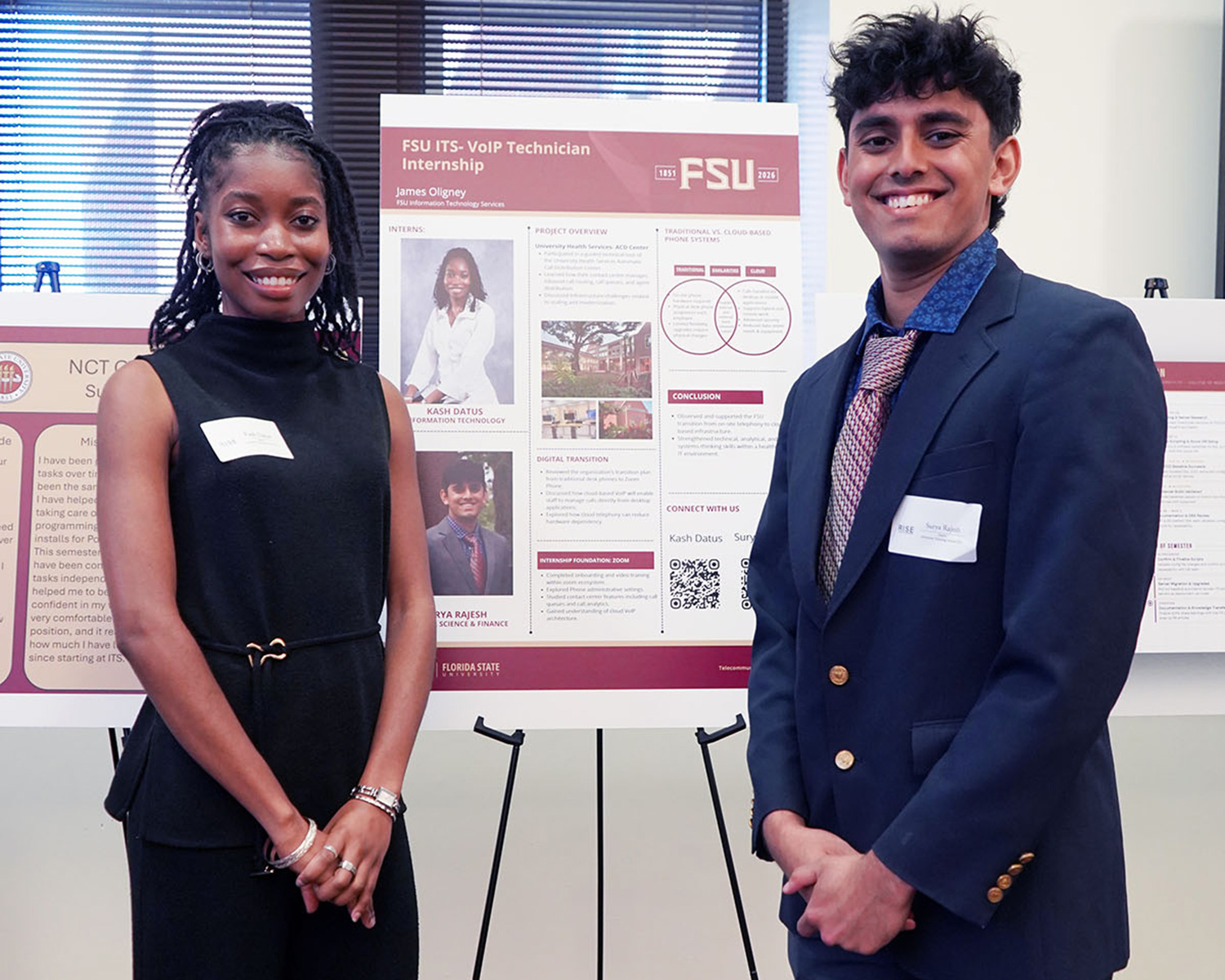
The showcase also highlighted the continued success of ITS’ student internship program, which has reached a record level of participation this year. A total of 156 student interns currently work across Information Technology Services this semester, gaining hands-on experience through real technology projects while supporting the university’s mission.
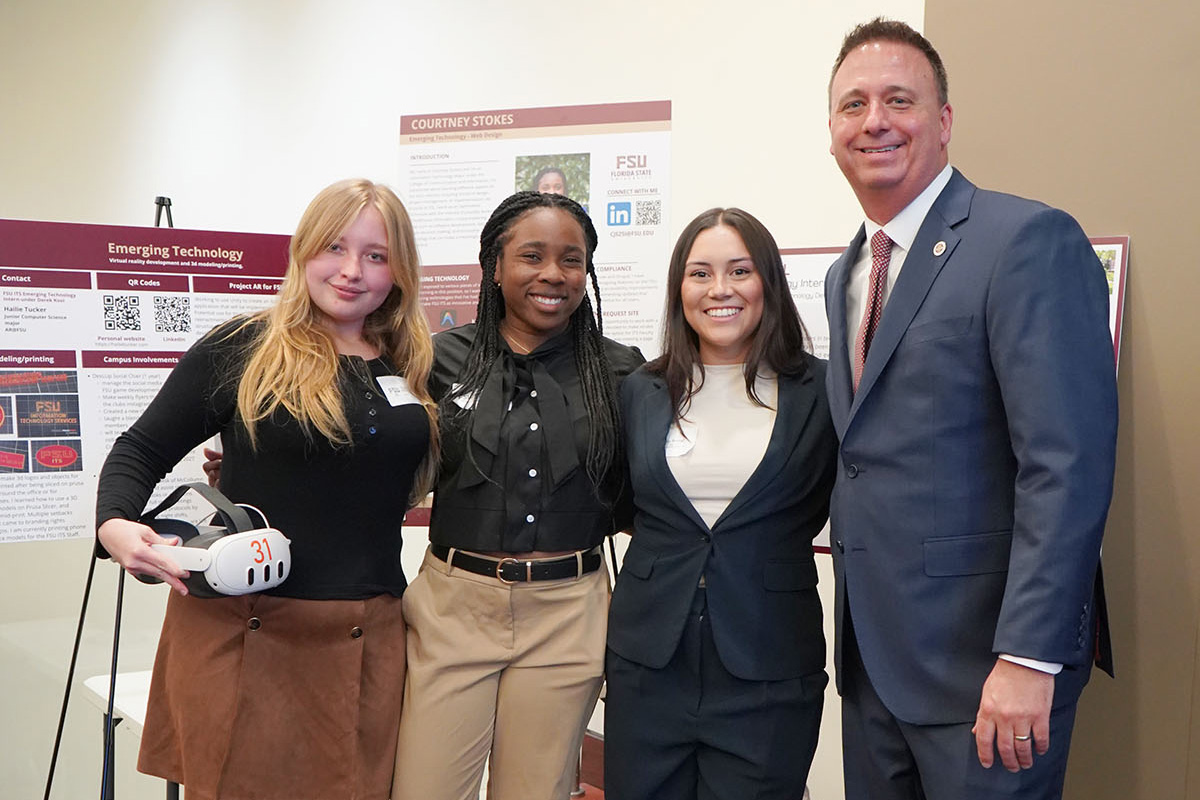
Among the presentations was a session on 3D printing showcasing work led by student interns in emerging technology, who are developing scalable printing services that support faculty, staff and campus events.
Another highlighted the reimagined version of Ruby, ITS’ Salesforce-based virtual assistant, rebuilt as an intelligent AI agent capable of interpreting user intent and performing multi-step tasks rather than simply returning search results.
Another session demonstrated how ITS is modernizing analytics at FSU, showing how cloud platforms and tools such as Power BI are used to transform complex institutional data into secure, accessible dashboards that support decision-making across academic and operational units.
Midway through the afternoon, interns presented posters and spoke with campus leaders and attendees about their work, offering a chance to spotlight student-driven innovation.
By the end of the day, the message was consistent: at Florida State University, technology is a strategic, people-centered enterprise powering research, instruction, health care and student success and moving the institution forward.