



Key Points
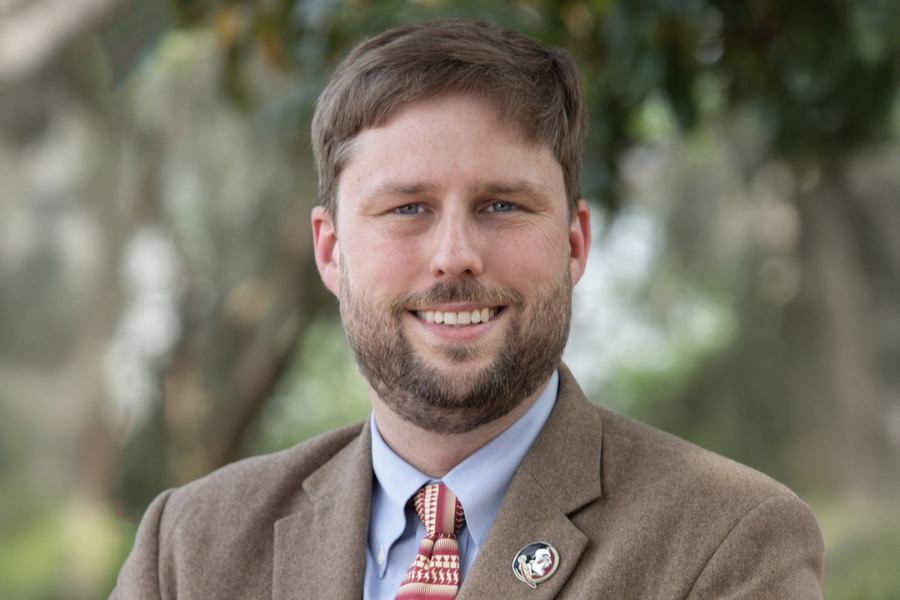
- James Hunt, FSU's associate vice provost and chief data and analytics officer, was recognized by CDO Magazine for his leadership in using data to improve university decision-making and support student success.
- Under Hunt's leadership, FSU has expanded data training and analytics across campus, earning a state productivity award and helping prepare the university for the responsible use of artificial intelligence.
Florida State University’s James Hunt has been named one of the Top 30 Higher Education Data & AI Influencers for 2026 by CDO Magazine, a global publication covering data, analytics and artificial intelligence leadership. The recognition honors his work to improve how universities use data to make decisions and support student success.
Hunt joins leaders from some of the nation’s most prominent universities, including Harvard, Cornell, Michigan, Penn State, Georgia Tech, Notre Dame and Vanderbilt, on the annual list recognizing individuals who are helping colleges and universities use data, analytics and artificial intelligence to advance their missions.
“As his supervisor and collaborator, I have witnessed his ability to connect strategy, technology, governance and culture,” said Rick Burnette, FSU’s senior vice provost and chief strategy officer, who nominated Hunt for the recognition. “He is not just building better analytics at FSU; he is instrumental in making FSU one of the first data engaged campuses, where data is essential to every strategic decision, thus demonstrating a model of higher education data leadership for other institutions.”
Under Hunt’s leadership, FSU’s Office of Institutional Research has expanded its role in student success, strategic planning, enrollment and resource allocation. His team has developed tools and partnerships that give university leaders, faculty and staff better access to reliable data to guide decisions.
Those efforts have produced measurable results. A university-wide data and technology training program led by Hunt’s team earned a 2025 Florida TaxWatch Government Productivity Award after delivering 60 training sessions to more than 860 employees in one year. The program avoided more than $100,000 in direct training costs and was credited with an estimated $10 million in annual taxpayer savings through increased productivity.
Hunt also has helped build a culture of data engagement across campus. FSU’s Data User Group has grown from 17 to nearly 900 members, while the university’s second annual Data Day conference in 2026 drew more than 250 participants. The event brings together faculty, staff, researchers and technology professionals to explore practical applications of data and analytics across the university.
“I’m honored by this recognition, but the work it represents is truly a team effort. I’m fortunate to work alongside an exceptional group of colleagues in Institutional Research and across FSU who are committed to helping people throughout the university engage with data in meaningful ways,” Hunt said. “What excites me most is seeing that work translate into better decisions, stronger collaboration and real progress toward our university’s goals.”
Hunt’s work also is helping prepare FSU for the growing use of artificial intelligence in higher education. His approach emphasizes strong data governance, secure access, consistent reporting and reliable information as the foundation for responsible AI applications. Rather than adopting technology for its own sake, his strategy focuses on using AI and analytics to address the university’s needs.
A member of FSU’s Office of Institutional Research since 2016, Hunt previously served as its director before being named the university’s first associate vice provost and chief data and analytics officer in 2025. He also serves as FSU’s institutional data administrator.
His influence extends beyond Florida State. A former president of the Southern Association for Institutional Research, Hunt has shared his expertise through presentations at national higher education conferences, including EDUCAUSE, the Association of Public and Land-grant Universities and the Association for Institutional Research.
CDO Magazine selected its 2026 honorees based on their leadership in institutional strategy, measurable impact, innovation, data governance and contributions to the broader higher education community.