



Key Points
- Florida State University brought researchers from across disciplines together to explore how artificial intelligence can advance research and address complex challenges, encouraging new ideas and collaborations spanning areas such as health, smart cities, robotics and the societal impacts of AI.
- FSU's Collaborative Collision LaunchPad Funding is offering teams up to $25,000 in seed funding to develop partnerships and pursue innovative AI-related research.
As artificial intelligence creates new possibilities for scientific discovery, Florida State University is uniting researchers from a wide range of fields to explore its potential and ability to address complex, real-world challenges.
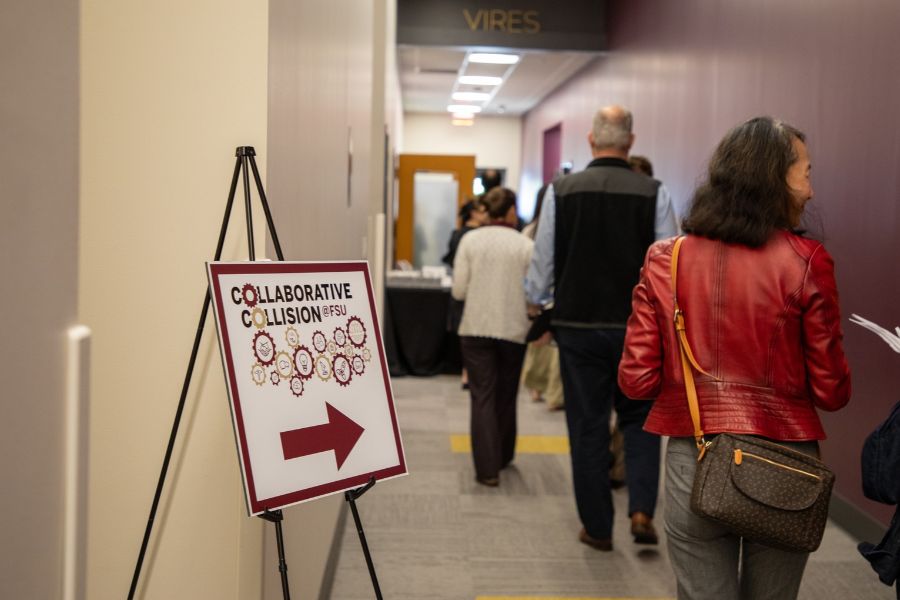
During FSU’s Discovery Days, the FSU Research Development team from the Office of Research hosted “Collaborative Collision: The Future of Intelligence,” giving faculty a forum to discuss AI in research, connect across disciplines, build partnerships and pursue projects that could advance scientific discovery.
“This event was a great way to engage faculty from all across campus in thinking carefully about the nature of intelligence and what it means to be human in the age of AI,” said Paul Marty, associate vice provost for academic innovation. “We had extremely rewarding conversations about the importance of keeping humanity front and center as we move forward as a university and study the role of AI in society, health, education, science and the workforce.”
After opening remarks, attendees joined breakout sessions focused on how artificial intelligence intersects with different fields of study. Participants spent the day exchanging ideas, exploring how AI could be applied to various research areas, from human health to smart cities to robotics.
“This event brought together researchers from many disciplines to discuss the impact of AI and related emerging technology on their scholarship,” said Mike Wolfe, director of AI research solutions. “By getting different perspectives into the same room, we hope to encourage cross-domain discussions that will result in new project ideas and partnerships.”
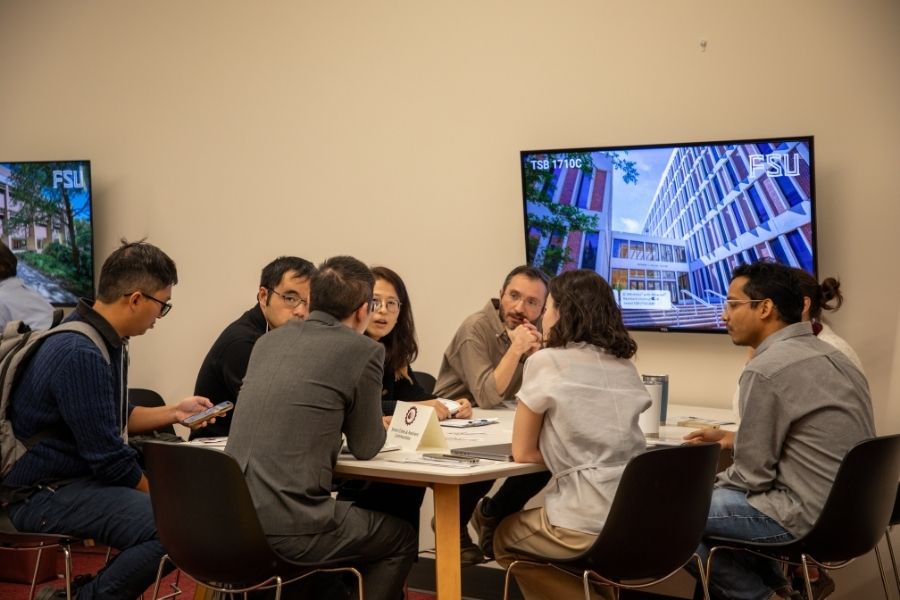
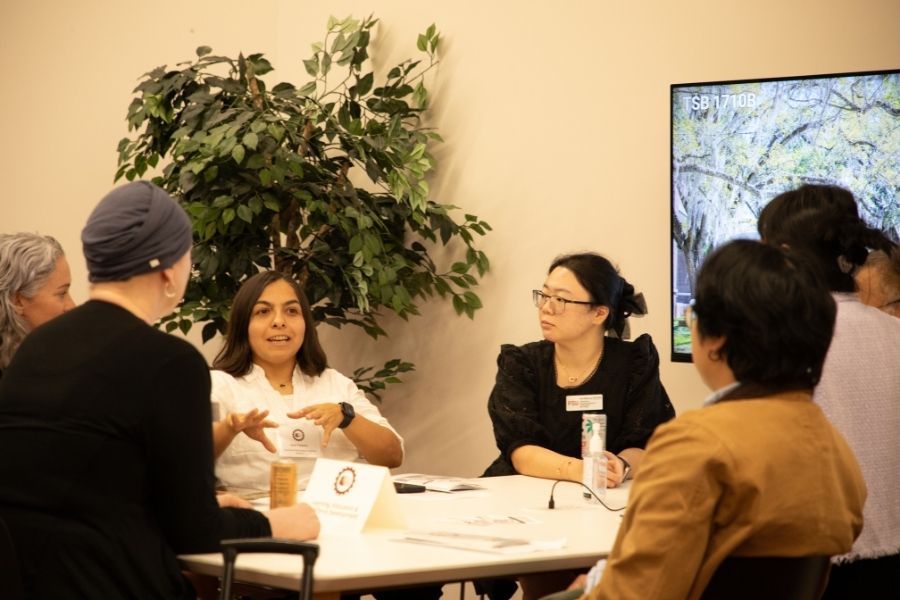
The discussions encouraged researchers to look beyond the focus of their own work, identify shared interests and consider how different areas of expertise could combine to tackle scientific and societal challenges together.
Following the breakout discussions, FSU’s Research Development team introduced Collaborative Collision LaunchPad Funding, an opportunity for researchers to turn their cross-departmental connections into collaborative research projects. Participants were encouraged to form interdisciplinary teams and develop project proposals so they can compete for up to $25,000 in seed funding.
“This event demonstrates the Office of Research’s commitment to cutting-edge scholarship across all disciplines that makes FSU special, such as research on autonomous security systems, the social aspects of AI integration or artistic creativity at the technological frontier,” said Jared Parmer, research development coordinator. “We’re catalyzing new research teams and seeding new projects through LaunchPad grants to help build a future we can all look forward to.”
In a dedicated resource room, attendees connected with representatives from Information Technology Services, FSU Libraries and the Research Computing Center to learn about tools, services and technical support for their projects and research needs.
For more information on research development opportunities at FSU, visit FSU Research Development.