


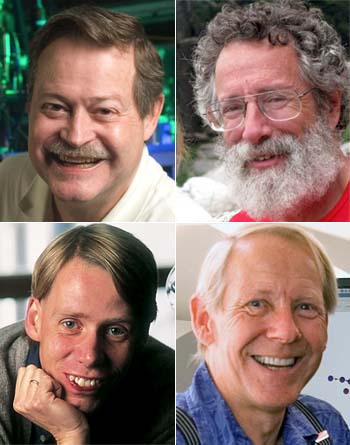
Arne Rikvold, and Oliver Steinbock
The Florida State University has long been recognized internationally for the high quality of research conducted on its campus in a wide variety of academic disciplines. That stellar reputation was reaffirmed today as four Florida State professors — an oceanographer, a marine biologist, a physicist and a chemist — were elevated to the rank of fellow by the American Association for the Advancement of Science (AAAS).
The Florida State faculty members selected as AAAS fellows for 2011, and the language provided on their AAAS citations, are as follows:
- Philip Froelich, FSU’s Francis Eppes Professor of Oceanography, Department of Earth, Ocean and Atmospheric Science, “for foundational contributions toward the understanding of the geochemistry of marine sediments, and the application of this knowledge to the reconstruction of ocean history.”
- Don R. Levitan, Professor, Department of Biological Science, “for distinguished contributions to the field of marine invertebrate ecology and evolution, particularly for interpreting field and laboratory studies of broadcast spawning in a modern theoretical framework.”
- Per Arne Rikvold, Distinguished Research Professor and the James G. Skofronick Professor of Physics, Department of Physics, “for distinguished contributions to computational statistical physics and its interdisciplinary applications in condensed-matter and materials physics, electrochemistry, computer science, biology, and engineering.”
- Oliver Steinbock, Professor, Department of Chemistry and Biochemistry, “for distinguished contributions to the field of physical chemistry, particularly for the experimental study and the modeling of emergent phenomena in nonequilibrium systems.”
Election as a fellow of the AAAS is an honor bestowed upon association members by their peers. Fellows are recognized for meritorious efforts to advance science or its applications. “We are very pleased but not surprised by the recognition of Professors Froelich, Levitan, Rikvold and Steinbock as AAAS fellows,” said FSU Dean of the Faculties Anne Rowe. “They have had significant and stellar careers at The Florida State University, contributing not only to their own fields but working across disciplines to create knowledge. This recognition from other AAAS fellows is well deserved and reflects the health of the sciences at FSU.”
While they may share AAAS honors, the four faculty members have little else in common in terms of their areas of research.
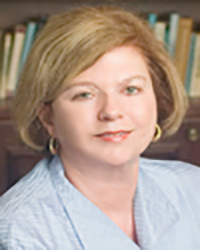
Steinbock, for example, studies chemical reactions and materials capable of producing complex features that are usually associated with living organisms.
“In living organisms, nerve fibers transmit information over long distances; internal structures grow into large biological architectures; and complex rhythms, such as our internal clocks, are kept over long time periods,” he said. “I investigate how similar effects can be created with inorganic chemistry. The motivation for this systems research is to better understand biology and dynamic diseases, as well as to use biology’s ‘tricks’ for modern materials science.”
Two major, National Science Foundation-funded research thrusts in Steinbock’s group are the study of complex wave patterns that have been linked to sudden cardiac death in humans and the production of hollow microtubes with tailored catalytic and sensory features.
The central theme of Rikvold’s research, meanwhile, is “computational nonequilibrium statistical physics” — an interdisciplinary field that studies systems consisting of a very large number of interacting entities, be they atoms, molecules, animals, people, or the components of complex engineering systems.
“In my work, I have applied methods from statistical physics to nano-magnetism, electrochemistry and catalysis, computer science, evolutionary biology and ecology, economics, and power-grid engineering,” he said. “Such systems of many interacting parts often show striking similarities in their ability to self-organize and display complex patterns and dynamic behaviors that span many orders of magnitude in space and time.”
Levitan studies the ecology, evolution and reproductive biology of marine invertebrates.
“My work examines the interactions between ecological processes, natural and sexual selection, and molecular evolution,” he said. “I am currently exploring how population density influences selection on gamete recognition proteins, and its cascading effects on reproductive isolation and speciation.”
In conducting his research, Levitan uses a diverse array of tools to answer questions including field experiments on gamete fertilization and reproductive isolation, molecular studies of paternity, hybridization and protein evolution, phylogenetic analysis of trait evolution, and theoretical explorations of sexual selection and gamete evolution.
Froelich’s interests span the breadth of global biogeochemical dynamics, a field that endeavors to understand the links between current and past environmental changes. His research groups unravel past changes in ocean and atmosphere chemistry driven by both natural and manmade processes.
“My students work on projects such as stalagmite recorders (cave dripstone deposits) of Southeastern rainfall and climate over the past several thousand years; isotope and trace-element recorders of ocean chemistry changes embedded in microfossil shells from marine sediments over tens of millions of years; the release of toxic trace elements by industrial processes such as coal-fired power plants to Southeastern airsheds, rivers and streams over the past three decades; and sea-level changes affecting salt exchange through the Straits of Bab El Mendab in the Red Sea over the past 20,000 years,” Froelich said.
The AAAS honors are another tangible sign of the strength of the university’s faculty, said Vice President for Research Kirby W. Kemper.
“The diversity of research areas covered by these new AAAS fellows vividly demonstrates the broad areas of excellence present on the FSU campus,” said Kemper, who holds the title of Robert O. Lawton Distinguished Professor of Physics at the university. “FSU is proud to have these distinguished individuals as members of our faculty.”
The American Association for the Advancement of Science is the world’s largest general scientific society. It has more than 127,000 individual and institutional members and 262 affiliates, serving 10 million scientists in fields ranging from plant biology to dentistry. The association also publishes Science, which, with an estimated total readership of 1 million, has the largest paid circulation of any peer-reviewed general science journal in the world. According to the association, 503 members have been awarded AAAS fellowships this year “because of their efforts toward advancing science applications that are deemed scientifically or socially distinguished.” With the addition of Froelich, Levitan, Rikvold and Steinbock, Florida State now has 42 current and emeritus faculty members who are AAAS fellows.