



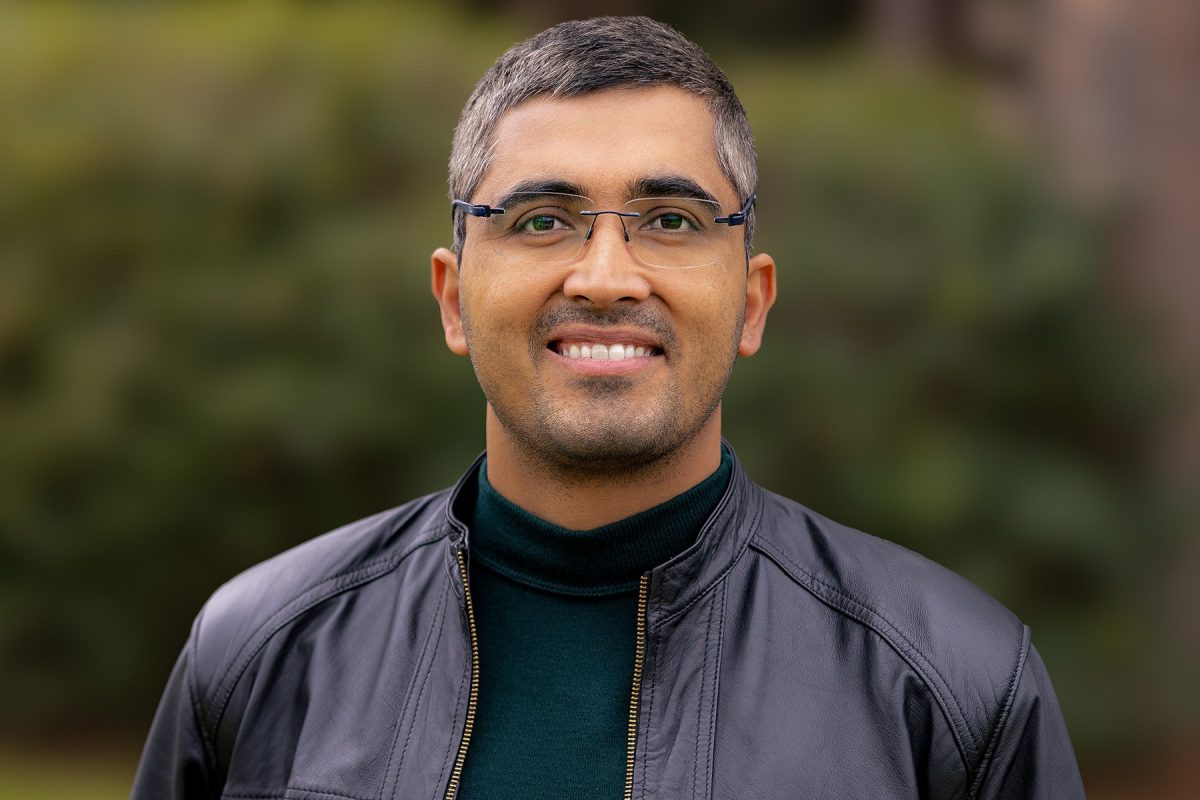
“Leading the LEARN network and the Nepalese Student Association has given me a chance to mentor students, celebrate culture and create a sense of belonging. In small ways, I hope my work reflects FSU’s spirit of community and purpose.”
Fast Facts
- Outdoorsy: Loves spending the weekends kayaking at the FSU Lakefront Park & Retreat Center
- Photographer: Passionate about utilizing photography to help slow down and see beauty in small moments
- FSU Dining: Spent most of his first year eating lunch and dinner at the Seminole Café, which practically felt like home
- Culture-Driven: Loves introducing Nepali food and culture to international friends
- Travel: Visited remote mountain schools in Nepal as part of his education and rebuilding work
Nepalese doctoral candidate Bhushan Dahal is pursuing his doctorate in Educational Leadership and Policy Studies (ELPS), Dahal’s mission is to apply the knowledge gained during his time at FSU toward strengthening the public-school systems of Nepal. He aims to use research to dig deeper into core questions regarding school-community partnerships.
As both a national and international educator, Dahal has seen firsthand how changes in policy and leadership can directly influence education at the administrative level. He has made a tremendous impact on educational reform through his service as both executive director and strategic director for the nonprofit Kids of Kathmandu, an organization that has built eleven public schools and two are under construction across Nepal, serving 7,500 students.
Dahal has been featured in the Tallahassee Democrat and led a TED talk at FSU where his work was highlighted with the message “it all begins with education.” He holds leadership roles in both the Leadership, Education and Research Network (LEARN) and the Nepalese Student Association (NSA).
Looking towards the future, Dahal hopes to return to Nepal and use his studies here at Florida State to strengthen public schools and address a core question: “Why are students not learning even when they attend school, and what can communities do to solve this?”
Why did you choose to attend FSU?
I chose to pursue my doctorate in ELPS at Florida State University because of its global outlook and strong emphasis on advancing educational equity through leadership and research. As an educator and administrator who has worked with both national and international organizations, I have seen how policy, leadership and teacher capacity directly influence the quality of education. My experiences have also shown that while improving infrastructure is important, lasting educational reform depends on empowering teachers and strengthening school leadership. The ELPS program’s focus on global and comparative education, and its faculty’s engagement in international research, aligns closely with my goals. I am especially inspired by the work of Associate Professor of International and Multicultural Education in the Department of Educational Leadership and Policy Studies, Ayesha Khurshid, whose research on education, gender and transnational contexts resonates deeply with my interest in understanding how leadership and policy affect public schooling in Nepal. Learning under her mentorship helps me critically examine how local realities connect to broader global forces shaping education.
What academic achievements are you most proud of?
One of my most significant accomplishments at FSU was being featured on the front page of the Tallahassee Democrat for my work in Nepal, which highlights the schools I have helped rebuild and the educational initiatives I continue to lead there. I was also invited to give a TED Talk at FSU, where I shared my journey and research on school-community partnerships and educational reform in Nepal. In addition, I am currently leading a conference jointly organized by the World Bank and the Learning Systems Institute at FSU, which focuses on global education systems and policy innovation. These experiences have allowed me to connect my academic research with real-world impact while representing FSU on both local and international platforms.
How have you impacted the FSU community?
At FSU, I’ve tried to build bridges — between local and global communities, and between stories and impact. Sharing my journey of rebuilding public schools in Nepal has allowed me to bring real-world perspectives into classrooms and conversations here. Being featured in the Tallahassee Democrat and giving a TED Talk at FSU reminded me how deeply connected our global efforts are to this campus. Closer to home, leading the LEARN network and the Nepalese Student Association has given me a chance to mentor students, celebrate culture and create a sense of belonging. In small ways, I hope my work reflects FSU’s spirit of community and purpose.