



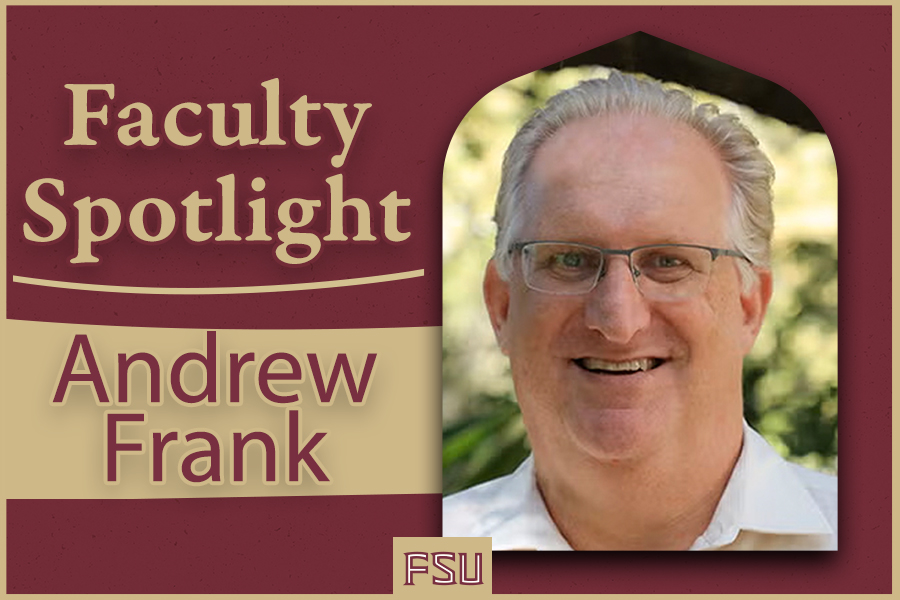
Key Points
- Professor Andrew Frank studies the history of the Florida Seminoles and the Native South and directs the FSU's Native American and Indigenous Studies Center (NAIS Center).
- The NAIS Center is a physical and conceptual hub for community members who are committed to Native American and Indigenous research and artistic practice. The Center promotes and coordinates consultations with tribal nations and community leaders, educational efforts inside and outside of the classroom and collaborative scholarship more broadly.
For Florida State University historian Andrew Frank, relationships are at the heart of his work with the Seminole Tribe of Florida.
As the Allen Morris Professor of History and director of FSU’s Native American and Indigenous Studies Center (NAIS Center), Frank studies the history of the Florida Seminoles and the Native South and promotes and coordinates consultations with tribal nations and community leaders.
“Many scholars will go into Indian or Native communities, ask questions, extract data and then publish their findings behind a paywall and never talk to the tribe again,” he said. “I don’t walk up to Seminoles and badger them about their history. They are my colleagues. Sometimes we talk about the past and sometimes we talk about what movies they have seen. I want others to do the same. The more unscripted conversations we have, the more trusting we can be with each other.”
FSU established the NAIS Center in 2023, one of the latest developments in a partnership between FSU and the Seminole Tribe of Florida that goes back decades. Since the 1970s, when FSU initially spoke with the Seminole Tribe of Florida about using its iconography, the two institutions have developed a respectful and mutually supportive relationship.
“The partnership is much more collaborative than it is extractive,” Frank said. “We don’t want to give Indigenous communities solutions to problems that they didn’t know they had or don’t see as problems. Instead, we want to combine the very best of our 21st century institutions and work together to answer questions that they want to address. That really is our main goal: to create relationships that do the best work in various fields. Everything else is a bonus.”
Frank came to FSU in 2007 to teach about the history of the Seminoles and the Indigenous people of what is now the Southeastern United States. He has written more than 10 books about the social and cultural history of early America, specifically the Southern region of the United States and Florida.
As center director, Frank holds a dual role, continuing his academic research and working with tribal members on community engagement efforts. His goal is to foster collaborative scholarship between FSU experts and Seminole experts.
“Tribes have amazing experts, more than just the stereotypical elder. Many tribes also have archaeologists, hydrologists, environmental engineers, doctors and lawyers. They are communities like every other,” Frank explained. “We call what we do Native American Indigenous Studies, but sometimes it’s simply geography, social work or Everglades restoration in Indigenous spaces and with Indigenous insights.”
As is tradition, FSU’s Homecoming celebration will feature Seminole engagement and appreciation. At the end of the parade on Nov. 20, members of the Seminole Tribe of Florida will be cooking traditional foods at the Seminole LIVE! 175 Homecoming Carnival for the FSU community. The NAIS Center will also have a tent with volunteers, tribal students and members, and employees.
During the Homecoming football game, members of the Seminole Tribe of Florida will crown this year’s Homecoming Chief and Princess, as they have done since 1974. Tribal council members, board members and alumni all come to Tallahassee to join in the Homecoming festivities.
“There will be opportunities on campus to learn anything, from history and culture to linguistics, music and painting,” Frank said. “I have no preference for what people learn. I just hope that they spend a little extra time thinking about what it means to be a Seminole.”