



Key Points
- The FAMU-FSU College of Engineering hosted the Discovery Days event "Glittering Science" on Oct. 21.
- The event featured the collaborative work of Assistant Professor William Meier and Photographer Scott Holstein. Together, the two create captivating images of crystals through macrophotography.
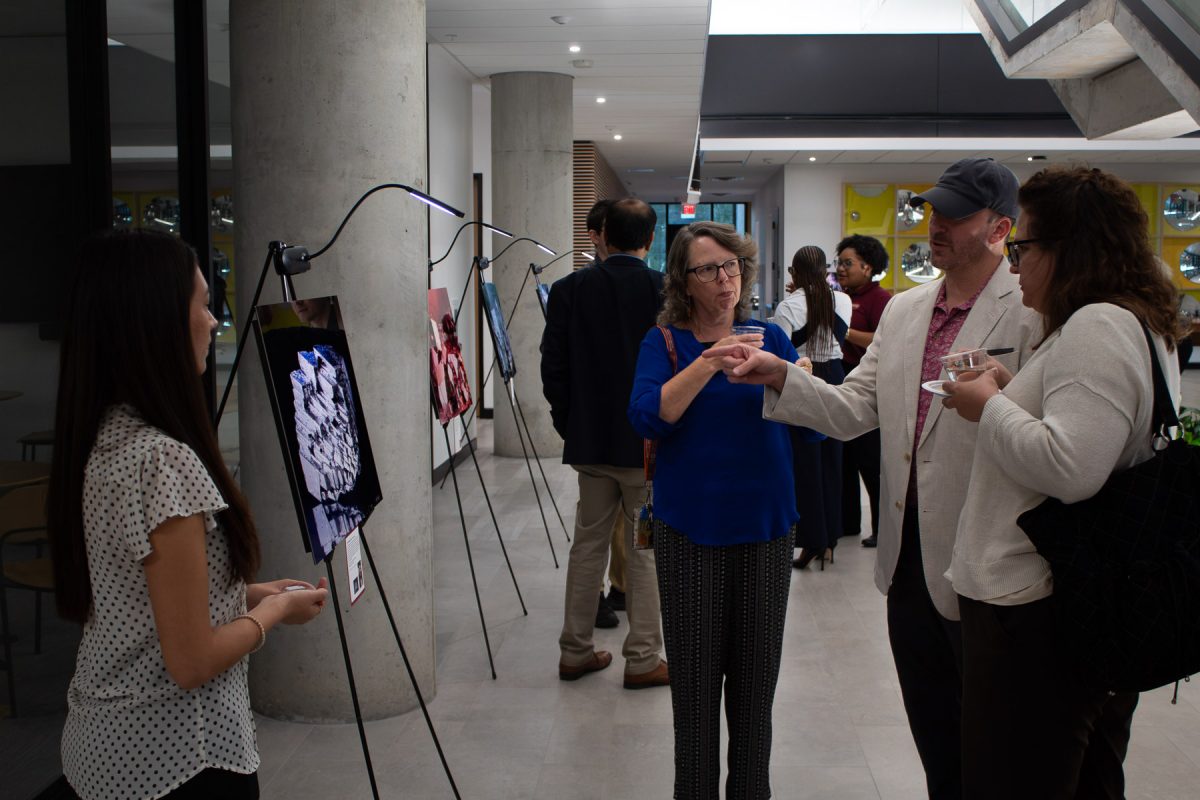
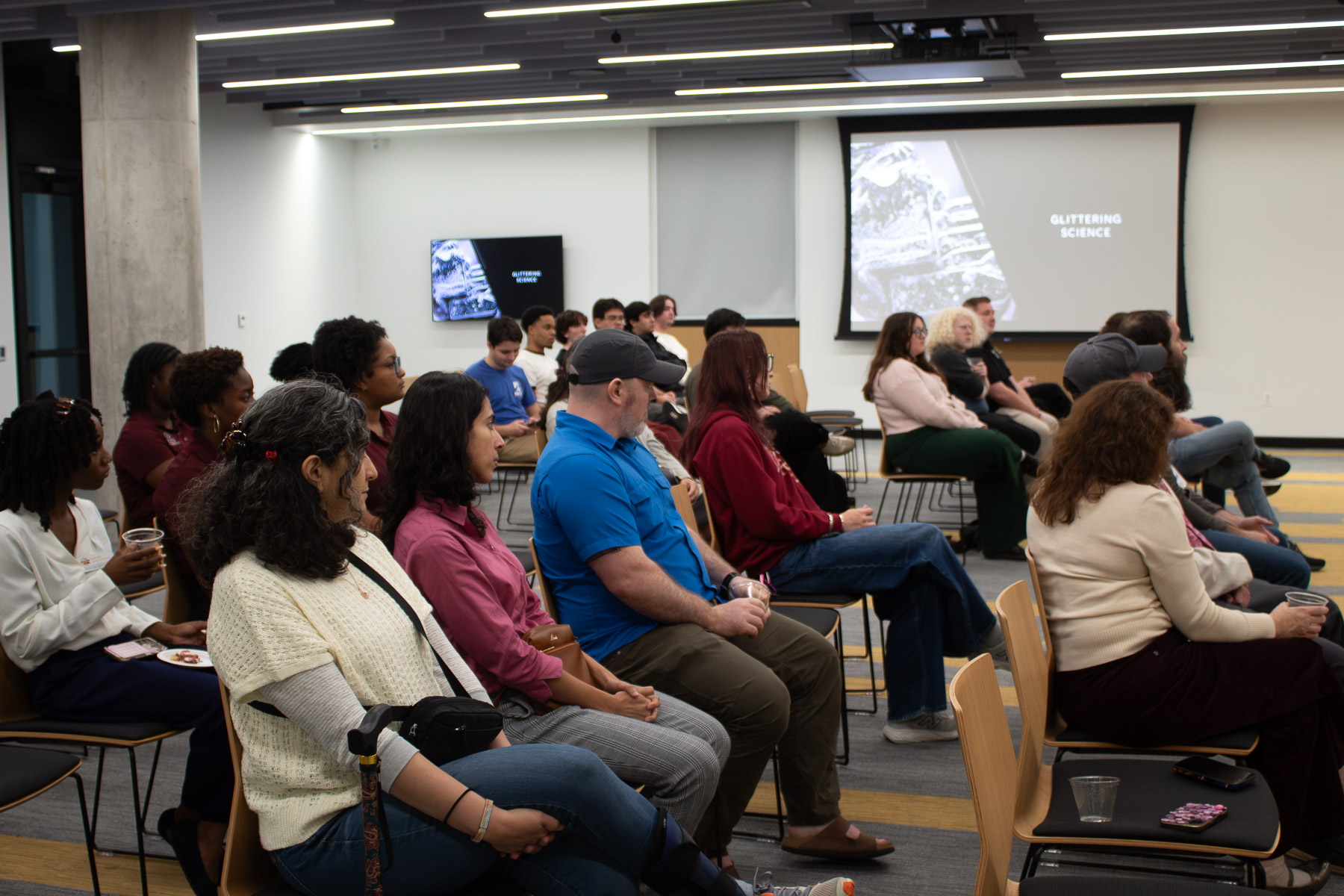
Science and art came together at Florida State University’s “Glittering Science” event Oct. 21, where photographs of tiny crystals revealed the unexpected beauty of scientific research.
The Discovery Days event showcased the collaborative work of William Meier, assistant professor of materials science and engineering at the FAMU-FSU College of Engineering, and Scott Holstein, the college’s professional photographer. Together, the two have transformed scientific discoveries into striking works of visual art through macrophotography.
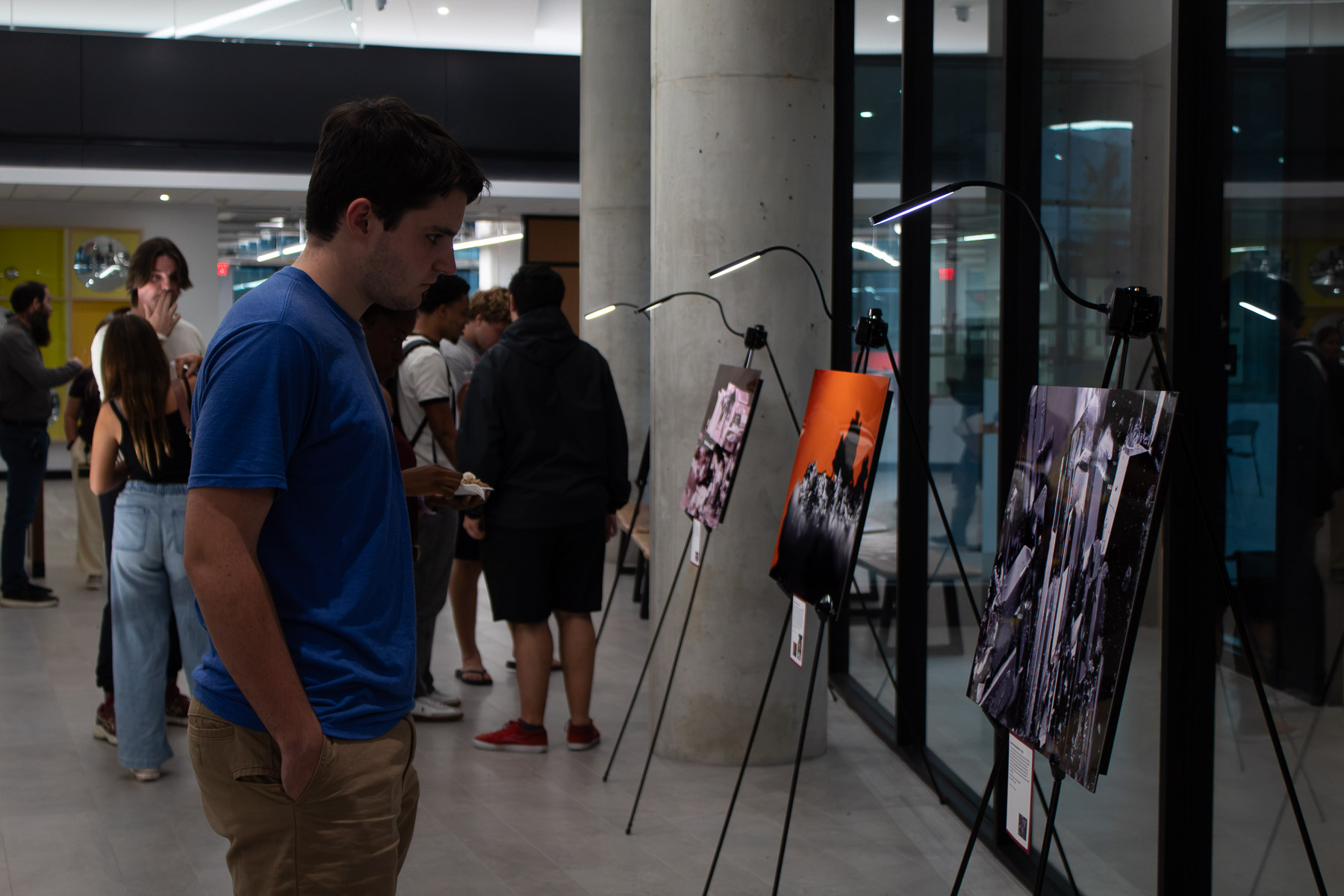
The resulting photographs were displayed at the event, highlighting the intersection of art and science.
As guests viewed the photographs during a reception, they were struck by the vibrancy and intricacy of the complex, multicolored crystals. Each photograph was labeled with its chemical composition and a striking title such as “Rattling Chains and Accidental Rainbows,” or “A Mysterious Treasure from the Unknown.”
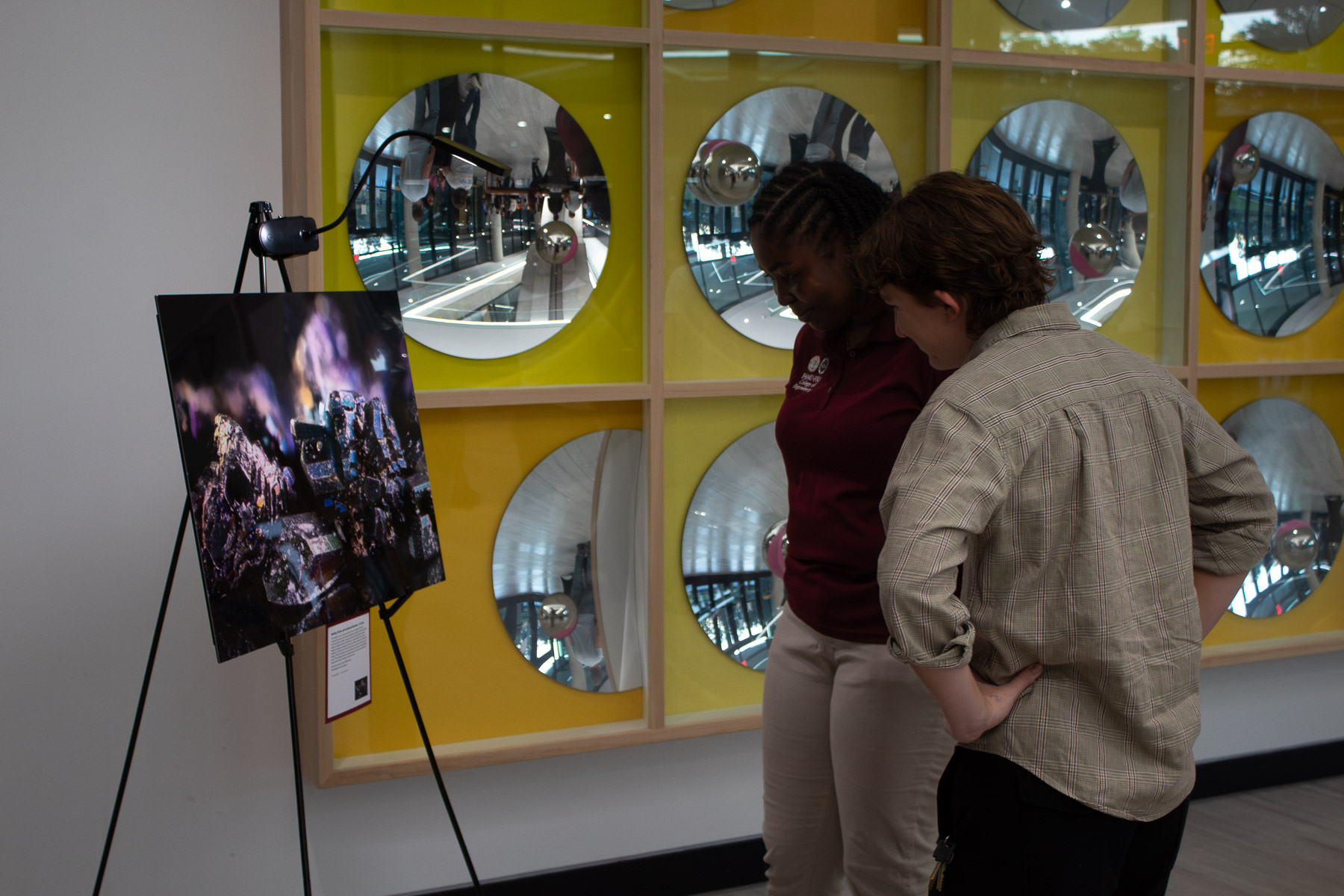
Walking around the reception and greeting attendees was Holstein, who happily explained the techniques behind the images.
“With these images, I work with up to 5:1 magnification,” Holstein said. “To do this extreme macrophotography, I have to use specialty lenses that can go from 1:1 to 5:1 in seconds.”
But capturing such small objects at high magnification requires more than a specialized lens.
“A single image is not a normal image in macrophotography,” said Holstein.” The depth of the field is so shallow, only a tiny amount of the crystal is actually in focus in one single image.”
To produce a fully focused image, Holstein takes dozens or even hundreds of photographs of the same crystal, adjusting the focus slightly between shots. The distance between one photo and the next, Holstein explained, can be less than the thickness of a strand of hair.
He then combines the photographs into a single image using a technique called focus stacking. The process also involves artistic decisions about which features to emphasize.
“A lot of times, I make creative decisions on the spot,” said Holstein. “I have to choose what I want the main focal point of the image to be; what I want the viewer to see when it is done.”
The result is a detailed image that reveals features of the crystal that would otherwise be difficult to see.
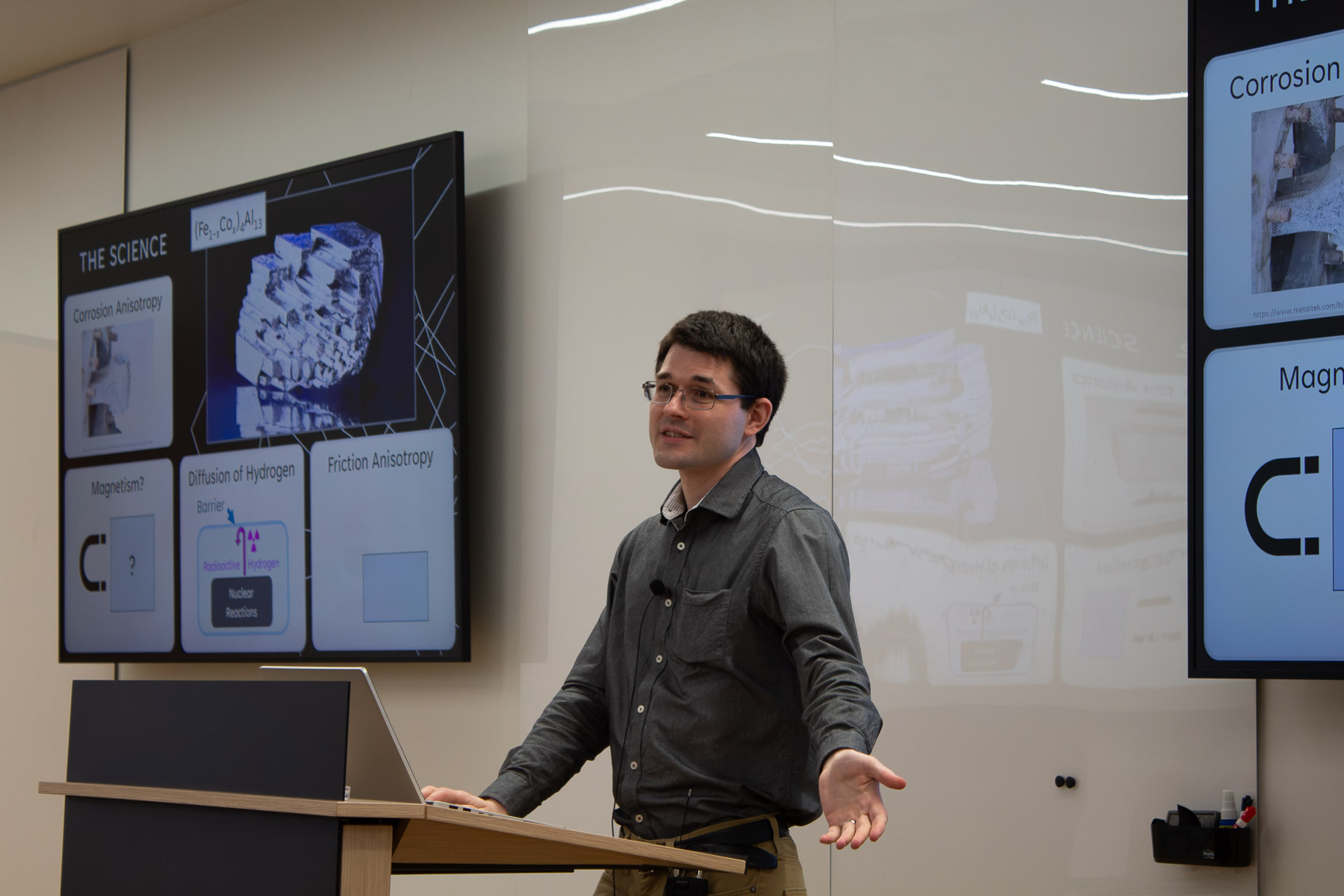
The process begins in Meier’s laboratory, where he and his team of graduate and undergraduate students grow the crystals that Holstein photographs.
“We grow beautiful crystals,” Meier said. “Crystals with weird metals, crystals with weird magnets and unusual materials.”
Meier compared the process of growing crystals to making rock candy, a familiar childhood experiment. But instead of using water, his team works with molten metals.
“It’s similar, except I don’t use water to grow crystals,” Meier said. “I use molten aluminum, or zinc, or in a particularly interesting example, a mixture of iron and arsenic.”
The researchers place the elements in a heat-resistant container and heat them until they melt. As the materials cool and crystallize, they can produce new structures with unexpected properties.
“When we get rid of the liquid we use as water, and when everything goes right, we get sparkling crystals. Sometimes, something brand new, and we have to figure out what it is,” said Meier.
Once the crystals are created and identified, researchers test their properties, including magnetism, melting point, anisotropy and color. They use an electron microscope to study the crystals’ atomic structure.
“In viewing our crystal, we start to see that pattern of atoms. We have squares, we have rectangles, we have triangles all with the same repeating atomic pattern,” Meier said. “This is what makes it a crystal.”
The materials can have practical applications, from trapping radioactive gases to use in construction and computer chips. But Meier also wants people to appreciate the beauty of the scientific process.
“I am really trying to work with more artists. The collaboration between science and art is really interesting,” Meier said. “We often get lost in our work as scientists. We will see something we make and go ‘oh, that’s pretty,’ and then move on to the next task. Sometimes we just need to stop and appreciate how truly amazing the work we do looks.”
Through their collaboration, Meier and Holstein are giving audiences a new way to see scientific research, one that celebrates both discovery and creativity.