



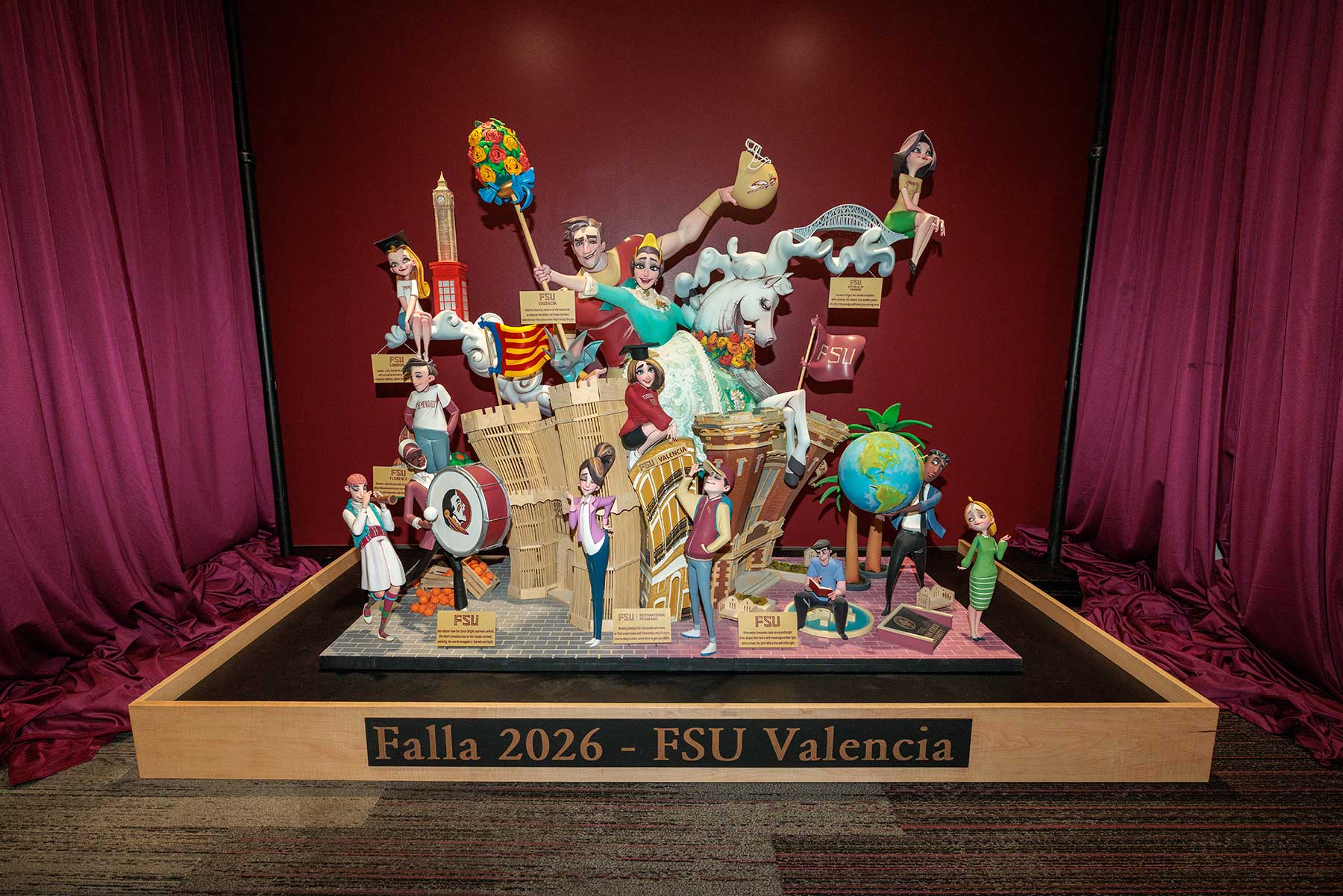
Florida State University brought a colorful piece of Spanish culture to Tallahassee on Thursday, unveiling a traditional Valencian sculpture in the Student Union that celebrates the university’s global connections.
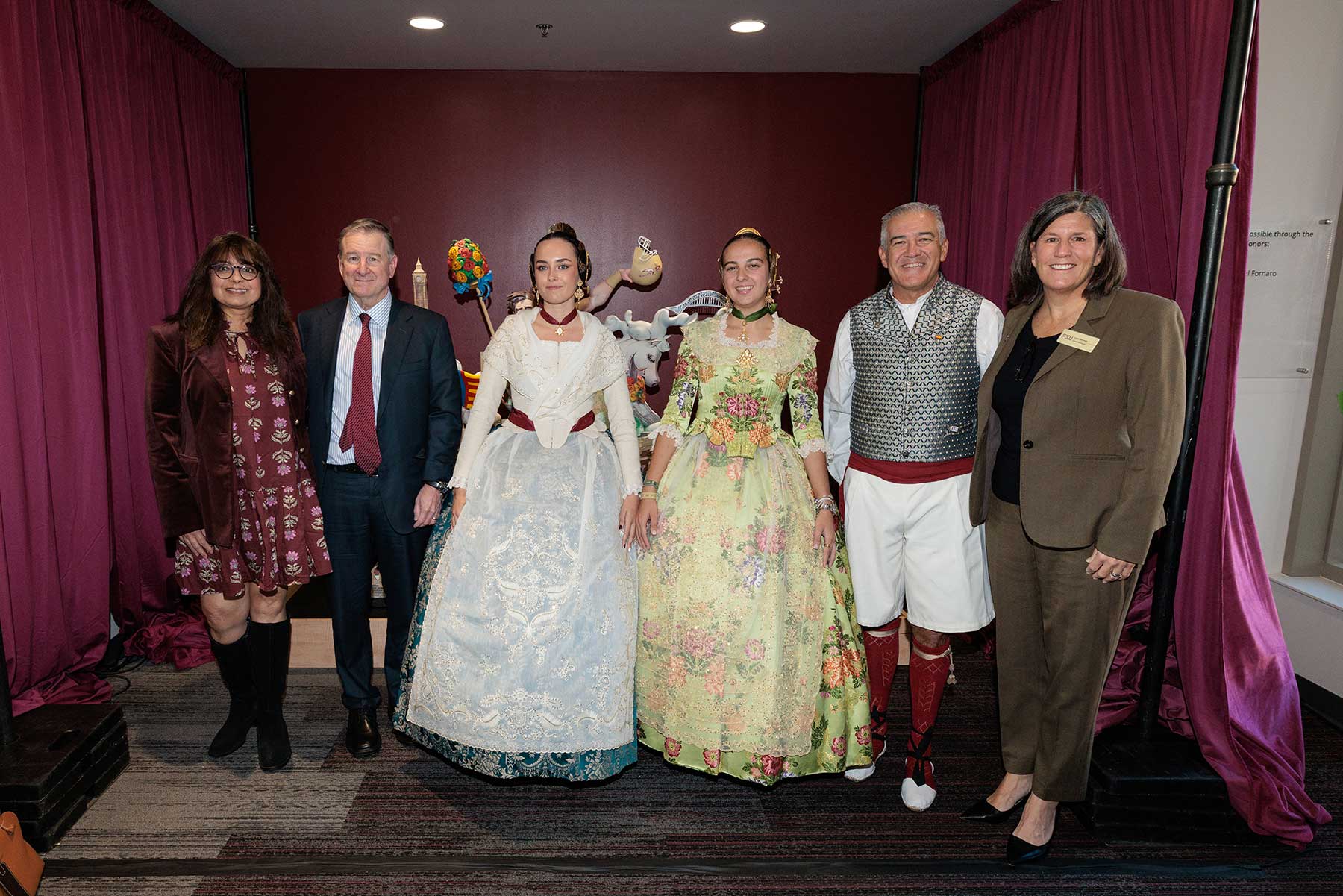
FSU President Richard McCullough unveiled the sculpture, known as a “falla,” during a ceremony attended by students, faculty and staff representing FSU’s study centers in Valencia, Florence, London and Panama.
“When you learn about other cultures, that really changes you as a person,” McCullough said. “I hope that this sculpture will be a wonderful memory for those of you who have studied abroad and had these international experiences.”
Las Fallas is an annual cultural festival held each March in Valencia, featuring elaborate sculptures made of papier-mâché, wood and other materials. Known as “fallas,” the sculptures often depict satirical scenes, public figures and cultural themes. They are displayed throughout the city during the weeklong festival before they are burned at midnight on March 19, the feast day of St. Joseph, the patron saint of carpenters.
The festival grew out of a tradition in which carpenters burned leftover materials from their workshops to honor their patron saint. Today, the tradition symbolizes renewal and the arrival of spring. In 2016, UNESCO recognized the festival as part of the Intangible Cultural Heritage of Humanity list.
The idea to bring artwork representing FSU’s global reach to Tallahassee originated with Chris Iansiti, immediate past chair of the FSU Foundation Board of Trustees. The project gained momentum during a visit to FSU’s European study centers in early 2025 that included Vice President for Student Affairs Amy Hecht and Louisa Blenman, executive director of International Programs.
With donor support, FSU launched the project in 2025 with the installation of three bronze statues in the Student Union titled “Vires, Artes, Mores,” representing the university’s core values of strength, skill and character. The statues were cast from the same molds as those displayed at the FSU Florence Study Center. The fallas is the second of four planned installations in the Student Union, with artwork representing FSU Panama and FSU London to follow.
“I’m so proud to be part of this project, which serves as a lasting symbol of Florida State University’s commitment to providing global opportunities for students, faculty and staff,” Blenman said. “Generations of students and FSU family will be reminded daily that we’re connected to others around the world through scholarship, exploration, cultural connections and art.”
The sculpture was crafted by Valencian artist José Luis Platero Cosí using papier-mâché, wood and other sustainable materials. Depictions of FSU’s European study centers and branch campus in the Republic of Panama are incorporated into the sculpture alongside imagery of favorite FSU traditions. It showcases Florida State’s commitment to global learning, highlighting the vibrancy of student life in Tallahassee and abroad.
“This is a beautiful moment,” said Ignacio Messana, director of FSU Valencia. “In this Falla, we tried to combine what study abroad and what Florida State University means. It’s an honor to have it here.”
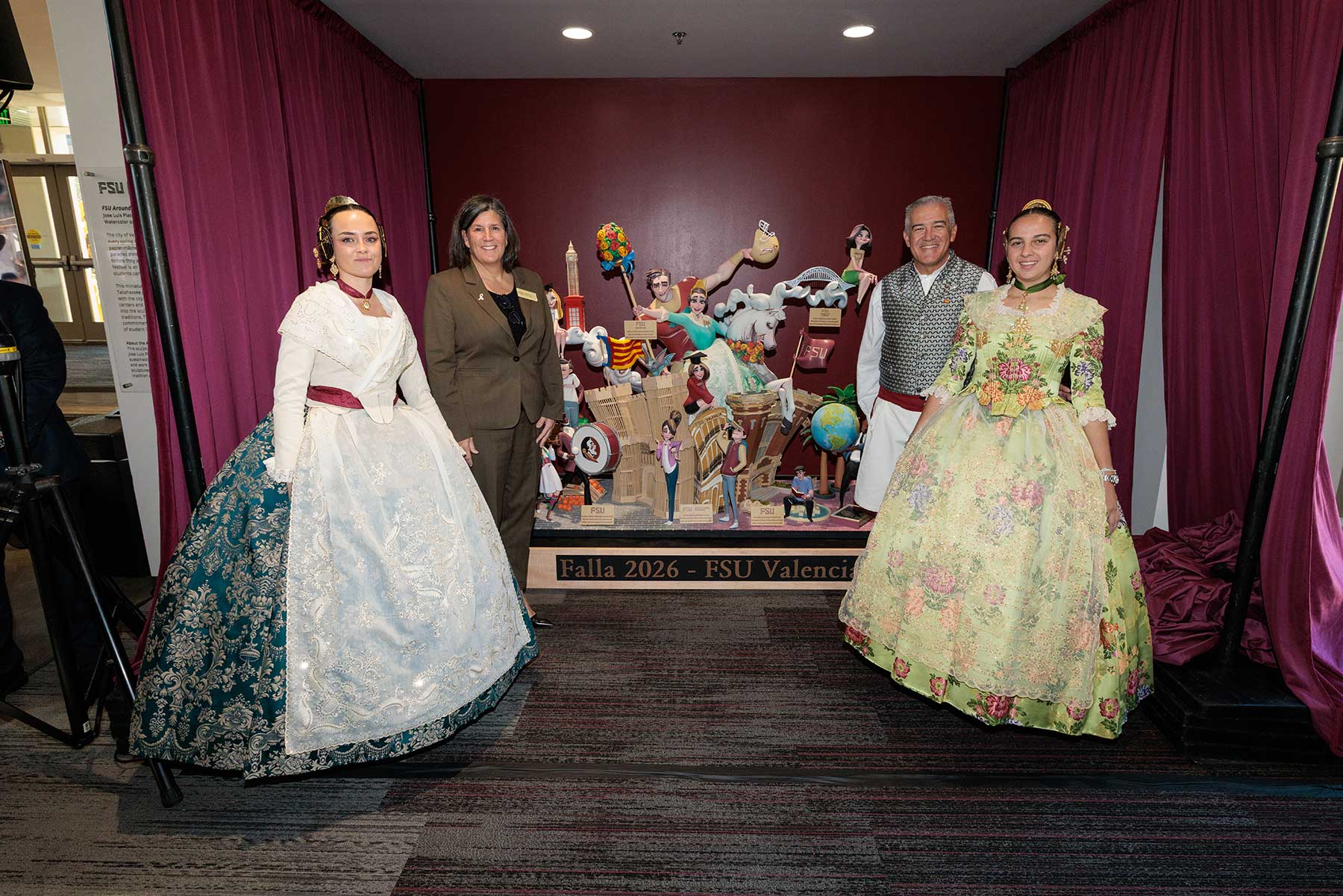
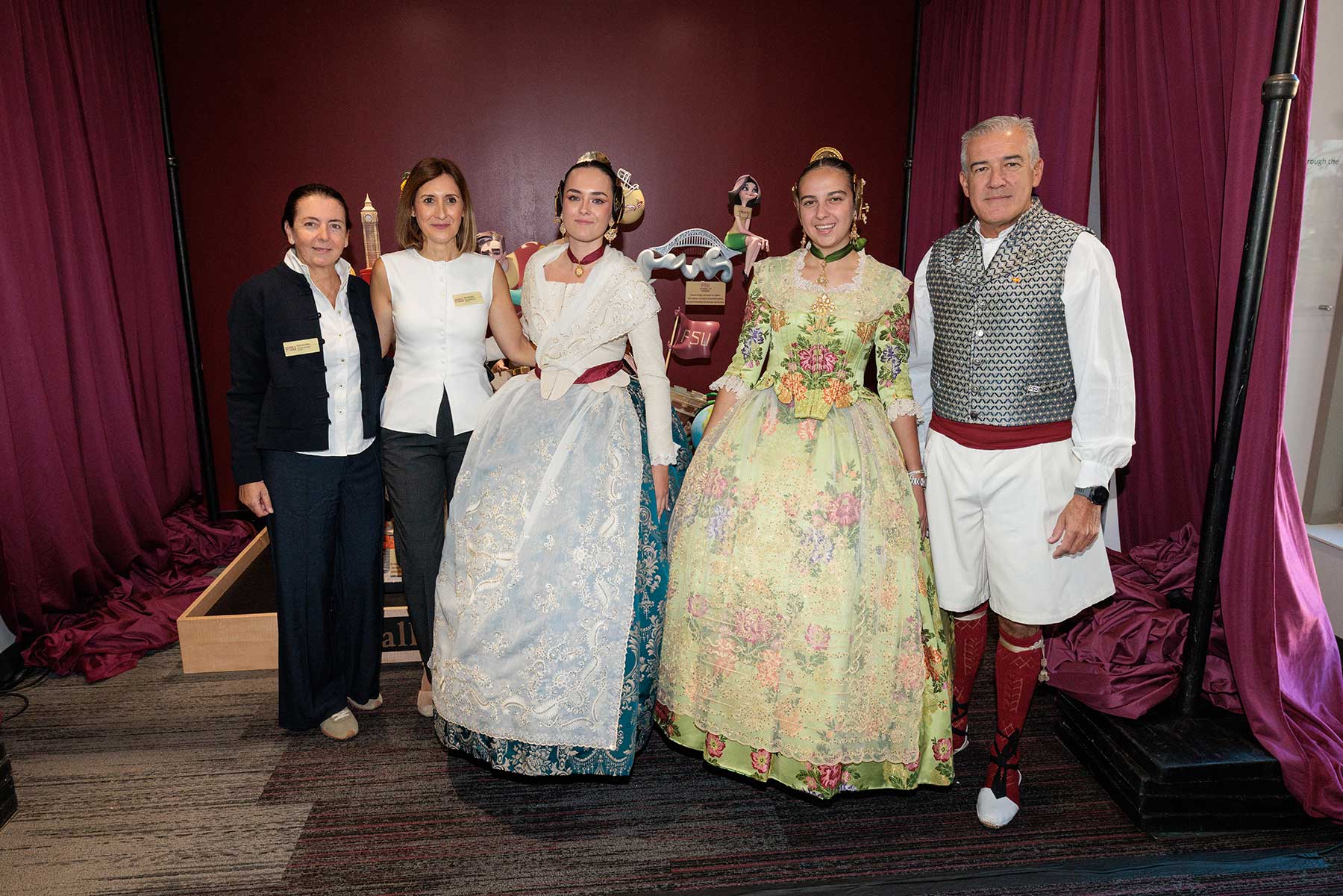
Each year, about 800 fallas are erected throughout Valencia by more than 350 neighborhood commissions. Women and girls known as falleras play a central role in the celebration, wearing elaborate Valencian dresses, intricate braided hairstyles and decorative combs.
Rus Arenas, cultural program coordinator at FSU Valencia, attended the ceremony in traditional fallera clothing alongside Messana’s daughter, Victoria. Also representing FSU Valencia at the ceremony were Associate Director Alicia Martinez and Assistant Director Victoria Pacheco.
FSU’s first study abroad program in Spain launched in 1997, with summer sessions in Madrid and fall and spring semesters in Torremolinos, a coastal city in southern Spain. Students first visited Valencia in the summer of 1999 and were drawn to the Mediterranean city. FSU relocated the program the following summer and began operating in Valencia year-round.
Messana joined FSU Valencia in 2002, two years before the university purchased the Garnet Study Center building in the heart of Valencia’s historic district, just steps from the iconic Serranos Towers. FSU acquired a second historic building in 2013. The buildings combine modern learning spaces with historic features, including an exposed 10th-century Moorish wall and glass floors revealing 14th-century leather-tanning tanks.
For more information about International Programs and FSU Valencia, visit international.fsu.edu. To learn more about FSU’s global presence, visit global.fsu.edu.